


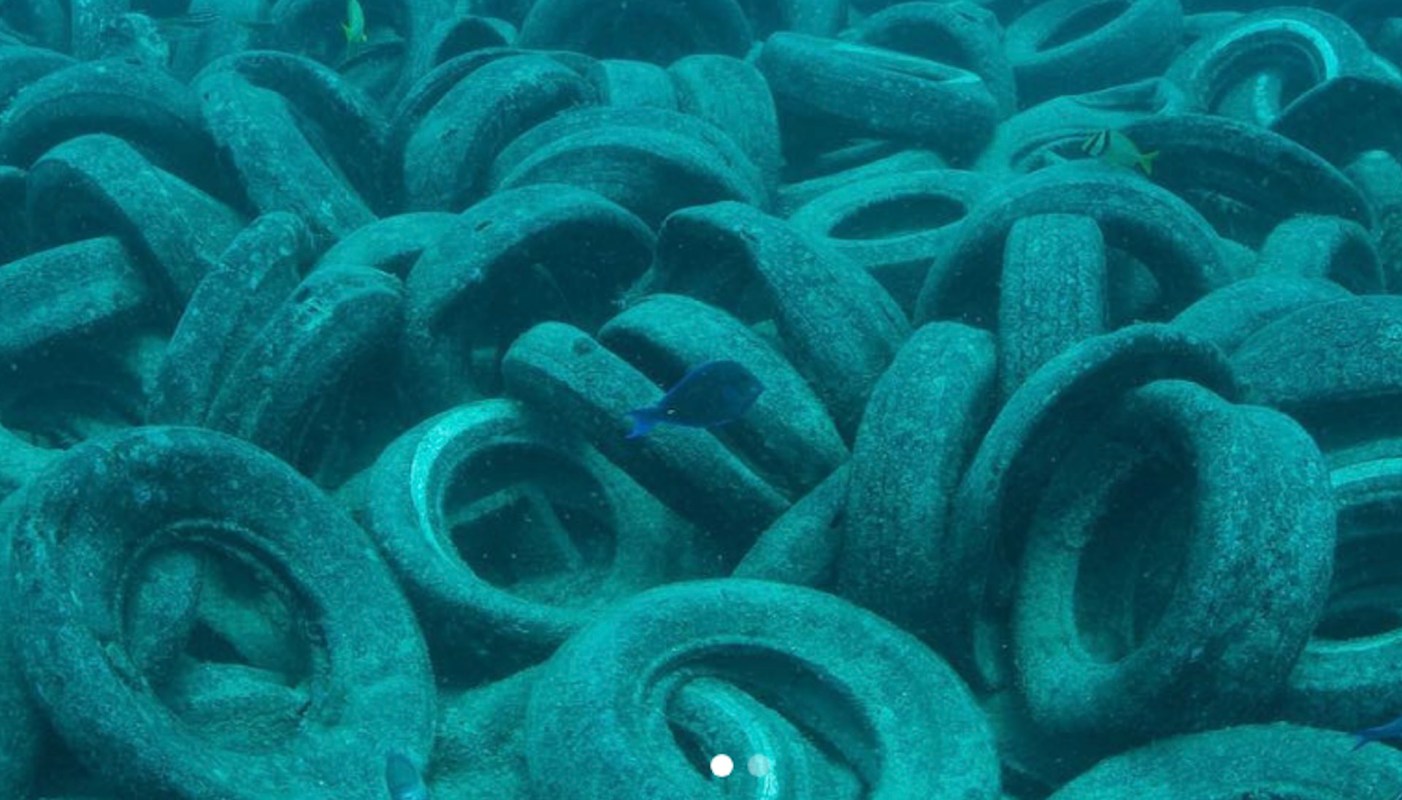
The best-laid plans of mice and men often go awry. That was certainly the case for the man-made Osborne Reef of the 1970s, which was meant to boost marine life off Florida's coast but did the opposite.
What's happening?
The Osborne Reef was created when a nonprofit dropped around two million tires into coastal waters during the 1970s, as Interesting Engineering described.
The concept was approved by the Army Corps of Engineers and garnered widespread support. Tire manufacturer Goodyear contributed by launching the initiative with a gold-plated tire from the Goodyear Blimp.
The project backfired because of an array of natural challenges. Tires broke loose during hurricanes and tropical storms as they were secured only by nylon ropes and steel clips.
Those tires damaged nearby coral reefs while failing to provide a proper habitat for coral as intended. The tires also traveled far and wide, creating a costly cleanup situation with hundreds of thousands of tires strewn across the bottom of the ocean.
Why is the Osborne Reef important?
The Osborne Reef saga shows that even projects with the right ideas can go very wrong. 4ocean (@4ocean), a company that works to clean up the ocean, illuminated that point in a post to Instagram, highlighting its efforts to clean up the area.
"Ultimately, the well-intentioned project failed," it wrote. "We definitely have a lot of work to do."
4ocean isn't alone in those efforts. The National Oceanic and Atmospheric Administration's Marine Debris Program launched a reconnaissance project nearly 20 years ago, and there have been other efforts to remove the tires.
What's being done about the Osborne Reef?
The Florida Department of Environmental Protection provided a summary of the efforts to clean up the tires. In several phases of a pilot project that started in 2007, divers got more efficient at removing the tires.
As they progressed, they also prioritized the health of coral found on the tires. The project now includes finding a new home for those coral that will give them a better chance of survival before tire removal by divers.
TCD Picks » Upway Spotlight
💡Upway makes it easy to find discounts of up to 60% on premium e-bike brands





By 2023, nearly 650,000 tires had been removed. That process will continue through at least February 2028.
|
What's the most you'd pay per month to put solar panels on your roof if there was no down payment?
Click your choice to see results and speak your mind. |
 $200 or more 💰
Get TCD's free newsletters for easy tips to save more, waste less, and make smarter choices — and earn up to $5,000 toward clean upgrades in TCD's exclusive Rewards Club.
Cool Picks






