


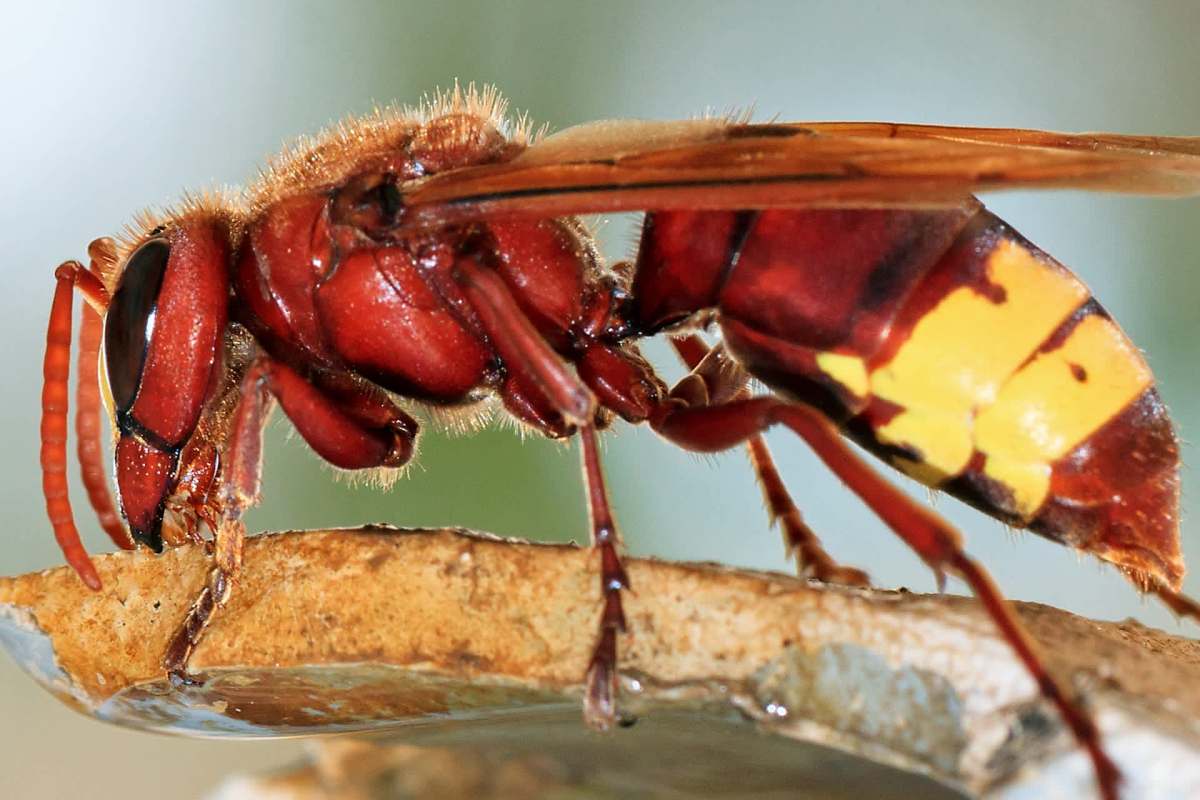
A dangerous critter has reappeared in one European country for the first time since the 1970s.
What's happening?
The oriental hornet was spotted near Split in a Kaštela quarry, Croatia Week reported in September.
It said that the insects were at peak activity and that stings could be likely. The species had previously been seen in Trieste, Italy, and may have traveled there by ship. It moved to neighboring Slovenia and then down the Adriatic coast to Dalmatia, the region that covers the southernmost part of Croatia.
"It is known that it was present before, but there has been no literature data since the 1970s, so it has retreated and is now returning to its old habitat," Nediljko Landeka of the Institute of Public Health told Dnevnik Nova TV, per Croatia Week.
Why is this important?
Strictly speaking, the oriental hornet may not be an invasive species in Croatia, which is at the limit of its range. But its long absence suggests that it could at least be a nuisance.
Invasive species are plants and animals that are not native to an area. They can spread rapidly, taking over ecosystems that haven't evolved with or adapted to their presence. Without natural predators or similar mechanisms to keep them in check, they push out other species and unbalance the environment.
"The reappearance of the oriental hornet serves as a reminder of how species can resurface after decades and why caution is vital when encountering them," the outlet noted.
The oriental hornet looks like the European hornet but is reddish brown, and its yellow bands don't reach the end of its abdomen, as the U.S. Army Public Health Center Entomological Sciences Program shows. It should also not be confused with the Asian hornet.
The fascinating creature can convert solar radiation into electrical energy, according to National Geographic. But it is also a threat to dwindling honeybee populations, according to the Italian Istituto Zooprofilattico Sperimentale delle Venezie.
What's being done about the oriental hornet?
The sting of the hornet can cause an allergic reaction and can even be fatal, so residents were advised to steer clear of nests. Treatment consists of washing the area with soap and water, as well as applying an antiseptic and cold compress. Those who experience worsening symptoms should seek medical care immediately, per Croatia Week.
TCD Picks » Quince Spotlight
💡These best-sellers from Quince deliver affordable, sustainable luxury for all




|
How bad are the mosquitoes in your area? Click your choice to see results and speak your mind. |
 What mosquitoes? 😎
 If the bug continues to spread, officials may have to take action. In the United Kingdom, for example, the government captured Asian hornets and used minute tracking devices to find their colonies. And in the United States, where the spotted lanternfly has become an invasive peril, biologists recommended removing certain invasive trees to spur local birds to develop an appetite for the planthopper.
That's because native plants are crucial to supporting native animals, and invasive species feed off one another. You can help by rewilding your yard and controlling pests naturally.

Get TCD's free newsletters for easy tips to save more, waste less, and make smarter choices — and earn up to $5,000 toward clean upgrades in TCD's exclusive Rewards Club.
Cool Picks






