


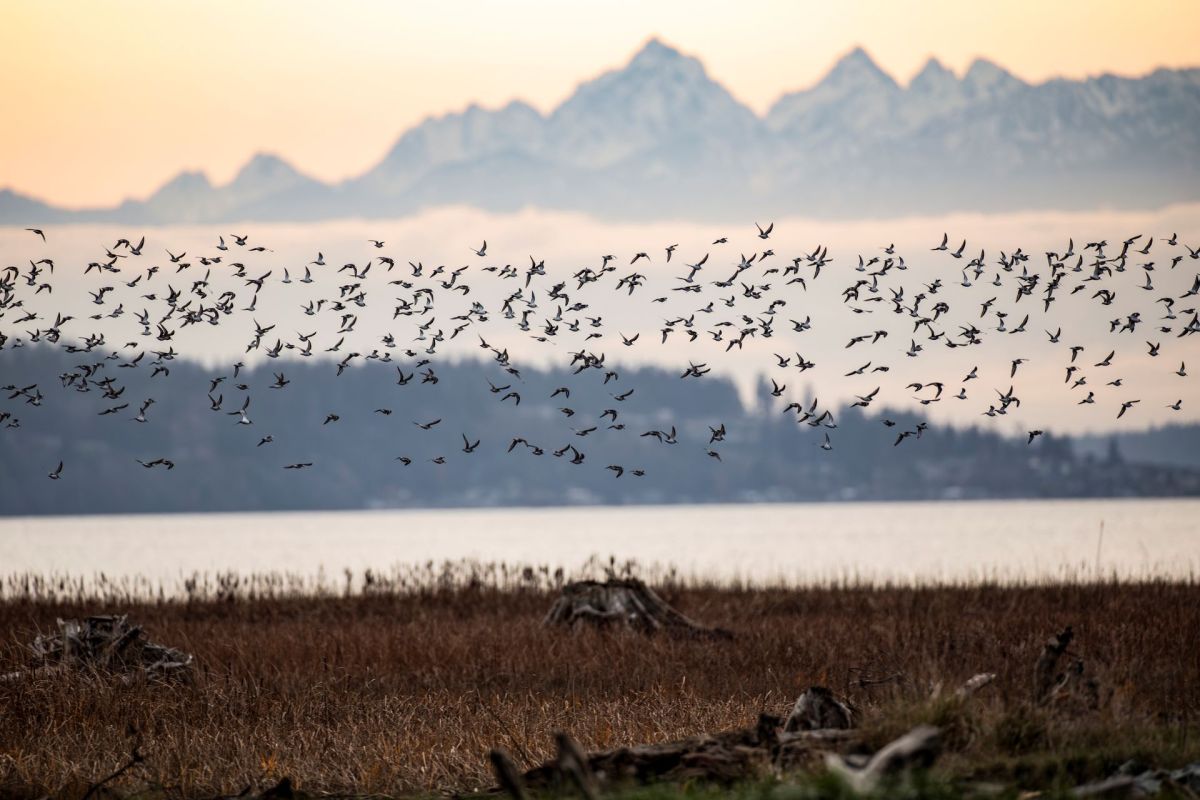
A meteorologist took to Facebook to highlight the amazing way that nearly half a million migratory birds had hitched a ride on winds caused by two hurricanes in the Atlantic Ocean.
"This is fascinating!" wrote Ross Ellet, a meteorologist for WTVG in Toledo, Ohio. "The twin hurricanes in the Atlantic are moving away from the U.S., but the migrating birds are using the power of that wind to their advantage."
According to Ellet, Doppler radars operated by the National Weather Service had picked up 492 million migratory birds making their way south for the winter, taking advantage of 30-mile-per-hour winds resulting from Hurricane Humberto and Hurricane Imelda.
"Winds move counterclockwise around areas of low pressure," Ellet explained in his Facebook post. "Since Hurricane Humberto is located northeast of Hurricane Imelda, those winds are out of the northeast and moving to the southwest in the migration zones. So once the birds take flight, they can glide in the right direction with lower effort than normal."
Facebook users flocked to the comments to share their takes.
"Even the birds know to work smarter not harder," said one commenter.
TCD Picks » Quince Spotlight
💡These best-sellers from Quince deliver affordable, sustainable luxury for all




"It's like the moving walkway at the airport," chimed in another.
"So those birds are getting a free ride?" commented a third. "Good for them."
Just days prior, Ellet had shared how weather radars had picked up a remarkable 1.2 billion migratory birds in flight on Sept. 25, the largest amount ever recorded by BirdCast, according to the Tennessean.
"WOW!" Ellet exclaimed in a Facebook post on the morning of Sept. 26. "I watch the radar for a living and monitor migration closely. I don't recall a night this big."
|
How often do you feel hopeful about the future of the planet when you read news stories or watch entertainment content? Click your choice to see results and speak your mind. |
 Often 😇
 Typically, birds do not fly high enough to be picked up by weather radar. However, during migration, birds travel at altitudes of 1,000 to 3,000 feet, which falls within radar's range. In addition to birds, radar can pick up flying bats and even swarms of insects, according to the Tennessean.
While some areas, such as California's Mono Lake, have seen a concerning drop in the arrival of the usual migratory birds, the recent Doppler images confirmed that hundreds of millions of birds are still flying south this year for the winter.

Join our free newsletter for good news and useful tips, and don't miss this cool list of easy ways to help yourself while helping the planet.







