


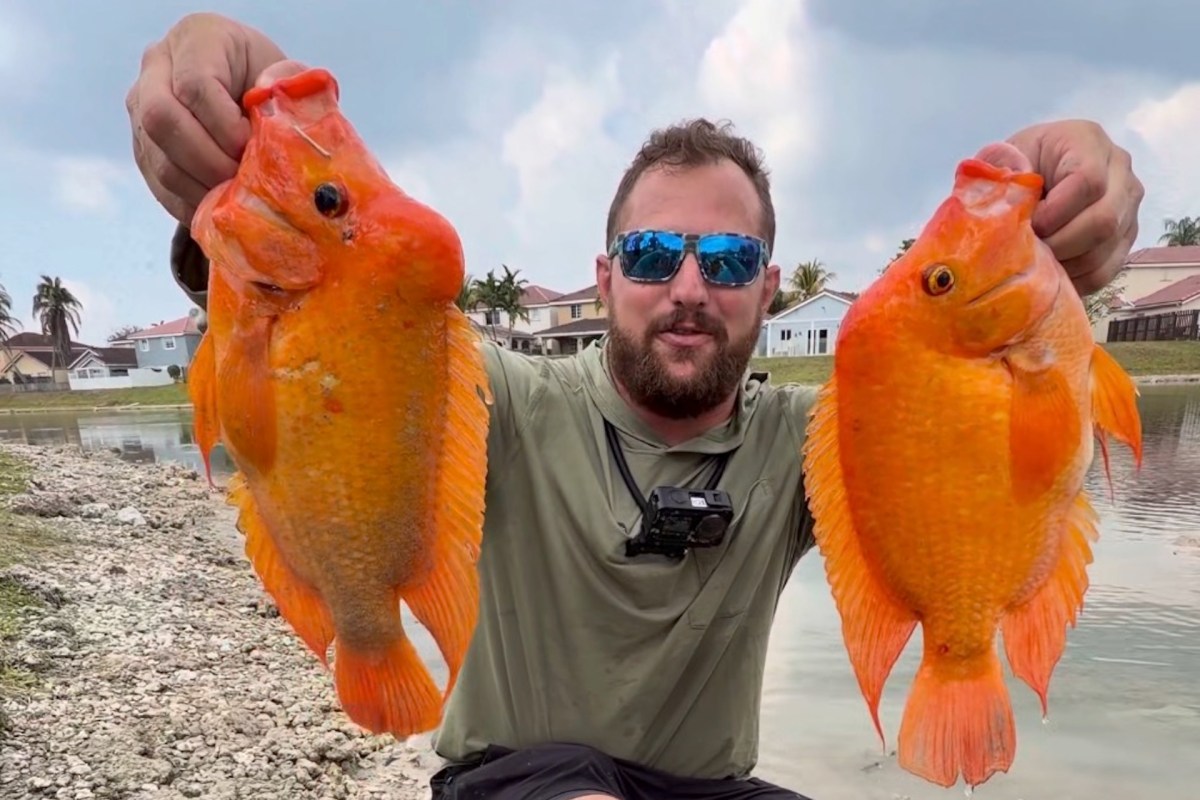
A fisher shared a video of an invasive fish in Florida, along with a culinary solution that sparked a lively discussion.
"This is a bizarre fish we have down here in Florida," the poster says in the Facebook video as he kneels on the shore and holds up two of the large orange fish.
He further explains that the fish are midas cichlids, a non-native species that looks like a goldfish but isn't.
The OP says the lake is full of them, and the humps on their heads indicate the fish are males, as they get them during mating.
"This is just absolutely insane," he says. "Big invasive midas cichlid, and we're actually going to be making him into tacos."
Endemic to Nicaragua and Costa Rica, they're also popular in pet stores, and several commenters suggested that the fish entered this lake when people bought them for aquariums and then released them.
Knowing how to identify and properly handle non-native species benefits the environment. These species find their way into ecosystems, usually through human activity, and wreak havoc. Sometimes, they can even permanently alter the ecosystem they establish in.
Displaced species outcompete native species for resources, and they typically spread rapidly. They can harm infrastructure and be difficult and expensive to remove, too.
The U.S. Fish & Wildlife Service reports that Florida's unique tropical climate and abundance of food sources have made the state the nation's top hotspot for invasive species, with over 500 species now established there.
Catching and eating non-native fish, as the poster intends to do, is a management solution that has been gaining popularity. From catfish in Malaysia to snakeheads in Maryland to lionfish throughout the Atlantic Ocean, citizens are encouraged to put these species on their plates.
TCD Picks » Quince Spotlight
💡These best-sellers from Quince deliver affordable, sustainable luxury for all




|
Which of these savings plans for rooftop solar panels would be most appealing for you?
Click your choice to see results and earn rewards to spend on home upgrades. |
 Save $1,000 this year 💸
 "Golden, crispy, and one lime away from greatness," one viewer commented on the Facebook video.
"Great on ceviche," another agreed.
A third was more concerned about what the cichlids were dining on.
"They eat the native large mouth bass and bream eggs," they wrote. "Very aggressive to the native fish."

Get TCD's free newsletters for easy tips to save more, waste less, and make smarter choices — and earn up to $5,000 toward clean upgrades in TCD's exclusive Rewards Club.
Cool Picks




