


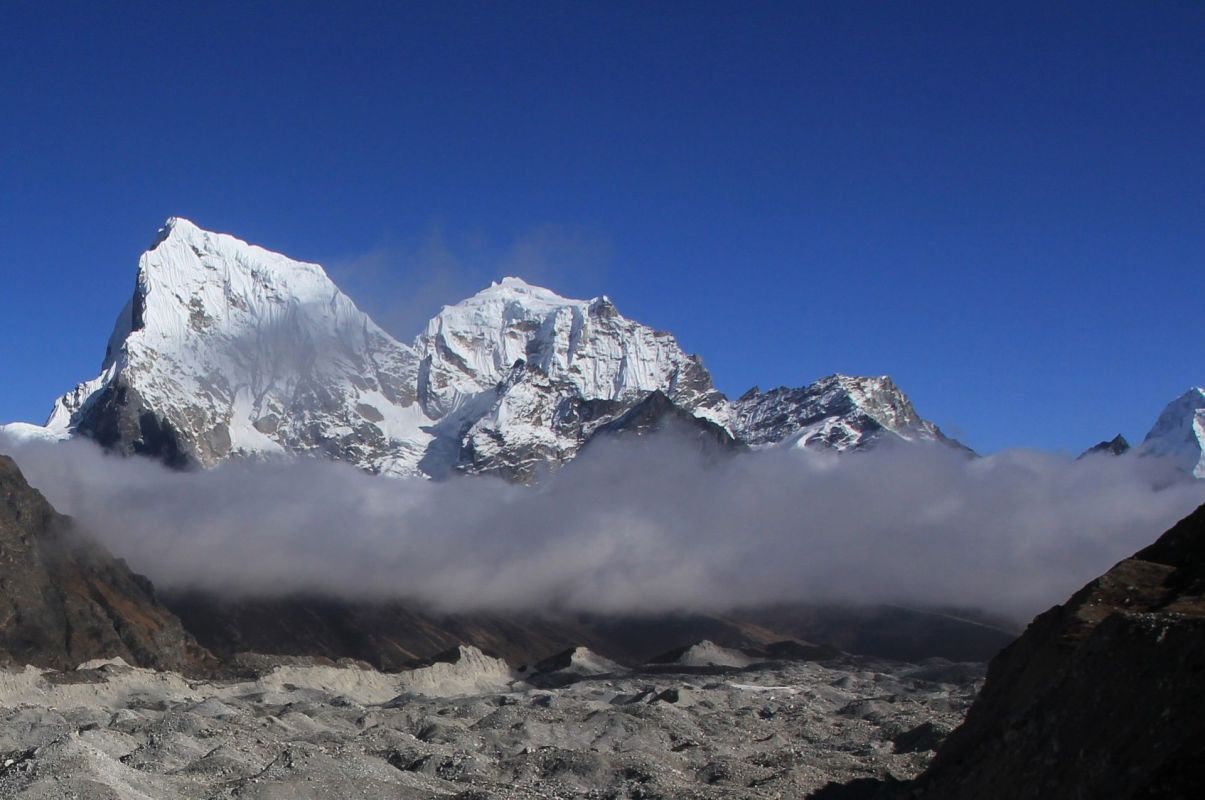
As global temperatures continue to rise, the melting of Himalayan glaciers has shown no signs of slowing down. Climate scientists are now issuing a warning that this development could have catastrophic consequences.
What's happening?
As reported by Policy Circle, regions in the Himalayas are losing ice mass at an alarming rate. Nepal has lost about one-third of its ice over the last 30 years. Perhaps more concerning is the fact that the rate of this ice loss is continuing to accelerate throughout the entire mountain range.
According to a study from the International Centre for Integrated Mountain Development, the Hindu Kush Himalayan region is now estimated to lose up to 80% of its glacier volume by the end of this century. This could result in irreversible damage to countless communities throughout Asia.
Izabella Koziell, deputy director general of ICIMOD, emphasized what's at stake as these mountain glaciers continue to melt at blazing speed. "The glaciers of the Hindu Kush Himalaya are a major component of the Earth system," Koziell said. "With two billion people in Asia reliant on the water that glaciers and snow here hold, the consequences of losing this cryosphere are too vast to contemplate. We need leaders to act now to prevent catastrophe."
Why are retreating Himalayan glaciers important?
Retreating Himalayan glaciers threaten water security for hundreds of millions of people due to disrupted river flow. Glaciers act as natural water reservoirs, and their retreat diminishes this crucial water supply. This can be especially true for communities reliant on them for drinking water and irrigation during dry seasons.
Mountain glacier loss can also increase the risk of catastrophic glacial lake outburst floods, which can lead to long-term water scarcity that will impact agriculture, food security, and energy production. As global temperatures continue to climb, we could see greater frequency and potentially more severe GLOFs.
Beyond Asia, the melting of ice masses in the Himalayas is a large contributor to rising global sea levels, which can have far-reaching impacts across the world. This includes increased storm surge and severe erosion, leading to significant land loss. Communities may also experience an influx of saltwater leaching into freshwater sources, further diminishing key water supplies.
What's being done about the melting of Himalayan glaciers?
While the forecast for the Himalayan glaciers appears to be grim, there is still optimism that we have enough time to slow down the rate of ice melt. However, this is dependent on both proactive strategies and large-scale adaptation. As countries continue to work to reduce their reliance on planet-heating fossil fuels and invest in renewable energy resources, we can see a slowdown in global temperature rise.
"There is still time to save this critical region, but only if fast and deep emissions cuts start now. Every increment of a degree of warming matters to glaciers here and to the hundreds of millions of people that depend on them," added Koziell. "As this study shows, alongside urgent mitigation action, we need adaptation funds and programmes and ecosystem restoration to be rapidly scaled up, and the mobilisation of finance for losses and damages."
|
What source of air pollution do you worry most about at home? Click your choice to see results and speak your mind. |
 Wildfires 😷
Join our free newsletter for good news and useful tips, and don't miss this cool list of easy ways to help yourself while helping the planet.
TCD Picks » Quince Spotlight
💡These best-sellers from Quince deliver affordable, sustainable luxury for all




Cool Picks






