


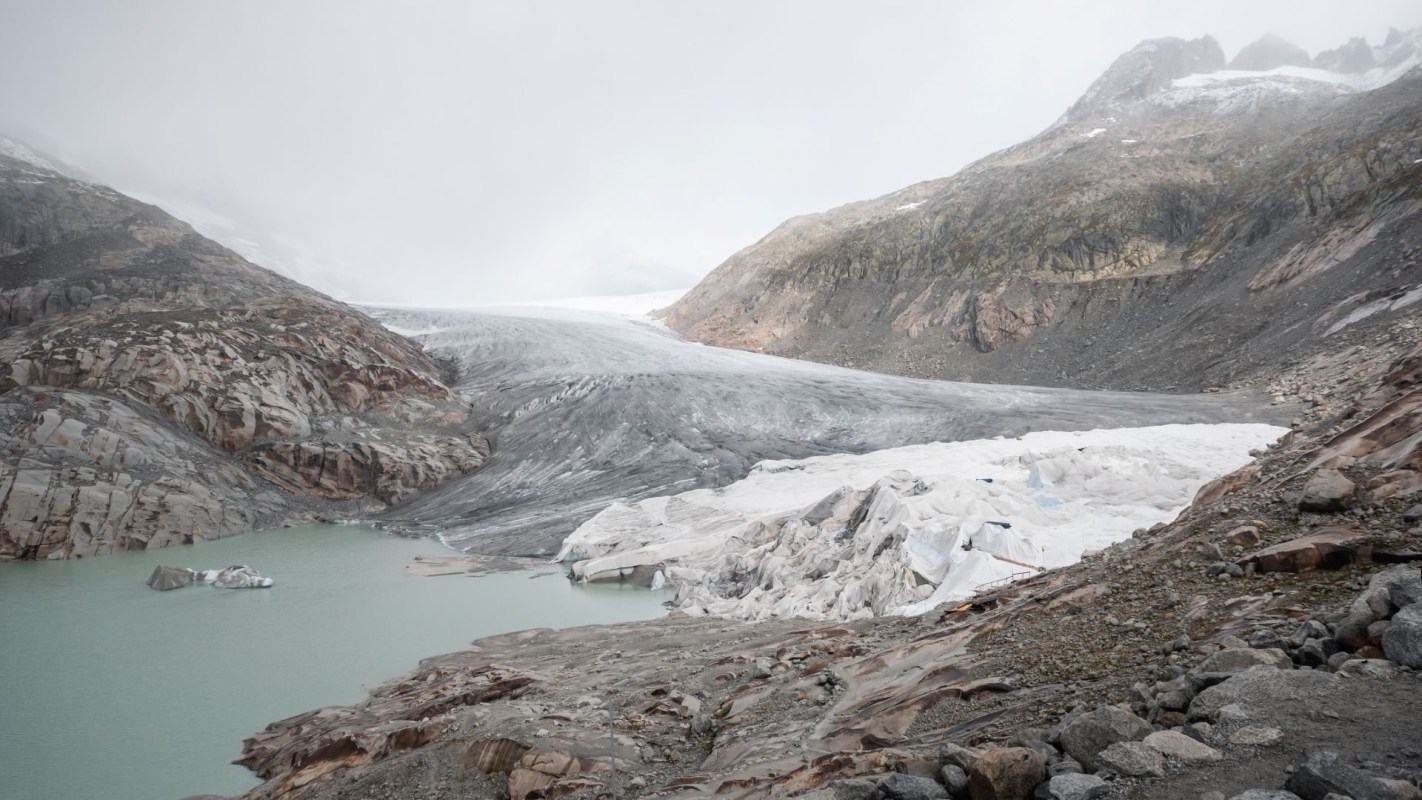
What happens when "nature's water towers" run dry?
That has been the question that researchers studying important yet rapidly disappearing glaciers in the Swiss Alps have been racing to answer, as changes that used to take place over centuries or even millennia have unfolded quickly enough for scientists to observe them firsthand over the course of their careers, according to a report this week from NPR.
What's happening?
From a village being buried beneath rock, mud, and ice to glaciers receding by several yards every year, the Swiss Alps have been on the front line of Europe's rapidly rising temperatures. The repercussions have been felt across the continent.
For centuries, the massive glaciers of the Swiss Alps, though far out of sight and out of mind for most Europeans, have provided vital water supplies through the hot summer months, right when they have been needed most.
"If you think of a catchment or an area where you have a glacier, and you envisage a very dry, hot summer, well, you will get water because the glaciers are melting," Daniel Farinotti, a glaciologist, explained to NPR. "If you go to the same area and remove the glacier while in a very dry, hot summer, you don't get a droplet. So the timing at which water will come will change. And this is what the concern is about."
Farinotti has called these glaciers "nature's water towers" because they store frozen water for centuries at a time. During the hot summer months, the glaciers partially melt, providing vital supplies of water to rivers that flow hundreds of miles across Europe, allowing for irrigation, navigation, and drinking water.
Historically, the glaciers have frozen again in the winter, regaining much of the volume that had been lost over the course of the summer. However, in recent years, the melting has far outpaced the freezing, causing the glaciers to lose huge amounts of their overall volume.
If current trends continue, the glaciers will disappear completely.
'If we stay on track with the climate we have at the moment, then that brings us to a very warm climate," Farinotti said, per NPR. "And that would mean that this glacier disappears later this century. So by 2100, you wouldn't find any ice anymore."
Why are melting glaciers important?
The impact of the shrinking glaciers has already been felt hundreds of miles downstream. The Rhine River, one of the many rivers fed by glacier meltwater during dry summers, has been experiencing lower-than-usual depths. This had made it increasingly difficult for barges and other vessels to traverse the waterway, which for centuries has provided a vital artery for German trade.
TCD Picks » Quince Spotlight
💡These best-sellers from Quince deliver affordable, sustainable luxury for all




|
Do you think America does a good job of protecting its natural beauty? Click your choice to see results and speak your mind. |
 Definitely 👍
 Hundreds of miles from the glaciers that nourish the Rhine and other rivers in the summer months, shipping professionals have been experiencing water levels more than three feet below normal, according to NPR.
"The low water situation was also in the past, it was always there," Steffen Bauer, CEO of HGK Shipping, told NPR. "But the problem is that [now] it stands for longer, for a longer period we are in this situation. So it's lasting two, three, up to four months, especially in the late summer, and that's a huge impact."
His company, which transports goods along the Rhine River in huge barges, has been adjusting by designing new barges that can operate in as little as 3 feet of water, but it will take many years and a lot of money for the entire fleet to be replaced. Further, the new barges will not be able to hold the same amount of cargo as previous versions made for deeper waters, per NPR.
What's being done about melting glaciers?
For decades, experts have warned that releasing large quantities of heat-trapping pollution into the atmosphere would cause global temperatures to rise. In addition to increasing the severity of extreme weather events from heat waves to hurricanes, the higher temperatures were also forecast to result in the massive loss of land ice like glaciers.
In order to reverse this trend, the world's economy needs to transition away from burning dirtier, extracted fuels like coal, oil, and natural gas and toward cleaner, renewable sources of energy like solar.
To help spur change at the political level, you can use your voice by contacting your elected representatives and voting for pro-climate candidates.
Taking things a step further, you can save money on gas and electricity while also reducing planet-overheating pollution by driving an EV and installing solar panels on your home. Pairing solar panels with a home battery system can also make your home more resilient in the event of a power outage, ensuring that you and your family have the electricity you need when you need it most.
EnergySage takes the confusion out of upgrading to home solar by providing simple, easy-to-use online tools that allow you to compare quotes from vetted local installers and to see what tax credits and other incentives are available in your state, saving customers as much as $10,000.
However, with federal tax credits for EVs set to expire Sept. 30, and tax credits for home solar ending Dec. 31, you must act now to take advantage of thousands of dollars in savings.

Join our free newsletter for good news and useful tips, and don't miss this cool list of easy ways to help yourself while helping the planet.
Cool Picks




