


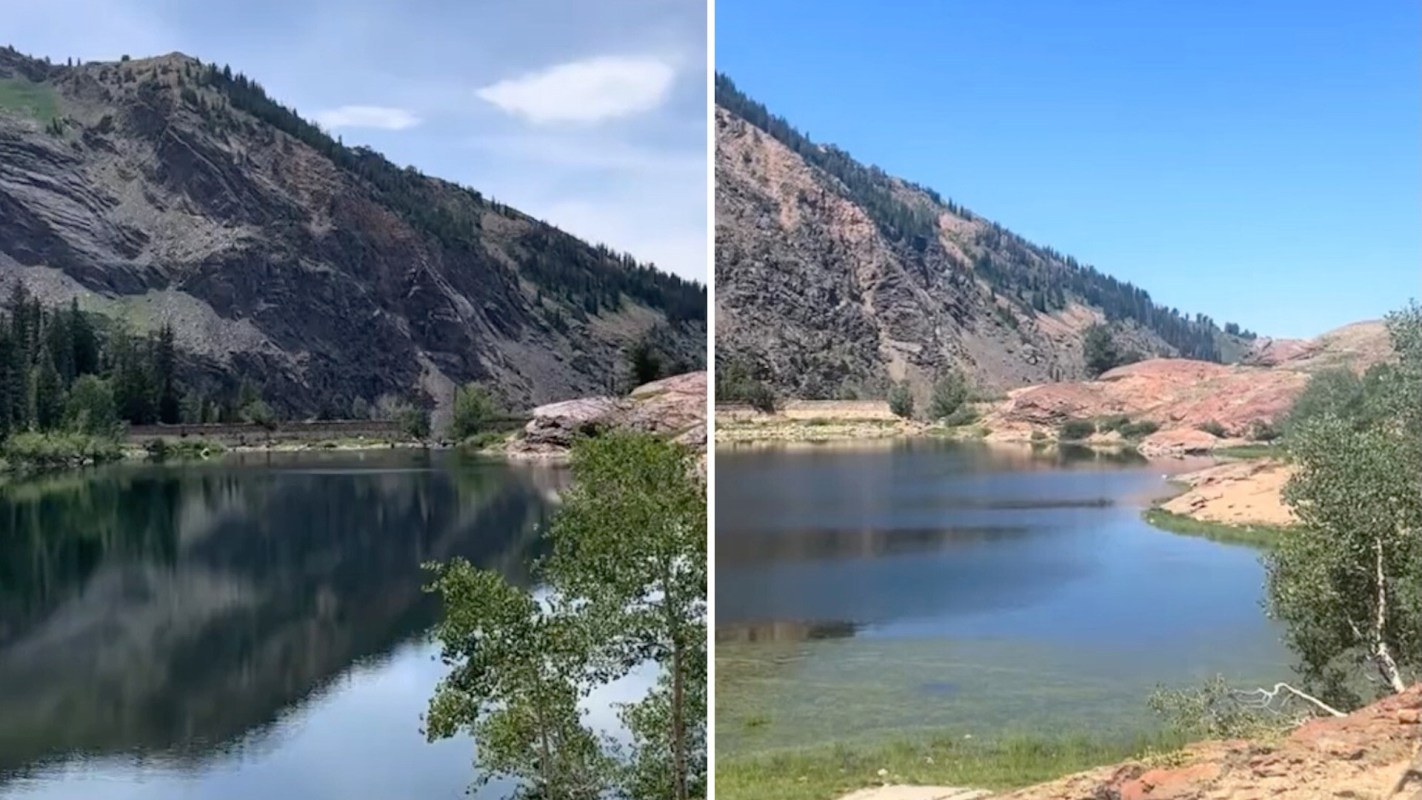
One of Utah's best-known alpine lakes has become the focus of a troubling hiking video. After reaching Lake Blanche, visitor Cristal Isa (@cristalisaa) found much less water than just three years before.
The online clip shows Lake Blanche in a sharply reduced state and comes amid ongoing concern about drought in the region.
What happened?
In a TikTok video, the creator showed footage of the lake from July 23, 2023, and now.
@cristalisaa was not expecting to see lake blanche with a quarter of her lake left :(( but yeah pray for rain ig #utah #hike #drought ♬ fine line acoustic - h
On-screen text asks, "And when Utah's lakes dry up … then what?"
The video from July 19 of this year shows that sad reality seems to be setting in. Footage from the hike shows the mountain lake pulled back enough to expose parts of the shoreline that are often underwater, making the drop in water level easy to see.
"Was not expecting to see lake blanche with a quarter of her lake left :((," Isa wrote in the caption. "But yeah pray for rain ig."
TCD Picks » Quince Spotlight
💡These best-sellers from Quince deliver affordable, sustainable luxury for all




People in the comments tied the view to wider worries about how dry conditions have been in Utah.
"Utah would have one bad year of rain and snow fall, but the next year would make up for it," one wrote. "But we haven't had a good snowfall/rain since 2022. We're cooked."
Others said late-summer shrinkage at Lake Blanche is familiar, and pointed out that 2022 was an exceptionally snowy winter.
"This is every year," a commenter countered. "I have pictures up here from 9 years ago and they drain the lake after the middle of summer."
Taken together, the replies mixed alarm about drought with the view that seasonally low water at the lake is not unusual.
Why does it matter?
When lakes, streams, and reservoirs drop, the effects reach beyond recreation. Low water levels can strain ecosystems, limit recreation access, and place added pressure on communities that already rely on limited snowpack and rainfall.
Worsening extreme weather can also endanger lives and livelihoods. Longer droughts can dry out vegetation and increase wildfire risk, threaten public health through smoke and heat, stress water supplies, and undermine economic stability for farmers, tourism workers, and local businesses that depend on healthy landscapes.
Lake Blanche reflects those pressures in a place many people know. As a state, Utah is contending with a longstanding drought that is just seeing some relief. Just as worrisome is that winter 2025-26 saw record low snowpack.
What can I do?
A single hiker's video cannot explain every reason a lake is low. Practical steps in dry regions include fixing leaks, watering yards more efficiently, choosing drought-tolerant plants, and following seasonal water restrictions where they apply.
Checking current trail, lake, and wildfire conditions before heading out can also help. Dry landscapes can change quickly, and fire danger can rise quickly during prolonged hot weather.
At the community level, conservation programs, improved water infrastructure, and landscape choices that require less water can all help reduce pressure on strained supplies. Individual action will not solve drought on its own, but it can lower household costs and ease stress on local systems.

Get TCD's free newsletters for easy tips, smart advice, and a chance to earn $5,000 toward home upgrades. To see more stories like this one, change your Google preferences here.







