


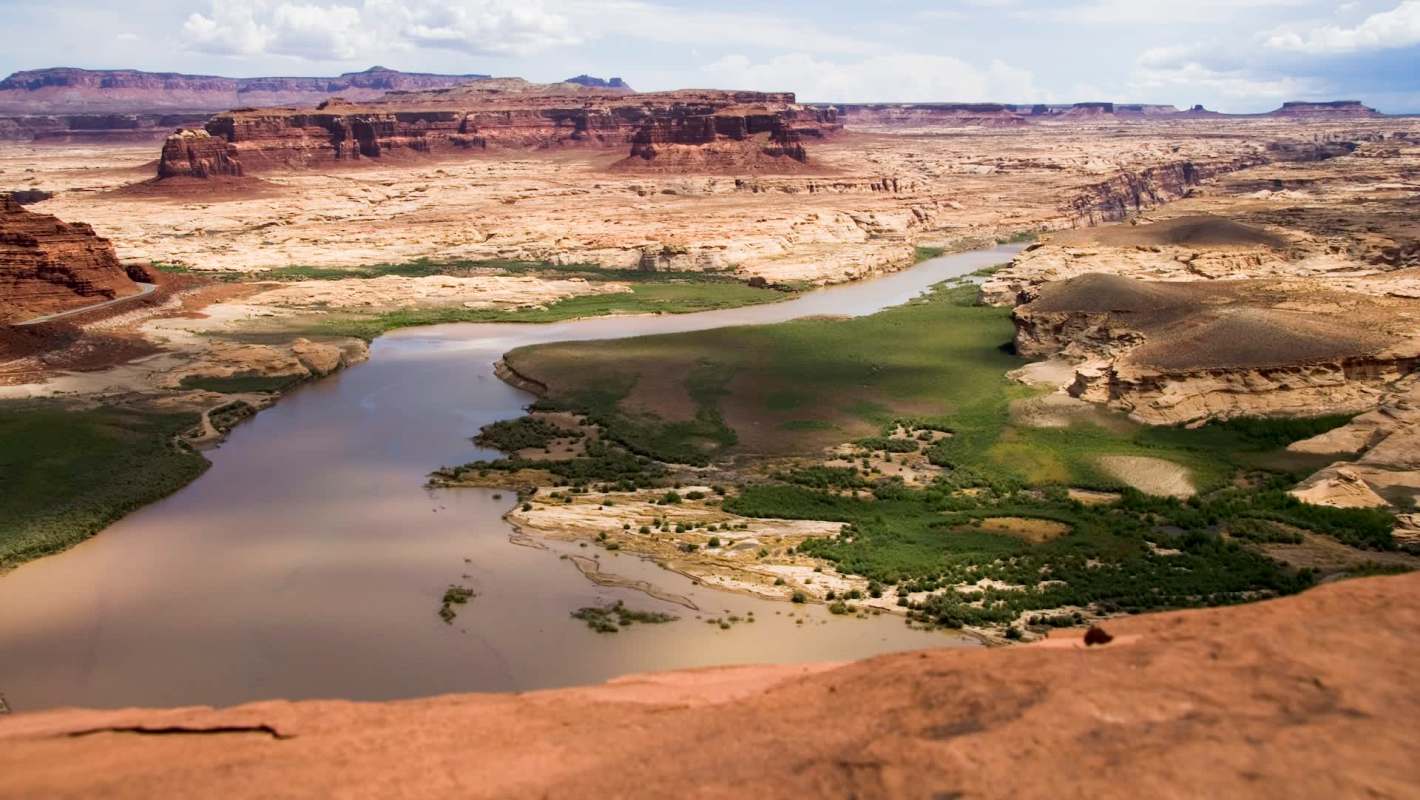
Lake Powell has dropped to its lowest point of 2026, and officials do not expect the downward trend to reverse soon.
Persistent drought, hotter conditions, and heavy water use are still squeezing one of the West's most important water supplies.
What's happening?
The reservoir set a new low for the year on June 30 after a temporary spring recovery, KJZZ reported.
A previous low for 2026 came on May 7. Levels then rose somewhat as Rocky Mountain snowmelt reached the reservoir and emergency releases from Flaming Gorge Reservoir, which spans Utah and Wyoming, added water.
Now less than one-quarter full, the reservoir behind Glen Canyon Dam sits only a little above the all-time low it reached in April 2023. Its high point this year came on June 1, and levels have been falling again since then.
This year's drop is part of a much longer pattern. Since the early 2000s, Lake Powell — the second-largest reservoir in the United States — has been receding as drought and climate-driven drying have stressed the Colorado River system while farms and cities continue drawing heavily from it.
TCD Picks » Quince Spotlight
💡These best-sellers from Quince deliver affordable, sustainable luxury for all




Jack Schmidt, director of the Utah State University Center for Colorado River Studies, told KJZZ that he expects the trend to continue through the rest of the year, putting Powell on track to hit fresh annual lows on a near-daily basis.
Why does it matter?
Further declines at Lake Powell could have consequences far beyond the reservoir's shoreline.
If levels sink too much, hydropower generation at Glen Canyon Dam could be forced to stop.
A steeper drop could also affect the dam's ability to move enough water downstream through the Colorado River system.
Worsening extreme weather disasters are making droughts hotter, longer, and more destructive. Those conditions can harm crops, drive up food and energy costs, reduce dependable drinking water supplies, worsen wildfire risk and smoke exposure, and put added pressure on local budgets needed for health, safety, and infrastructure.
As the water retreats, parts of Glen Canyon have reemerged, revealing dramatic rock formations and areas where native plants and animals are beginning to return.
What's being done?
To help shore up Powell and avoid near-term operational problems at the dam, federal officials have been relying on emergency steps such as releases from upstream reservoirs.
Those measures may reduce how quickly the reservoir falls, but they do not solve the deeper supply-and-demand imbalance.
Meanwhile, states and other Colorado River stakeholders remain locked in difficult negotiations over how to cut water use and stabilize the system. Some environmental advocates have pushed even further, arguing that Lake Powell should eventually be phased out so Glen Canyon can fully reemerge.

Get TCD's free newsletters for easy tips, smart advice, and a chance to earn $5,000 toward home upgrades. To see more stories like this one, change your Google preferences here.






