


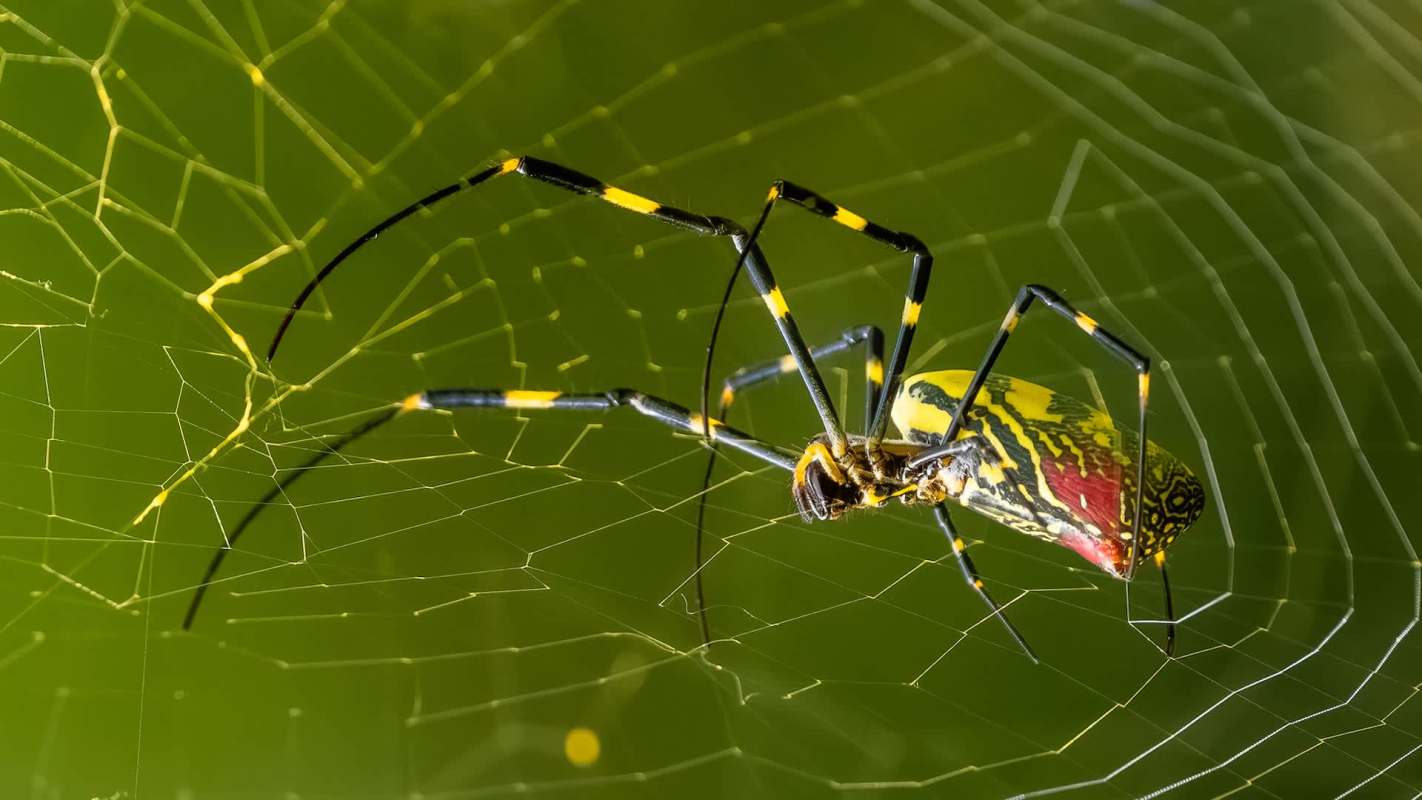
Gigantic invasive Joro spiders are showing up in places many people would never expect to see them: highway streetlights, gas pumps, parking lots, and other crowded areas saturated with traffic noise.
A new study published in the journal Physiological Entomology suggests the spiders are not unaffected by that chaos but that they may be especially good at putting up with it, which could help explain how they have spread so successfully through the United States.
What's happening?
Researchers in Georgia studied the spiders alongside their close relatives, golden silk spiders, to find out how they respond to road noise. The team collected spiders from both noisy and quiet locations, then exposed them to traffic-like pink noise in a lab setting while recording tiny movements in their abdomens to measure their heartbeats, according to National Geographic.
The results showed that the spiders experienced stress when exposed to the noise. Their heart rates increased, similar to how a person's heart rate might rise under pressure. But the reaction was modest.
That finding surprised researchers because earlier studies had shown the spiders can be skittish and easily startled. Even so, they are often found spinning large webs in places with constant disruptions, including beside heavily trafficked multilane roads, National Geographic reported.
Joro spiders have been present in the U.S. since 2014, and their ability to establish themselves in heavily developed areas may be one reason they have attracted so much attention. As one researcher put it, the spiders appear able to tolerate "crazy, very disturbed environments."
TCD Picks » Quince Spotlight
💡These best-sellers from Quince deliver affordable, sustainable luxury for all




Why is this important?
The findings matter for more than just anyone worried about walking into a huge spider web near a parking lot.
For one thing, Joro spiders are invasive, and a species that can tolerate noisy, built-up spaces may have an easier time spreading through towns, suburbs, and cities. That can add pressure to local ecosystems already experiencing habitat loss and other environmental stressors.
The study also points to a broader issue: Roads do more than divide landscapes — they create constant sound and vibration that can affect wildlife in ways people often miss. Spiders, in particular, detect both airborne sound and vibrations through their webs or the surfaces they occupy. That means they may effectively be getting "double the noise," as National Geographic put it.
That has real implications for communities trying to create healthier futures with more biodiversity. Roadsides are sometimes planted as pollinator habitats or wildlife-friendly green spaces, but if those areas are also chronically stressful for insects and arachnids, their value may be less than expected. In other words, simply adding habitat is not always enough if the surrounding conditions are still overwhelming for the animals meant to use it.
The research may also explain why some species do well in human-dominated environments while others fade away. Understanding that imbalance is important for conservation, especially as neighborhoods, transportation corridors, and other development continue to expand.
What's being done about Joro spiders and roadside noise?
One encouraging development is the research method itself. By using high-magnification video to monitor spider heartbeats, scientists now have a noninvasive way to measure stress in small animals that are often difficult to study. That could help researchers better understand how traffic, development, and noise affect not only spiders but other arthropods as well.
Experts say more research is needed to understand how animals that rely on vibration cope with noisy environments. Early evidence suggests spiders may even change the structure of their webs, which could inform better conservation strategies.
For communities and policymakers, the larger takeaway is that habitat quality matters just as much as habitat quantity. Protecting quiet green spaces, designing roadside plantings more thoughtfully, reducing unnecessary traffic noise, and supporting native habitat restoration away from the busiest corridors could all make a difference.
On the invasive species front, local monitoring and public awareness remain important. Tracking where Joro spiders are spreading can help researchers understand their impacts and give communities better information about how to respond.

Get TCD's free newsletters for easy tips, smart advice, and a chance to earn $5,000 toward home upgrades. To see more stories like this one, change your Google preferences here.







