


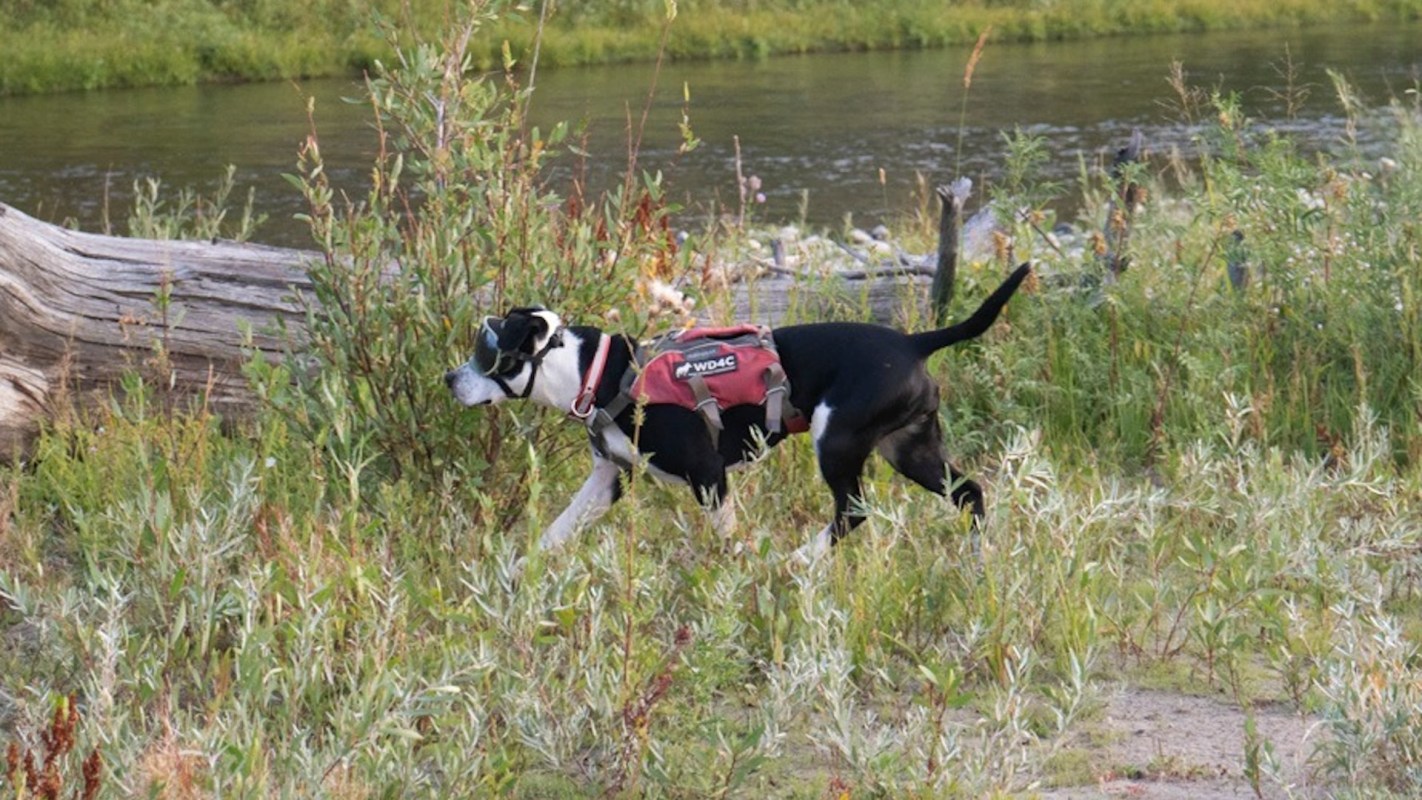
At the edge of the Snake River in Grand Teton National Park, a black-and-white dog moves through the brush, a red vest strapped across its back. A fallen tree stretches across the bank behind her, and the late-summer grasses reach up around her paws.
To an onlooker, it might seem like a casual stroll. But this dog is at work, and her task is precise: finding plants that don't belong here. According to Buckrail, the park highlighted these canines on National Dog Day, sharing photos and celebrating their role in detecting invasive plants that human crews often miss.
Trained by Working Dogs for Conservation, park officials called them "some of our best conservation allies." The animals are taught to locate invasive plants, such as salt cedar and perennial pepperweed, two species that spread quickly, crowd out native vegetation, and alter river habitats.
The scale of their contribution is striking. From 2020 to 2024, the dogs detected 190 new invasive plant sites along the river, about 75% more than human crews were able to find in the same period, according to the park. By catching infestations early, before they seed further downstream, the dogs give land managers a chance to stop the spread.
This work builds on decades of monitoring by the Jackson Hole Weed Management Association and the Teton County Weed and Pest District, which have been tracking invasive plants in the area for 24 years. In 2023, one site was identified as a likely seed source for many of the plants that had taken root farther down the Snake, which has become an illustration of how a single unchecked patch can alter an entire river corridor.
At the Craig Thomas Discovery and Visitor Center, visitors recently had the chance to watch the dogs in action during a public demonstration. The invitation from the park was straightforward: "Watch them work, learn about invasive species, and see why these four-legged teams are some of our best conservation allies."
The stakes are larger than a single plant or stretch of riverbank. Invasive species have drained reservoirs, reshaped forests, and silenced native bird habitats across the country. And in Grand Teton, it comes courtesy of a dog's natural instincts, redirected toward a different kind of game.
"These pups aren't just cute," the park noted in one post, but the work is anything but superficial. Each detection represents a small safeguard for the Snake River, a defense against invasive plants that, left alone, can overwhelm ecosystems. In Grand Teton, the line between preservation and loss sometimes comes down to a nose in the grass.
|
Do you think America does a good job of protecting its natural beauty? Click your choice to see results and speak your mind. |
 Definitely 👍
Join our free newsletter for good news and useful tips, and don't miss this cool list of easy ways to help yourself while helping the planet.
Cool Picks




