


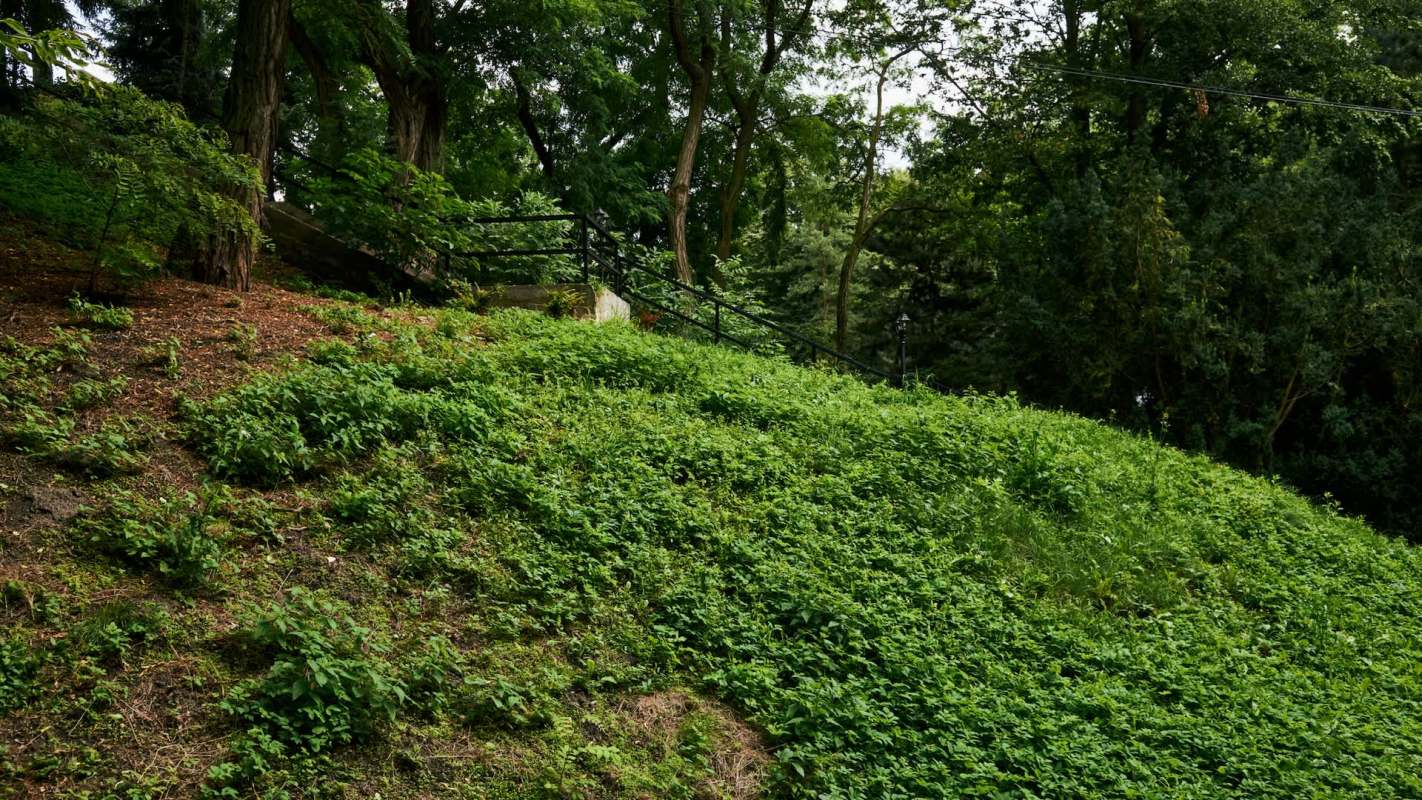
Government officials in Poland have warned the public about an invasive American mushroom species spreading deep within one of the country's oldest and most biodiverse forests.
What's happening?
According to TVP World, forest management officials have sounded the alarm about the proliferation of the slender golden bolete mushroom — which arrived in Poland in the early 2000s, according to research published in the journal Foods — in Białowieża Forest in Eastern Poland. The species initially appeared along the Baltic Coast and has since spread inland across Poland and other countries in Central Europe, including Latvia and Lithuania.
The mushroom, scientifically known as Aureoboletus projectellus, originated in Eastern North America and is considered invasive in Poland, with the potential to "disrupt native fungus populations and weaken local biodiversity," TVP World stated, citing the State Forests National Forest Holding explained.
"[The mushroom's] appearance in the region of a valuable natural site like the Białowieża Forest is a warning sign — nature is changing, and foreign species are more often encroaching on our environment," the agency said in a Facebook post, per a translation from TVP World.
Why is the invasive mushroom concerning?
Invasive species, whether they are mushrooms, plants, or insects, outcompete native species for resources such as food, water, and habitat, making it harder for them to survive. As such, the American mushroom could disrupt the food web in Białowieża Forest, which is home to many bird and mammal species, including the largest population of European bison. It is also the only Polish natural property designated as a UNESCO World Heritage Site and is considered the country's most popular national park.
Invasive fungi may harm forest health, as they push out indigenous species that play vital roles in breaking down organic matter, cycling nutrients, and creating habitats.
The impact on humans is likely minimal, as the forest management agency stated that the species is edible. However, the spread of the invasive mushroom may lead to the loss of potential medicinal compounds, as penicillin is produced by fungi. By displacing beneficial species, invasive ones have far-reaching effects on humans and ecosystems.
What's being done to stop its spread?
The state forest agency encouraged visitors to the national park to report sightings of the invasive mushroom. Scientists are also documenting its spread and continuing to monitor its ecological impacts, as it isn't yet fully understood how it could reshape the local environment. There are no active programs to stop its spread, as the fungus is already well-established and seems to have a symbiotic relationship with native pine trees. The focus is rather on tracking its expansion and continuing to gather information on its biological impacts.
Meanwhile, people have devised creative ways to contain the spread of other invasive mushrooms, from picking and eating them to incorporating them in dishes in a cook-off competition and using them in a solution to combat the spread of invasive trees. If you see an invasive mushroom growing in a forest or park near you, ask experienced mycologists or local foragers if it's edible, and try adding some to your favorite dishes.
|
Do you think America does a good job of protecting its natural beauty? Click your choice to see results and speak your mind. |
 Definitely 👍
💰Get TCD's free newsletters for easy tips to save more, waste less, and make smarter choices — and earn up to $5,000 toward clean upgrades in TCD's exclusive Rewards Club.
TCD Picks » Upway Spotlight
💡Upway makes it easy to find discounts of up to 60% on premium e-bike brands





Cool Picks






