


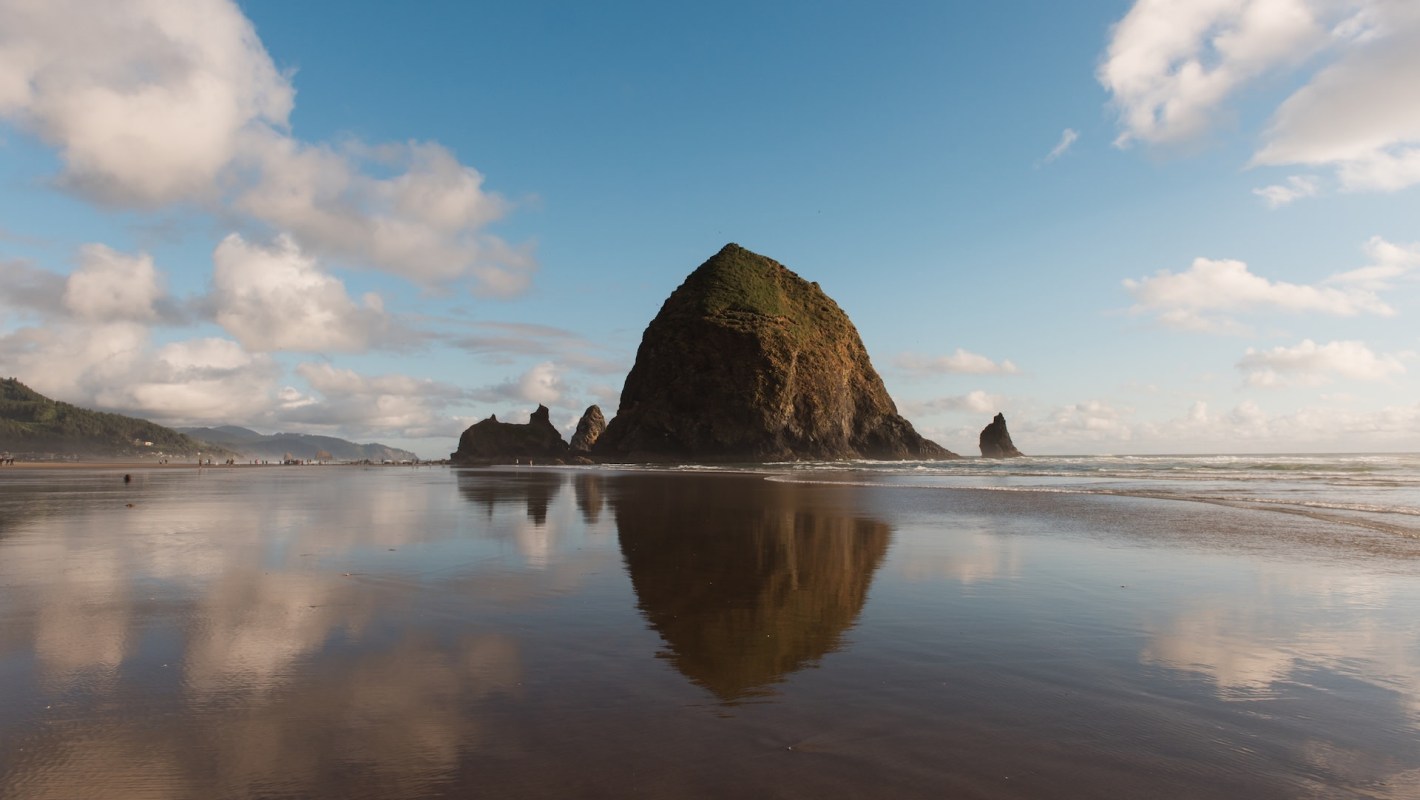
Seabirds at one of Oregon's most iconic spots have had a difficult year raising their chicks. Disturbing human behavior has only added to their struggles.
What's happening?
Seabirds at Cannon Beach's Haystack Rock in Oregon have had a challenging nesting season due to the presence of birds of prey. Bald eagles have caused issues for the local birds, like tufted puffins and black oystercatchers, who are trying to live in the area.
Regular behaviors like nesting and raising chicks have become even more difficult to do because of people. As reported by the Cannon Beach Gazette, an incident captured on camera in August 2025 showed a person aiming lasers at the nesting sites, causing birds to abandon their nests.
People have also been caught trying to climb Haystack Rock at night, causing birds to flee and leave their eggs and chicks vulnerable. A helicopter was reported for hovering over nests and flushing birds out of them.
A group of people was also found illegally harvesting sea stars from around the rock. And there have been incidents of people collecting mussels, which isn't allowed because Haystack Rock is a protected state garden.
"We have to be extra vigilant to take care of this area. So that way it continues for future generations. It doesn't take much to start really tipping it the wrong direction," said Jenny Gooldy of the Haystack Rock Awareness Program, per the Cannon Beach Gazette.
Why are these protected areas important?
Protected areas like these are often home to at-risk species that need protection to prevent populations from going extinct. Certain activities in these areas are prohibited to ensure that plants and wildlife can support or rebuild stable populations.
Protected areas preserve biodiversity and protect certain habitats to help plants and wildlife thrive. They can also help manage human-wildlife conflict and help educate people about the importance of the natural world.
What's being done about protecting wildlife?
Globally, the number of protected areas and habitat restoration projects is increasing as people realize that our future depends on us protecting nature.
In 2022, over 190 countries adopted the Kunming-Montreal Global Biodiversity Framework, intending to reverse habitat and species loss.
TCD Picks » Quince Spotlight
💡These best-sellers from Quince deliver affordable, sustainable luxury for all




According to the Nature Conservancy, this commitment entails protecting and managing 30% of the world's habitats by 2030. This includes those on land, in inland waters, coastal areas, and oceans.
|
Do you think America does a good job of protecting its natural beauty? Click your choice to see results and speak your mind. |
 Definitely 👍
Join our free newsletter for good news and useful tips, and don't miss this cool list of easy ways to help yourself while helping the planet.
Cool Picks






