


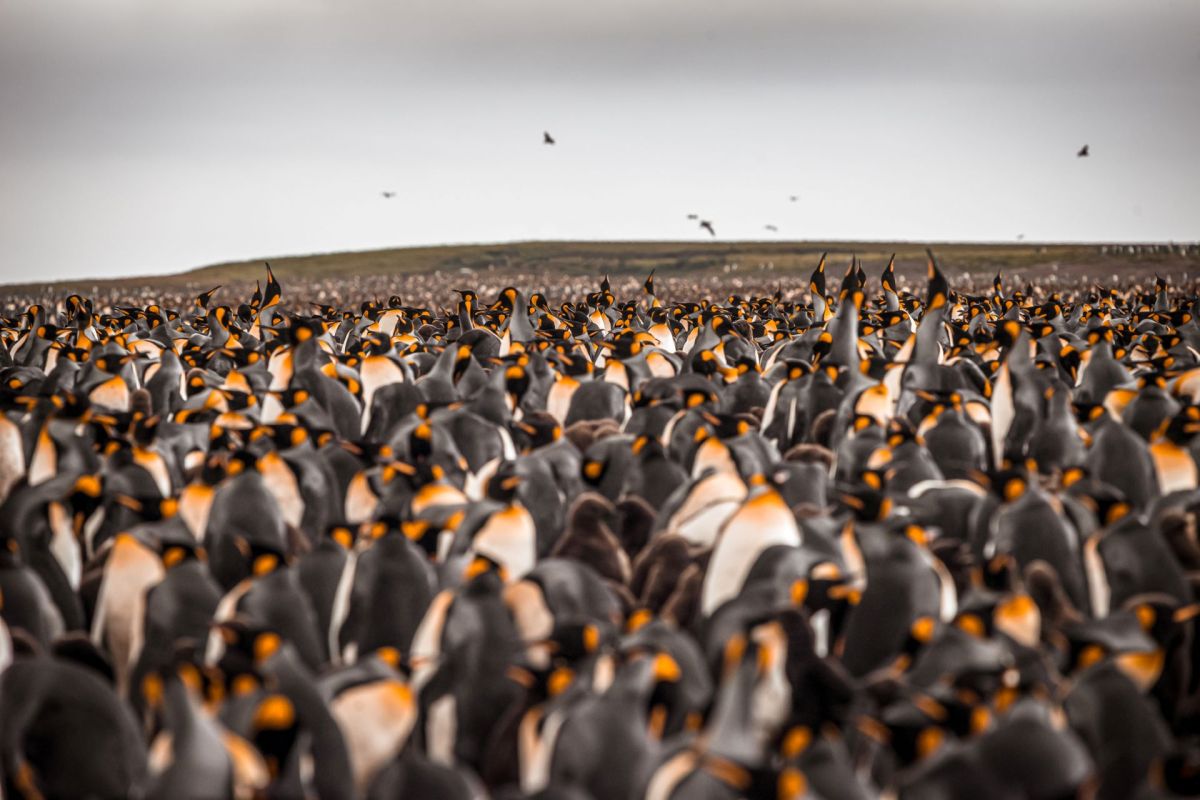
It's hard to think of Antarctica without picturing thousands of penguins waddling happily on the ice, but that may be the future.
What's happening?
Sea ice in Antarctica is melting at an alarming rate. Euronews.green recently reported that a new study published in Communications Earth & Environment found that the loss poses an enormous threat to emperor penguins.
Researchers from the British Antarctic Survey examined emperor penguin colonies in the central and eastern Bellingshausen Sea region. They found that the sea ice loss has led to the penguins experiencing unprecedented breeding failure.
In one region west of the Antarctic Peninsula, where there was total sea ice loss in 2022, chicks from four out of five colonies perished. In this zone, sea ice didn't start to re-form until late April of 2023.
"We have never seen emperor penguins fail to breed, at this scale, in a single season," said lead author of the study Dr. Peter Fretwell.
The scientists also examined satellite images, and the image records showed that by the end of December 2022, sea ice extent was the lowest experienced in 45 years, as reported by Euronews.green.
"The loss of sea ice in this region during the Antarctic summer made it very unlikely that displaced chicks would survive," Fretwell added.
The study's findings support predictions that more than 90% of emperor penguin colonies will be "quasi-extinct" by the end of this century.
Why is this potential die-off so dire?
Emperor penguins are a crucial part of Antarctica's food chain. They eat creatures like squid and small fish, helping to control their populations, and are also an important food source for predators like leopard seals and large sharks, according to the World Wildlife Fund.
Penguin eggs and the smaller young penguins provide food for land animals such as seabirds, foxes, leopards, and even crabs in warmer climates. The penguins also carry nutrients between land and sea, enriching both ecosystems with their feces.
TCD Picks » Quince Spotlight
💡These best-sellers from Quince deliver affordable, sustainable luxury for all




Their loss will significantly affect the health and viability of the ocean and numerous other species living in and around it
What can be done to protect the penguins?
Earth's rising temperature is the only major factor influencing the long-term population change of emperor penguins.
According to Earth.org, a professor at the University of Exeter and lead author of a study on extreme Antarctic events named Martin Siegert said that reducing planet-warming air pollution to net zero is our "best hope of preserving Antarctica."
"This must matter to every country — and individual — on the planet," he said.
Individually, we can limit our own heat-trapping gases by avoiding single-use plastics, integrating clean energy at home when possible, replacing old appliances with energy-efficient models, and limiting the burning of methane gas by taking public transportation, riding a bike, or upgrading to an electric vehicle.

Join our free newsletter for cool news and cool tips that make it easy to help yourself while helping the planet.
Cool Picks






