


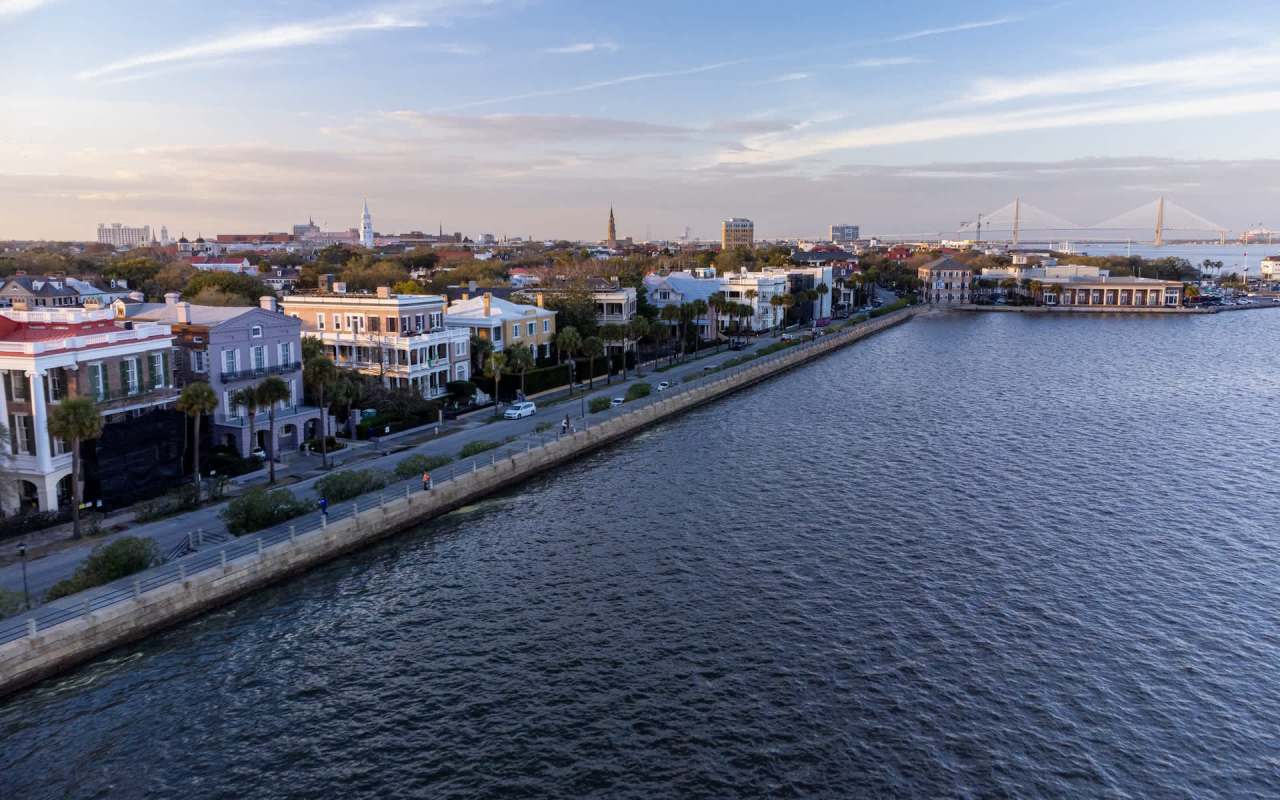
Concern for the safety of coastal communities on the Eastern Seaboard has been percolating since Hurricane Sandy brought many of them to their knees in 2012.
Although the issue is typically viewed as a "future problem," a new article in The Guardian demonstrated that in coastal enclaves like Charleston, South Carolina, it's been playing out for years — and as is often the case, working-class people bear the brunt of it.
What's happening?
Sandy didn't make landfall in Charleston, but like residents of waterfront communities on the East Coast, coastal flooding has become increasingly problematic in recent years.
Charleston resident Luvenia Brown, 58, told The Guardian that she'd become more focused on weather-related news, as items in her yard began disappearing in ever more frequent flooding.
Brown is reluctant to relocate, but she admitted that as time goes on, the prospect has begun to feel inevitable.
"If the water continues rising the way it is, I don't want to be here. I love my area. But I think my life is more important," Brown said. At the same time, Charleston and the federal government teamed up to plan the construction of a $1.3 billion seawall.
Seawalls are a form of climate adaptation, and the project in Charleston would provide protection for the city's historic downtown district — while leaving middle and working-class neighborhoods unshielded.
According to The Guardian, Charlotte's seawall provides no cover for "lower-income neighborhoods like Rosemont, a historically Black community bordered by a freeway and hemmed in by industrial sites," making residents "more exposed to rising waters than ever."
Ana Zimmerman and her husband bought a house in the coastal suburb of James Island in 2005, and by 2017, flooding had destroyed the home. Zimmerman said the experience led her to become an "unintentional flood activist," and she feared that help wouldn't come.
"Entire neighborhoods will have to move. But the vulnerable among us, there will be no one there to help them, save them, and they will not be able to save themselves," she warned.
TCD Picks » Quince Spotlight
💡These best-sellers from Quince deliver affordable, sustainable luxury for all




|
How often do you worry about having your personal info stolen? Click your choice to see results and speak your mind. |
 Never 😌
 Why is this so important?
Throughout The Guardian's coverage of Charleston's flooding dilemma, one theme kept emerging: This kind of flooding was different and devastating.
Coastal communities are accustomed to nuisance flooding, which is predictable, occasionally disruptive, but rarely dangerous, and typically occurs during high tides. Flooding can be a form of extreme weather, but it's also occasionally exacerbated or caused by it.
As temperatures rise, sea levels rise in tandem. The Guardian's coverage made it clear that flooding isn't a new problem for Charleston — but higher temperatures and hotter sea surfaces act as an accelerant for all forms of extreme weather.
Floods, hurricanes, and wildfires have always been part of our weather patterns, but an overheating planet makes them costlier and deadlier.
What's being done about coastal flooding?
Charleston's seawall plan is a fantastic example of what's being done about at-risk coastal communities as flooding becomes more common.
Constructing a seawall makes the area more resilient, but it's not comprehensive and leaves too many coastal areas exposed and vulnerable.
Brown's strategy of keeping tabs on key climate issues is smart and imperative as climate risk profiles rapidly shift.

Join our free newsletter for good news and useful tips, and don't miss this cool list of easy ways to help yourself while helping the planet.
Cool Picks






