


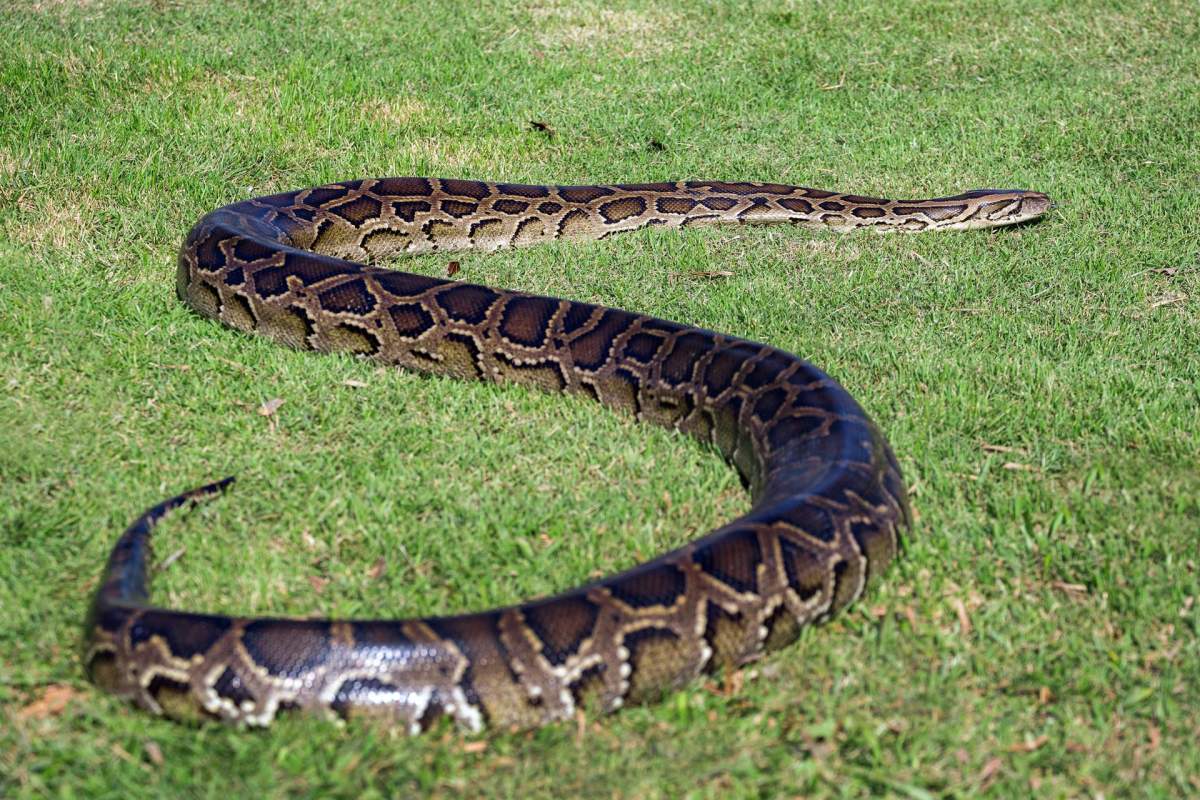
Florida's Burmese pythons appear to be on the move, and the problem may no longer be limited to the Everglades.
WESH News reported that, after more than two decades of being established in the Everglades, the giant invasive snakes are being found farther north, raising new concerns for wildlife, ecosystems, and nearby communities.
According to local experts cited by the Orlando news station, sightings of Burmese pythons are increasing in Brevard County, which could be a sign that the species is expanding its range.
That's a big deal because invasive predators can disrupt entire food webs, making it harder to protect native animals and restore balance in places Floridians rely on for recreation, tourism, and biodiversity. With no natural predators in Florida, Burmese pythons essentially have free rein.
The pythons have been wreaking havoc across the Everglades, eating everything they can get their jaws around — which is most animals. One recent video shows a python swallowing a 77-pound deer.
When an invasive species begins to remove resources from the system, it creates ripple effects that can alter population levels, weaken biodiversity, and disrupt the natural checks and balances that keep habitats healthy.
TCD Picks » Quince Spotlight
💡These best-sellers from Quince deliver affordable, sustainable luxury for all




Researchers had hoped colder weather and occasional hard freezes in Florida would limit how far the snakes could spread. But newer studies suggest the pythons have figured out ways around that.
WESH reported that during cold spells, they can hide in burrows used by threatened gopher tortoises or invasive armadillos, and may even reproduce there. That ability to survive cooler conditions could help explain why the species is now being found farther north.
State wildlife officials and ecologists are trying several approaches to control the population, including research into where pythons are appearing, organized python hunts, tighter rules on where the animals originate, and even using opossums to help locate the massive snakes.
Experts also suspect some of the snakes now showing up in Brevard may be former pets that were released once they became too big to handle, highlighting the unintended consequences of releasing exotic pets into the wild.
If residents spot one, the advice is simple: Don't touch it. Instead, report it to the Florida Fish and Wildlife Conservation Commission, which also recommends using the I'veGot1 app to flag invasive species sightings.

Get TCD's free newsletters for easy tips, smart advice, and a chance to earn $5,000 toward home upgrades. To see more stories like this one, change your Google preferences here.







