


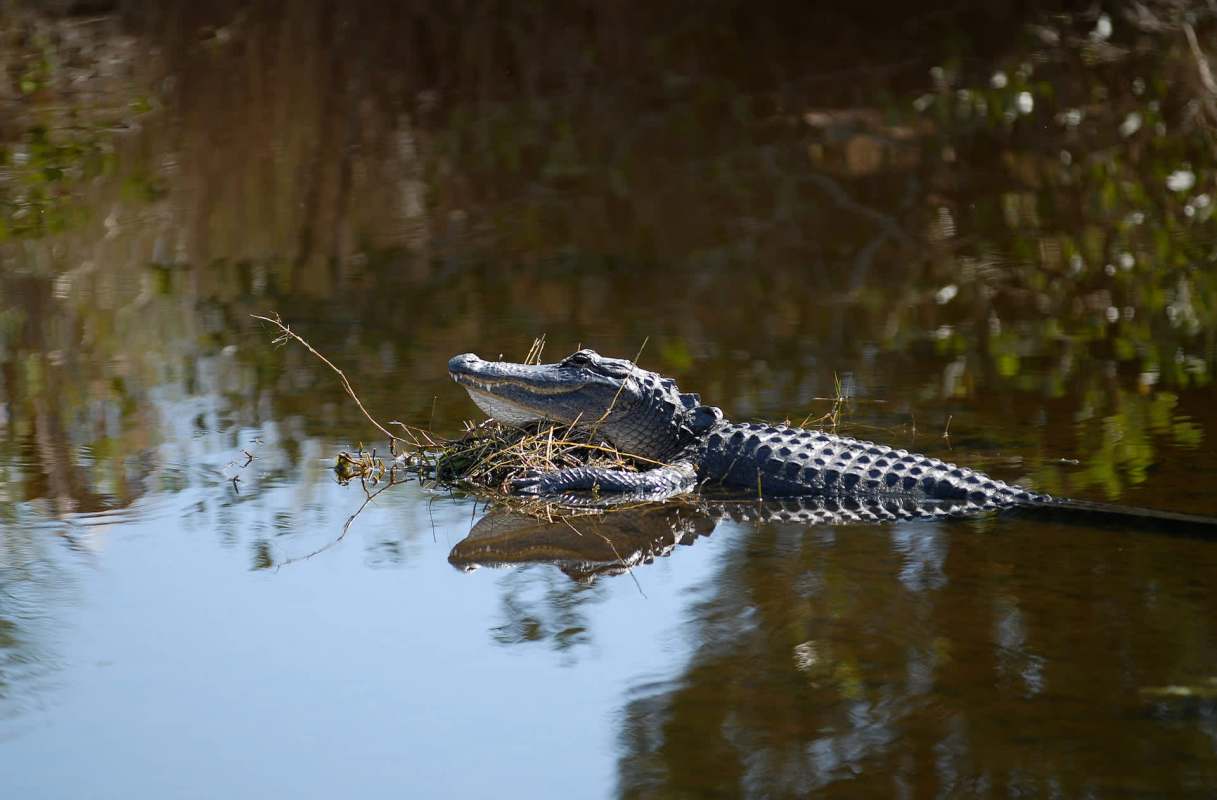
TikToker Kerry (@floridawashdad) posted a video of tourists paddling in a local Florida river that left commenters utterly frustrated. Not only were these people inexperienced at steering the canoe, but they also paddled themselves right into a log where a baby alligator was resting.
@floridawashdad #florida #wildlife ♬ original sound - Kerry
Kerry's video documents an audible gasp just before the three tourists hit a tree and spot the baby alligator within paddle's reach of their boat.
A paddleboarder helped them away from the scene.
"You guys are good," someone called out as he rushed over. He swiftly sandwiched his vessel between the canoe and the log, creating a barrier between the wildlife and the tourists, and the alligator leapt into the water.
Users in the comments section were not only frustrated by the tourists' lack of skills, but they were also bothered by their intrusion on the local wildlife's habitat.
"If you can't swim or paddle a boat, STAY AWAY FROM WATER especially with 🐊🐊🐊," one said.
Another person noted, "That was a young gator that wasn't worried about them until someone got closer."
Adult alligators are apex predators, which means they sit at the top of the food chain with no natural predators. Growing more than 12 feet long and weighing over 1,000 pounds, adult alligators easily overpower smaller prey.
Baby alligators are born 6 to 8 inches long, weigh only a few ounces, and possess strong jaws and sharp teeth.
Their bites can still cause serious problems, but alligators don't seek out humans as a food source. In fact, 96% of human-alligator interactions resulting in injury or death are the fault of humans, a University of Florida study found. Alligators have a natural defense response that gets triggered when humans come too close.
TCD Picks » Quince Spotlight
💡These best-sellers from Quince deliver affordable, sustainable luxury for all




|
Do you worry about getting diseases from bug bites?
Click your choice to see results and speak your mind. |
 Absolutely 👍
 Human-wildlife encounters are not only harmful for humans, but in some cases they also result in the euthanization of wildlife. Staff at Yellowstone National Park were forced to put down a bear after it displayed concerning behavior around human campers.
Climate and weather pattern shifts, as well as human development, are destroying natural habitats and spreading diseases, making human-wildlife interactions more frequent.
Always take precaution and stay vigilant when entering spaces where wildlife live. Animals do not usually provoke encounters unless they feel threatened, so always maintain and observe them from a safe distance.
"They panicked," one user commented.
"They shouldn't be on the river," another commenter stated.
Someone else added: "At all! They endanger themselves and others."

Join our free newsletter for good news and useful tips, and don't miss this cool list of easy ways to help yourself while helping the planet.
Cool Picks






