


An undergrad student at Ohio's Xavier University shared some troubling plant growth to r/tree.
"Our school has a huge invasive problem," they said, posting several pictures of Amur honeysuckles.
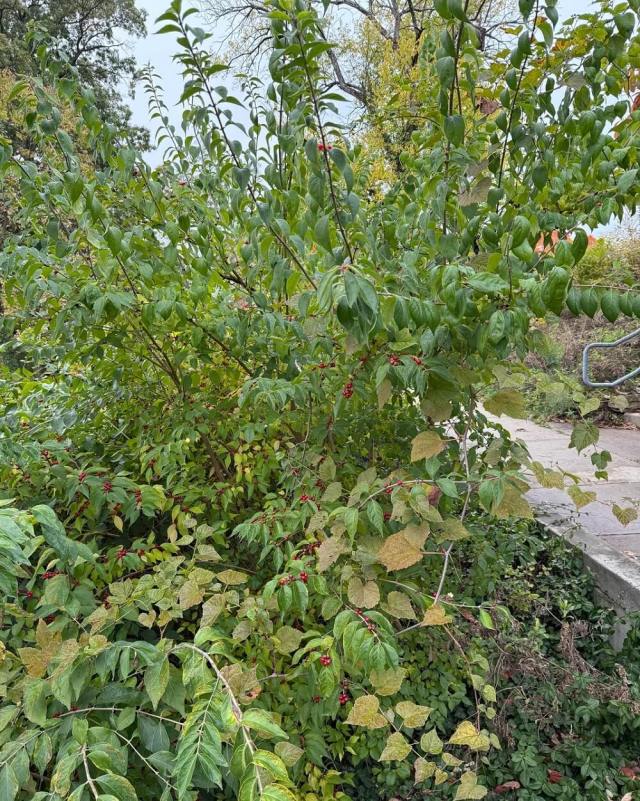
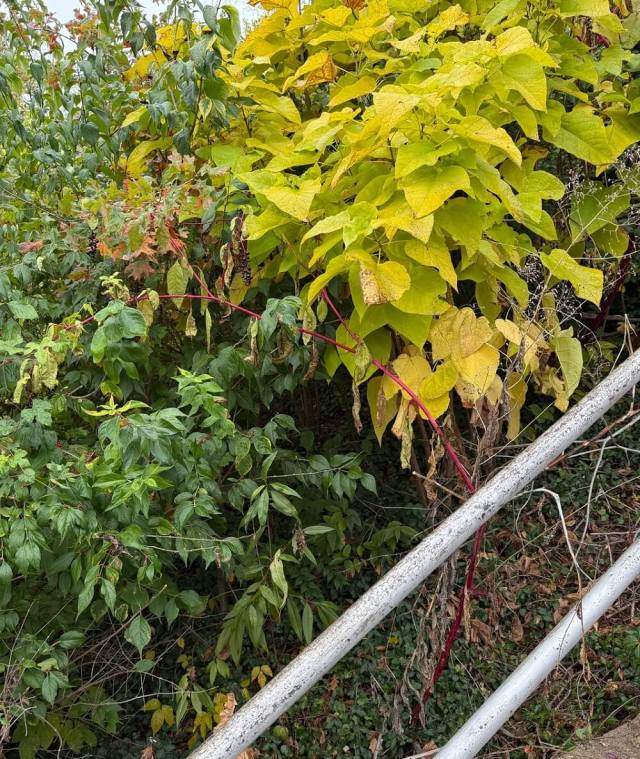
The OP had been researching the plant species for an ecology lab and was shocked by what they found.
"These pics were taken a month ago on the western side of our campus," they explained. "I originally saw 2 but then I discovered at least 20 or more of them growing within the same area."
Such rapid growth is, unfortunately, unsurprising. A native of northeastern Asia, the Amur honeysuckle was introduced to southern Ohio in the late 1950s and has since established itself throughout much of the eastern U.S., according to the Ohio Department of Natural Resources. Amur honeysuckles can grow up to 15 feet and quickly outcompete native shrubs and trees.
"But the staggering number of them growing in the same area allowed me to see how aggressive they really are!" the OP exclaimed.
Luckily, Amur honeysuckle is relatively simple to remove. If you catch it at the beginning of its lifespan, its root system will be shallow and easy to dig out.
However, they aren't always caught early enough.
"This is just a mere sprinkle of it," one commenter said. "Where I'm at in middle TN it is legitimately on 75% of properties or more."
Invasive plants like the Amur honeysuckle can be a real pain for homeowners and communities. For example, one homeowner mistakenly planted three invasive species in their garden that quickly took over their yard. And in Connecticut, a popular swimming spot was clogged with invasive weeds, making it impossible to swim or boat.
TCD Picks » Quince Spotlight
💡These best-sellers from Quince deliver affordable, sustainable luxury for all




|
Should schools teach more about gardening and lawn care?
Click your choice to see results and speak your mind. |
 It should be a main subject 💯
 While removal methods vary from plant to plant, the best way to combat invasives in the long run is to invest in native plants. Switching to a natural lawn, for instance, has multiple financial and ecological benefits.
Native grasses and/or wildflowers are well-adapted to your area. They require less water and treatment than typical monoculture lawns, reducing your expenses.
Plus, they benefit helpful pollinators, including bees, butterflies, and hummingbirds, upon which an estimated 35% of the world's food crops depend, according to the U.S. Department of Agriculture.
The earlier commenter continued: "All we can do as humans is to try to educate those that are open to it and do our part to fix the problem. Ridding of any invasive species even if just a seed is better than nothing."

Get TCD's free newsletters for easy tips to save more, waste less, and make smarter choices — and earn up to $5,000 toward clean upgrades in TCD's exclusive Rewards Club.
Cool Picks






