


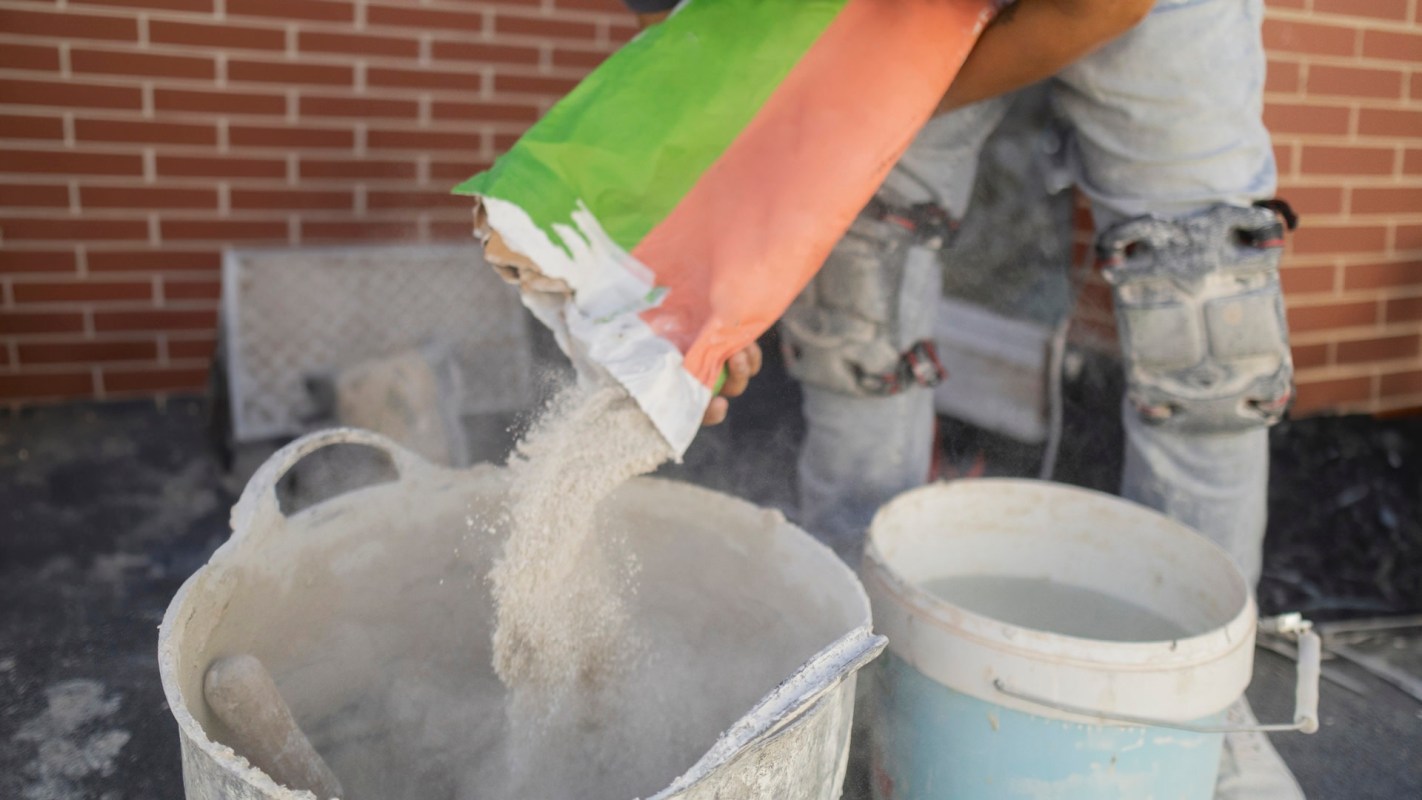
Cement and concrete are everywhere, used to build millions of structures and buildings, and they unfortunately have a continued impact on the environment. But scientists in China have found the potential to reduce that impact with a little tinkering with the formula for cement to help it reduce heat retention and lower the need for air conditioning.
Research published in Science Advances, reported on by Tech Xplore, explained that researchers at China's Southeast University's Department of Materials Science and Engineering modified cement to reflect light and emit heat rather than absorbing it, using tiny reflective crystals of a mineral called ettringite on the surface.
"This breakthrough holds the potential to turn the heavy cement industry into a negative-carbon emission system, where supercool cement could play a key role in driving an energy-efficient, carbon-free future for the construction industry," the researchers said in their paper, according to the outlet.
Cement is created by firing limestone, clay, and other materials in a kiln, which emits carbon dioxide, just under a pound for each pound of cement produced, according to reporting from Princeton University. When combined with other materials to make concrete, even more carbon dioxide is created, a whopping 4 billion tons annually.
As Tech Xplore explained, buildings account for 40% of global energy use and 36% of carbon pollution. If the new concrete, which was shown to be 5.4 degrees Celsius cooler than the surrounding air even under midday sun, is implemented in more construction, it can further reduce the need to run expensive and energy-intensive air conditioning units in buildings, as it will keep the overall structure cooler.
Cooler buildings also mean cooler cities. Urban areas with denser populations and structures are about 1-7 degrees Fahrenheit higher than temperatures, according to the EPA, and have detrimental effects on people living within them. Research last year showed that heat island areas retain high temperatures longer.
The potential new cement mix could help reduce that impact and make for a cooler future for urban residents and beyond.
|
Do you think all new homes should use heat pump technology? Click your choice to see results and speak your mind. |
 Definitely 💯
Join our free newsletter for weekly updates on the latest innovations improving our lives and shaping our future, and don't miss this cool list of easy ways to help yourself while helping the planet.
Cool Picks





