


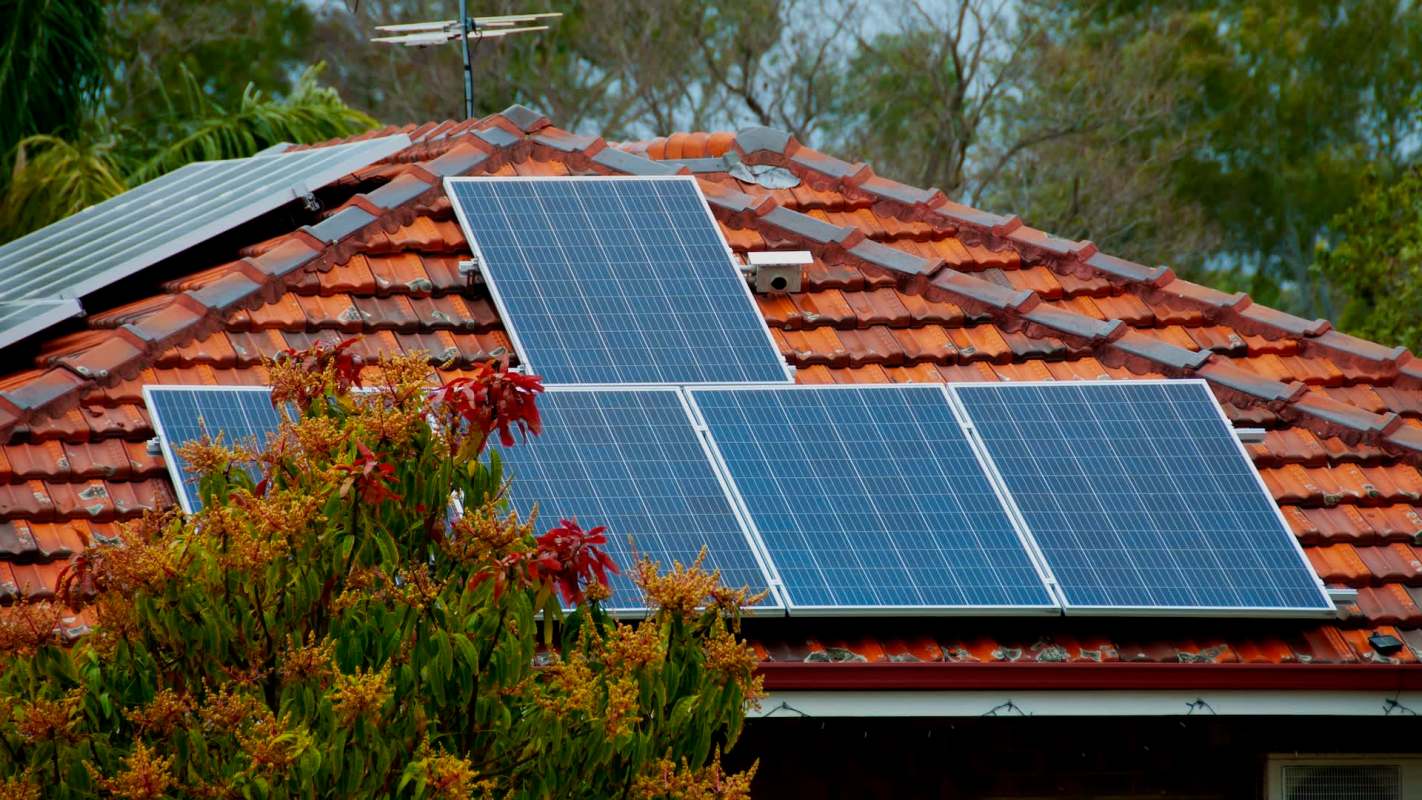
Solar energy experts highlighted a crucial specification homeowners should consider before adding a rooftop array: conversion rates.
"Not all solar panels produce the same amount of electricity from sunlight. The difference between an average panel and a highly efficient one can mean fitting a complete solar energy system on a smaller roof — or generating substantially more power from the space you have," EnergySage's Emily Walker wrote.
The metric directly impacts how much money and air pollution homeowners save and cut by adding the suncatchers. Most of the top silicon-based models on the market convert at least 20% of sunlight to electricity, but exceptional ones reach 22%, according to EnergySage. A product in development by Maxeon has hit nearly 25%, and panels using promising perovskite could reach nearly 30%. But longevity hurdles must first be cleared for the latter tech to be scaled, Solar Magazine reported.
EnergySage's list of the most efficient panels of 2025 had Maxeon's at the top, at 22.8%. Qcells, Solarever USA, Canadian Solar, and REC Alpha Pure products rounded out the top-to-bottom index, with rates from 22.5% to 22.2%.
EnergySage is a vetted resource that can help you find the right product at the right price as well as a trusted installer. Tools include a mapping feature that compares quotes by state along with incentives that can help you reap the most benefits.
The right setup can reduce or even eliminate your electric bill — savings backed up by a government study. EnergySage also has a list of the top models based on efficiency. But Walker wrote that you don't necessarily need the highest-rated kind. It depends on homeowner preference.
"Higher-efficiency panels are typically more expensive, but depending on your energy needs and the configuration of your roof, they can be worth it," she said.
A hypothetical scenario had a higher-rated system costing around $25,000, while a setup with a slightly less efficiency cost about $20,500. After 25 years, the difference in savings was $680. In both cases, the net gain after a couple of decades was right around $40,000, so either choice banks significant cash in the long term.
Save $10,000 on solar panels without even sharing your phone number Want to go solar but not sure who to trust? EnergySage has your back with free and transparent quotes from fully vetted providers that can help you save as much as $10k on installation. To get started, just answer a few questions about your home — no phone number required. Within a day or two, EnergySage will email you the best local options for your needs, and their expert advisers can help you compare quotes and pick a winner. |

That's in addition to reducing heat-trapping air pollution that's causing more frequent and intense extreme weather and unbearable heat waves, NASA's experts report.
Other factors also contribute to panel efficiency, including positioning, reflection, temperature, and operation. Simply cleaning the panels regularly can make a difference.
|
What's the biggest thing stopping you from going solar? Click your choice to see results and speak your mind. |
 The cost 💵
 EnergySage can help you sort through the metrics, putting together a plan that can save you up to $10,000. More benefits can be realized by pairing the panels with upgraded appliances such as an efficient heat pump. The Cool Down's HVAC Explorer will match you with partners and quotes and find the right installer.
The International Energy Agency reports that modern heat pumps are up to five times more efficient than gas boilers, making them a great upgrade that can both heat and cool your home. The Department of Energy adds that popular ductless air-source models can reduce your electricity use for heating by 75%.
More From EnergySage
💡Go deep on the latest news and trends shaping the residential solar landscape

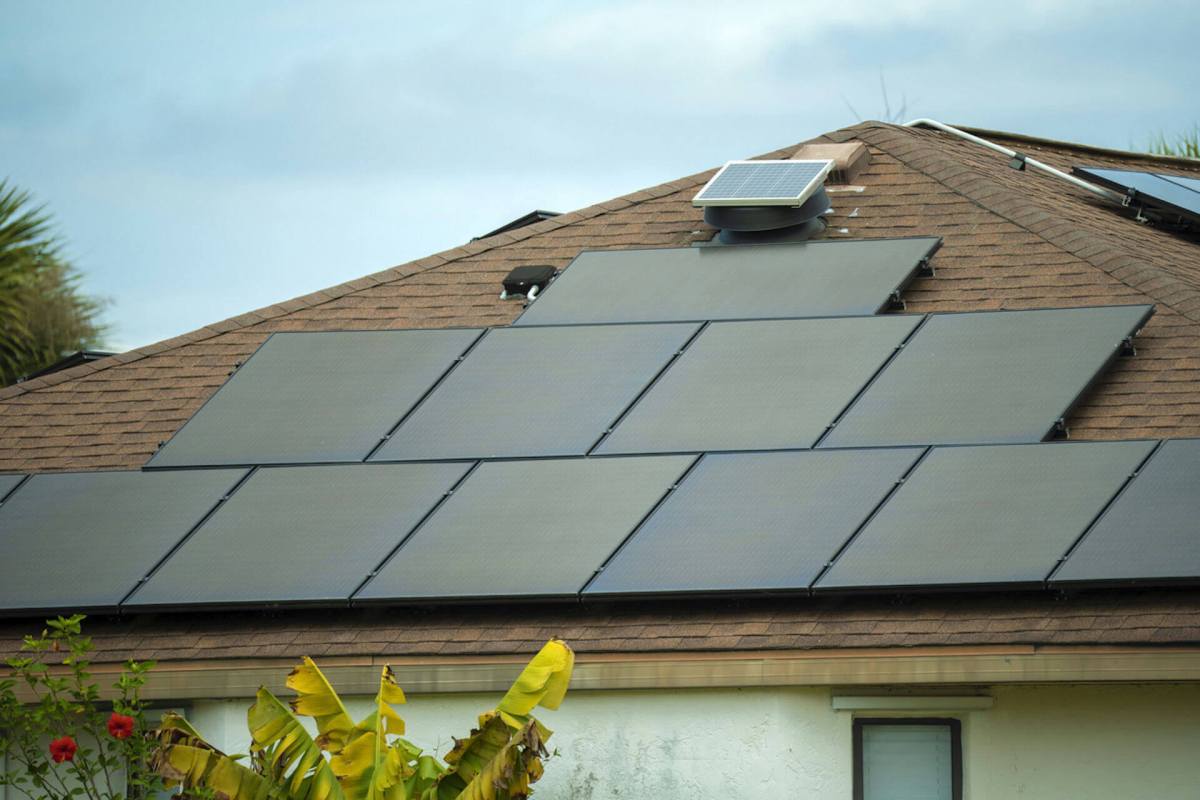



On the solar front, efficiency rates continue to climb. The first cell invented by Charles Fritts in 1883 only converted about 1% of sunlight into electricity, according to the World Economic Forum.
The arrow is solidly pointed sunward.
"Solar panels will likely become even more efficient in the coming years. Researchers have achieved 47% efficiency in a lab," Walker wrote.

Get TCD's free newsletters for easy tips to save more, waste less, and make smarter choices — and earn up to $5,000 toward clean upgrades in TCD's exclusive Rewards Club.
Cool Picks


