


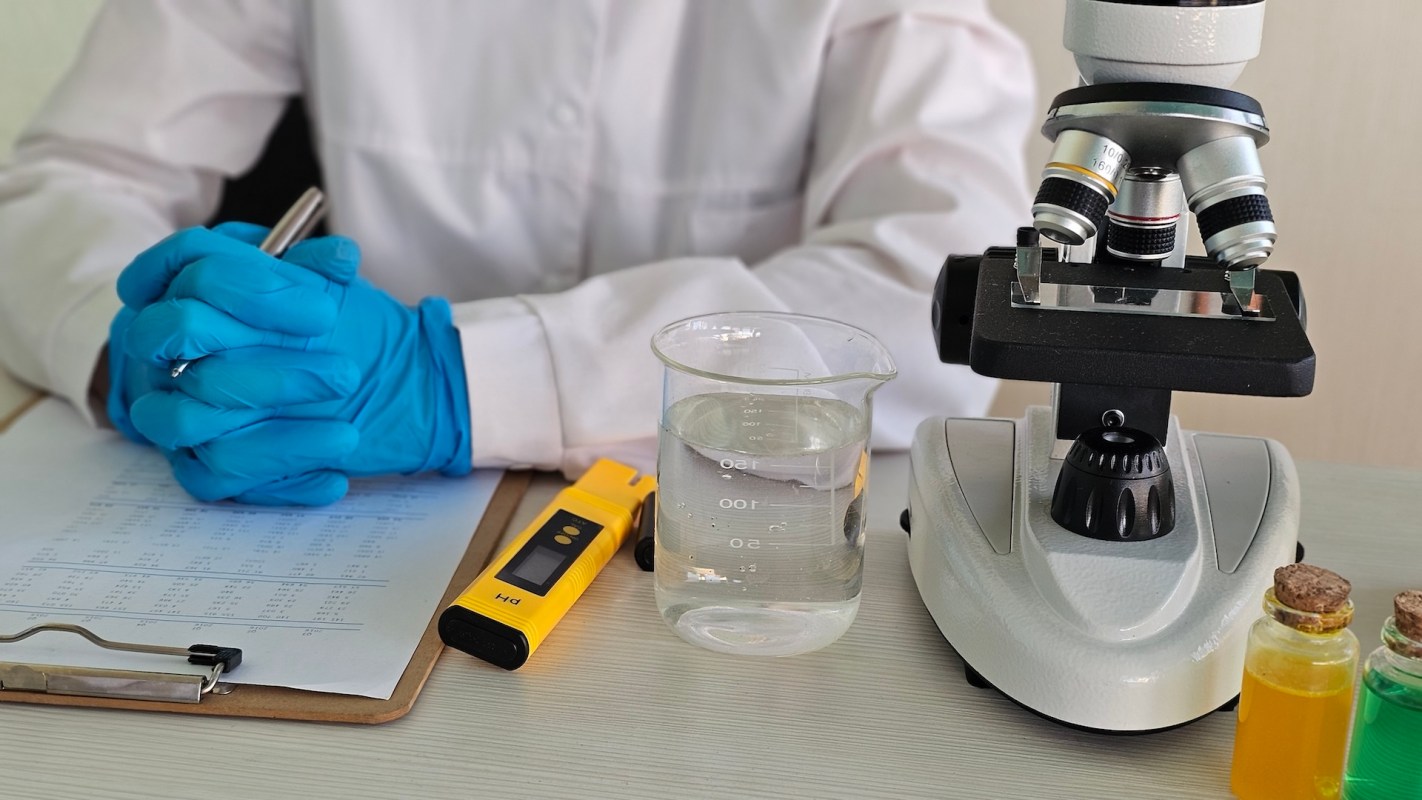
One of the most invisible and elusive forms of plastic pollution might have met its match.
South Korean scientists have unveiled a breakthrough water-filtration technology that could reduce human exposure to ultrafine nanoplastics (under 100 nanometers) that are nearly impossible to remove with conventional systems.
A research team at Sungkyunkwan University developed a reusable, self-powered electrokinetic filtration system capable of removing more than 99% of nanoplastic particles smaller than 50nm, even under commercial-scale, high-flow conditions.
Nanoplastics — particles thousands of times thinner than human hair — are small enough to pass through biological membranes in humans and have been linked to immune dysfunction, hormonal disruption, and increased cancer risk. Studies have found thousands of these particles in a single bottle of water, largely because existing water treatment plants struggle to capture plastics at such tiny sizes.
Published in the journal Materials Today, the study detailed that the system uses electricity rather than pressure-based membranes to catch nanoparticles. Researchers coated a porous metallic filter with magnesium oxide and a specially engineered polymer, then applied a low-voltage electric field that attracts negatively charged nanoplastics and pulls them out of the water.
The technology also generates electricity through its own mechanical motion. This could potentially lower the costs for utilities, rural communities, and developing regions where clean water is scarce. It performed well with both tap water and river water, reducing contaminants to levels that meet World Health Organization drinking water standards.
By reversing the electric field to detach trapped nanoplastics from the surface, the filter is also reusable. Tests showed the system maintained more than 93% efficiency after 20 reuse cycles.
By reducing reliance on energy- and membrane-intensive filtration systems, the technology could lead to real savings for households and improve long-term health.
While breakthroughs like this are critical to reducing microscopic plastic pollution, reducing plastic use at the source remains extremely important. Everyday choices like opting for a reusable water bottle instead of a plastic one can keep the material out of the environment.
A refillable bottle will easily pay for itself within a year, and some companies even offer store credit for your old bottles when it's time to upgrade. It also signals to the corporations responsible for massive amounts of plastic waste that a change is necessary.
TCD Picks » Upway Spotlight
💡Upway makes it easy to find discounts of up to 60% on premium e-bike brands





|
What's the most you'd pay per month to put solar panels on your roof if there was no down payment?
Click your choice to see results and speak your mind. |
 $200 or more 💰
 "Going forward, the technology can be extended to various water purification applications, including bacterial removal and selective capture of valuable metal resources," according to lead researcher Professor Jeong-Min Baik in a SKKU press release.
The research team has filed a domestic patent and is accelerating follow-up studies aimed at commercialization.

Get TCD's free newsletters for easy tips to save more, waste less, and make smarter choices — and earn up to $5,000 toward clean upgrades in TCD's exclusive Rewards Club.
Cool Picks





