


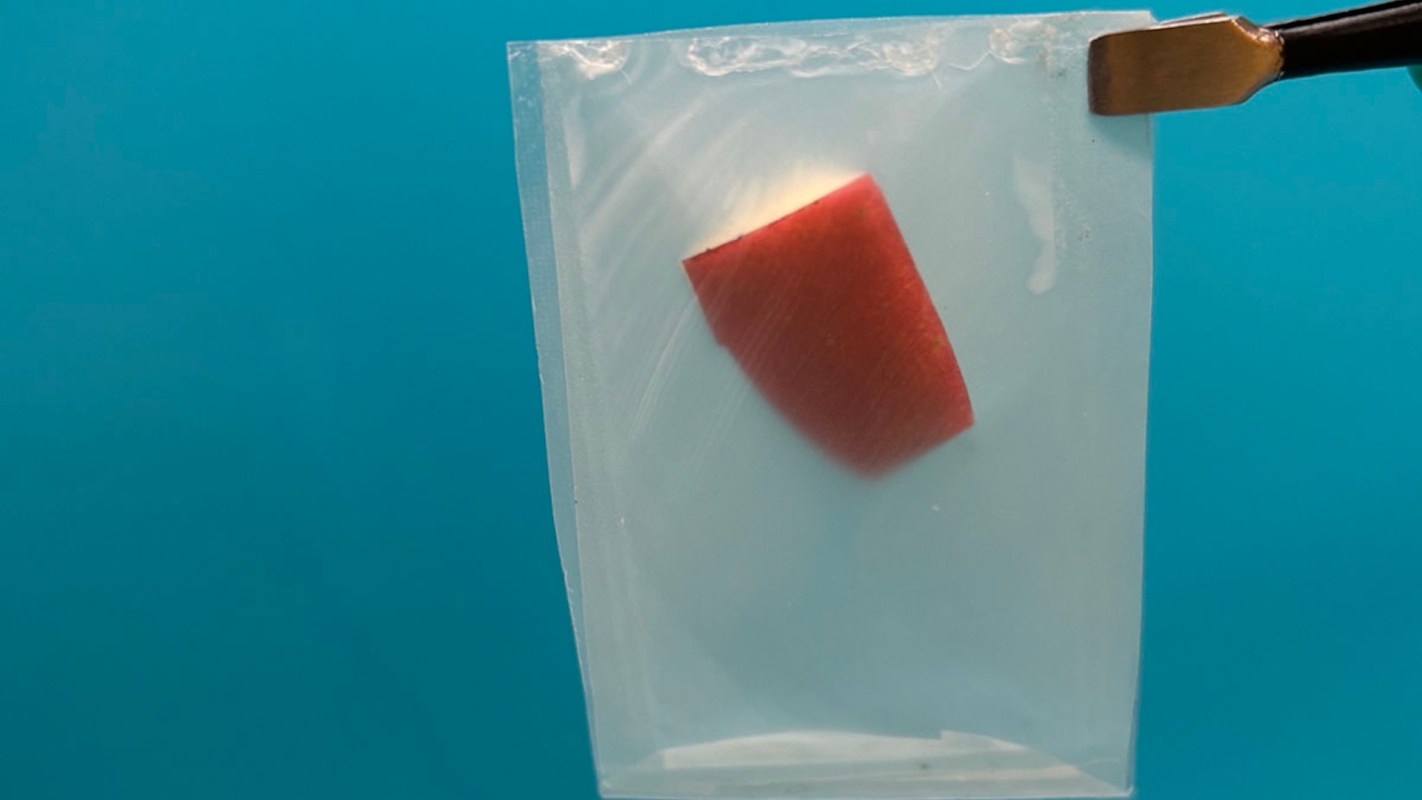
A research team from Washington University, St. Louis, recently developed a leaf-inspired bioplastic that holds up well in comparison to standard petroleum-based plastics in terms of resilience but far exceeds them on the sustainability front.
While convincing to a certain degree, most modern-day bioplastics — that is, biodegradable "plastic" alternatives — tend to disappoint when it comes to durability, reducing the average consumer's incentive to choose the more eco-friendly option. What's worse, the actual breakdown of most common bioplastics requires high-heat industrial composters to take effect, making their biodegradability expensive and complicated, according to Interesting Engineering.
Fortunately, WashU's latest bioplastic design — known as Layered, Ecological, Advanced, and multi-Functional Film, or LEAFF — surpasses not only other bioplastics in strength and flexibility, but also petroleum-based plastics, which are the current plastic norm.
As published in a Nature Communications study, the researchers interposed cellulose nanofibers amid the dual-layered bioplastic, reinforcing the structure with the polymer found in fortified plant cells and minimizing the ability of air and water to permeate the final product, making it ideal for food storage, among other needs.
"We created this multilayer structure where cellulose is in the middle and the bioplastics are on two sides," explained engineering professor Joshua Yuan. "In this way, we created a material that is very strong and that offers multifunctionality."
In this day and age, plastic is virtually unavoidable. From food containers to shopping bags, dryer sheets, and shipping packages, the rampant presence of plastic is only growing as more and more consumers incorporate plastics into their day-to-day lives.
Unfortunately, petrochemical plastic — from the carbon pollution generated during the fuel-based production process to the landfills that fill up fast from unrecycled waste — never fully breaks down in nature, leaving potentially hazardous microplastics in the food and water we ingest and posing quite the burden to our planet.
As a result, establishing plastic alternatives that require less pollution-heavy energy to produce and degrade naturally over time is crucial to driving down global temperatures and protecting our communities from the weather extremes and resource shortages that come with the worst of climate change.
In fact, per Interesting Engineering, the WashU team is now working on refining the bioplastic production process into a more sustainable one, using agricultural waste as feedstock. That way, the biomass left over when bioplastics like LEAFF degrade can be channeled back into producing more, creating a sustainable circular economy.
|
Which factor would motivate you to pay more for a sustainable product? Click your choice to see results and speak your mind. |
 Superior quality 💎
Join our free newsletter for weekly updates on the latest innovations improving our lives and shaping our future, and don't miss this cool list of easy ways to help yourself while helping the planet.
TCD Picks » Quince Spotlight
💡These best-sellers from Quince deliver affordable, sustainable luxury for all




Cool Picks





