


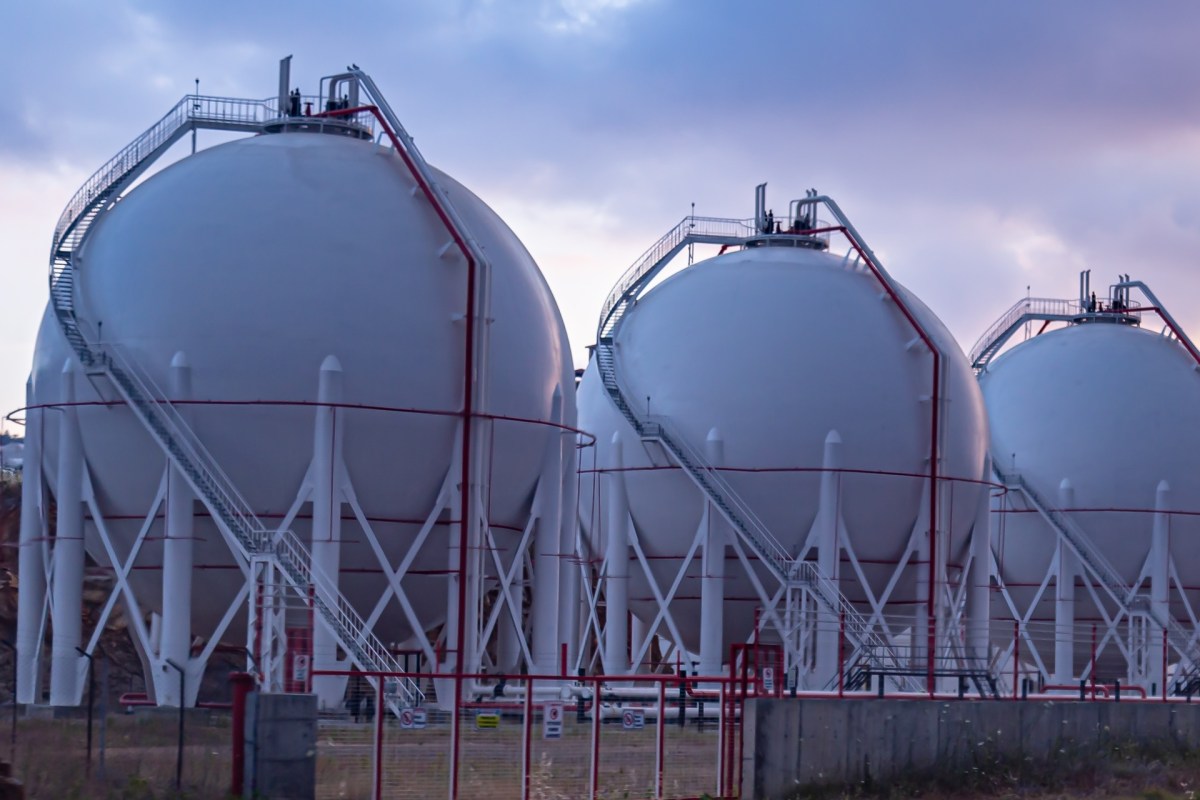
Scientists at the National University of Singapore may have cracked one of the planet's biggest energy challenges.
The study, published in Nature Communications, demonstrates a promising new way to safely and efficiently store gas that's much greener than traditional methods.
"Natural gas and biomethane are important components in the energy mix today, but their storage and transport have long relied on methods that are either costly or carbon-intensive," said Professor Praveen Linga, the lead researcher, in an NUS press release.
Traditionally, it has been done either under high pressure or super-cold temperatures around -162 degrees Celsius (-259.6 degrees Fahrenheit).
Both require loads of energy and money. Even newer "solidified natural gas" methods are so slow that they're not practical at scale.
But, as Interesting Engineering reported, the team found that adding natural amino acids to water before freezing creates a biodegradable "ice" that captures methane gas in minutes rather than hours.
This amino-acid-modified ice can reach 90% storage capacity in just over two minutes, which is way faster than conventional gas storage methods.
Unlike chemical surfactants that can create pollution, the amino acids are fully biodegradable. The ice can also be reheated to release the stored gas as needed and refrozen for reuse — a closed-loop system that reduces waste and costs.
A faster, cleaner way to store natural gas and biomethane — the latter an important "green gas" in our clean energy transition — could reduce industrial waste and planet-heating pollution.
As burning dirty energy sources such as oil and coal continue to overheat our planet, the effects are visible around the world. From supercharged weather events, such as destructive hurricanes and devastating wildfires, to toxic fumes harming public health, human-generated pollution is taking its toll on our planet.
TCD Picks » Quince Spotlight
💡These best-sellers from Quince deliver affordable, sustainable luxury for all




|
Would you drive a car powered by hydrogen fuel?
Click your choice to see results and speak your mind. |
 Definitely 👍
 But companies, governments, and researchers are making big strides toward cleaner alternatives for powering our lives — such as biomethane plants and sustainable aviation fuel made by repurposing waste.
In the end, that means cleaner air for communities, cleaner oceans, more balanced ecosystems, and, ultimately, a safer future for all of us.
While researchers are still in the proof-of-concept stage with this discovery, their experiments have already been promising. If practically scaled, storing and transporting natural gas and biomethane would become more affordable and sustainable, opening opportunities to clean up other types of pollution.
"What we are showing is a simple, biodegradable pathway that can both work quickly and be reused," said Linga. "It makes gas storage safer, greener, and more adaptable."

Join our free newsletter for weekly updates on the latest innovations improving our lives and shaping our future, and don't miss this cool list of easy ways to help yourself while helping the planet.
Cool Picks





