


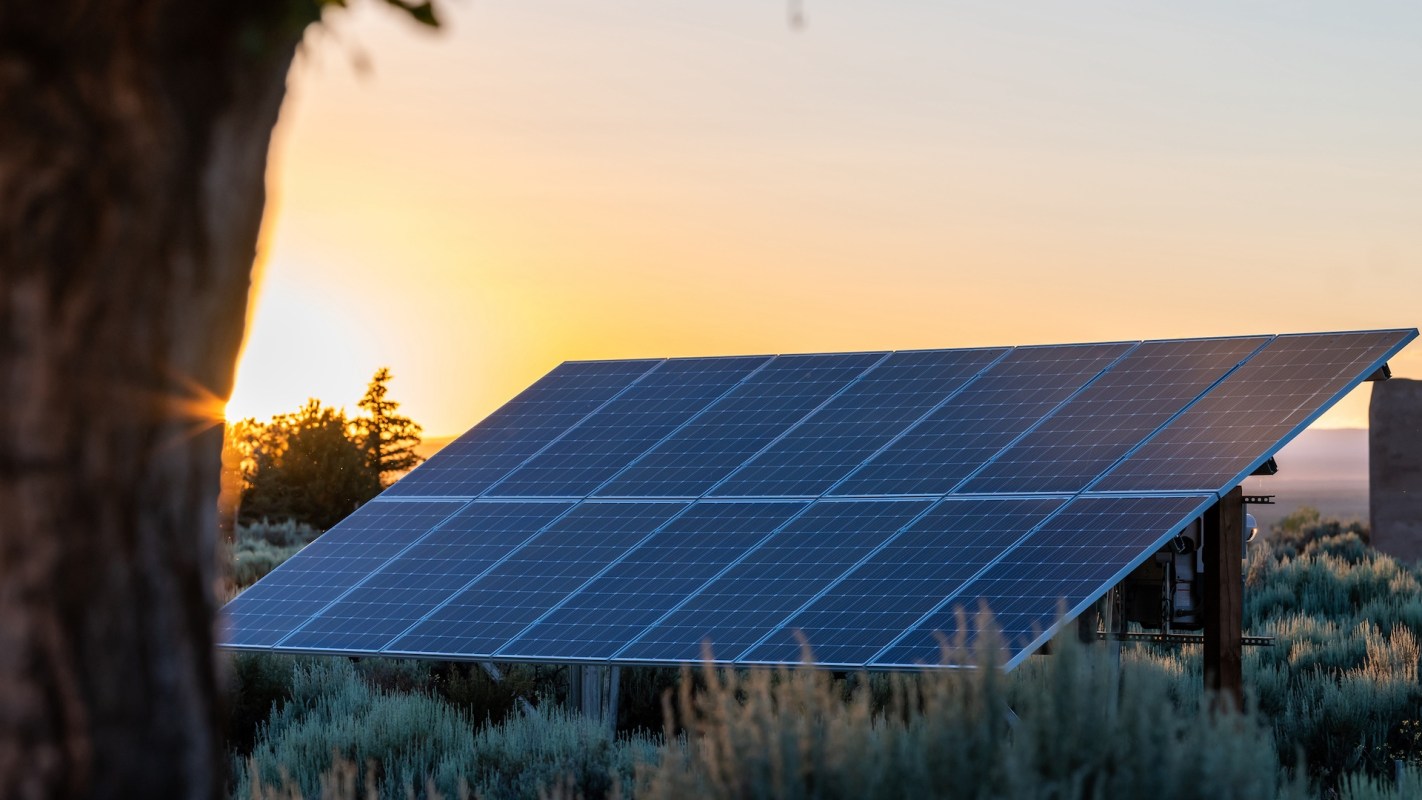
Dover, Delaware, is welcoming a new community solar farm as growing electricity use from users like data centers adds strain to the power grid.
As WMDT reported, officials say the project arrives at a useful moment because it could expand local clean power and reduce what residents pay each month for electricity.
What's happening?
Officials celebrated the launch of the KE73 Community Solar Farm, a 4-megawatt development from Nautilus Solar and TurningPoint Energy.
Its rollout comes as energy systems across the region are under more pressure from rising demand, including electricity use from data centers. Delaware Public Advocate Jameson Tweedie said that makes the new generation especially urgent.
"PJM capacity auctions have cleared short of their reliability threshold now for multiple auctions, and we simply need more generation," Tweedie said, according to WMDT. "We are dependent on generation elsewhere in the region. And building local generation is critically important."
Backers say the Dover project fits into a larger push to produce electricity nearer to the communities that use it. State Sen. Kyra Hoffner, who represents the area where the site is located, said the development carries real value for the district.
TCD Picks » Quince Spotlight
💡These best-sellers from Quince deliver affordable, sustainable luxury for all




"It's not just an investment in clean energy," Hoffner explained to WMDT. "It's an investment in the people who live and work here."
TurningPoint Energy told the outlet it has already developed and financed 10 renewable energy projects totaling more than 47 megawatts, with more than 60 additional megawatts moving through the pipeline or nearing final development stages.
Why does it matter?
Community solar can reduce electricity costs without requiring every household to install panels on its own roof.
WMDT reported that recent Delaware legislation sets minimum savings at 10% for community solar subscribers and 20% for customers who qualify under low-income guidelines.
Caroline Belmont, manager of business development at TurningPoint Energy, described those savings as "huge" for lower-income residents to the station. She also touted the legislation's easy-to-follow system.
"What the customer sees is just one bill, the regular Delmarva Power bill with the community solar savings taken off of it," Belmont told WMDT. "It's a much more simplified system."
According to the station, locals were heartened to learn that the installation can be removed at the end of its 35-year lease without causing lasting ecological harm, so the energy it produces would not permanently change the land. Some reportedly described that as a "win-win."
"It gives me a little bit more hope, you know, it's a good thing," new subscriber Amy Huebner told WMDT.
What's being done?
State lawmakers have also moved to widen access to community solar, the station noted.
Belmont said Senate Bill 321, passed in June, made the customer discounts permanent and broadened the definition of low- to moderate-income households so more people can qualify for larger savings.
When locals oppose solar farms, potential changes to the environment or the character of the area are often at the forefront. Belmont emphasized that the solar farm can truly be the best of both worlds in preserving the local ecosystem in the time it's there.
"There are trees and flowers, and these panels just sit there for, you know, 25, 30 years exactly like this," she explained to WMDT. "It's very noninvasive."

Get TCD's free newsletters for easy tips, smart advice, and a chance to earn $5,000 toward home upgrades. To see more stories like this one, change your Google preferences here.






