


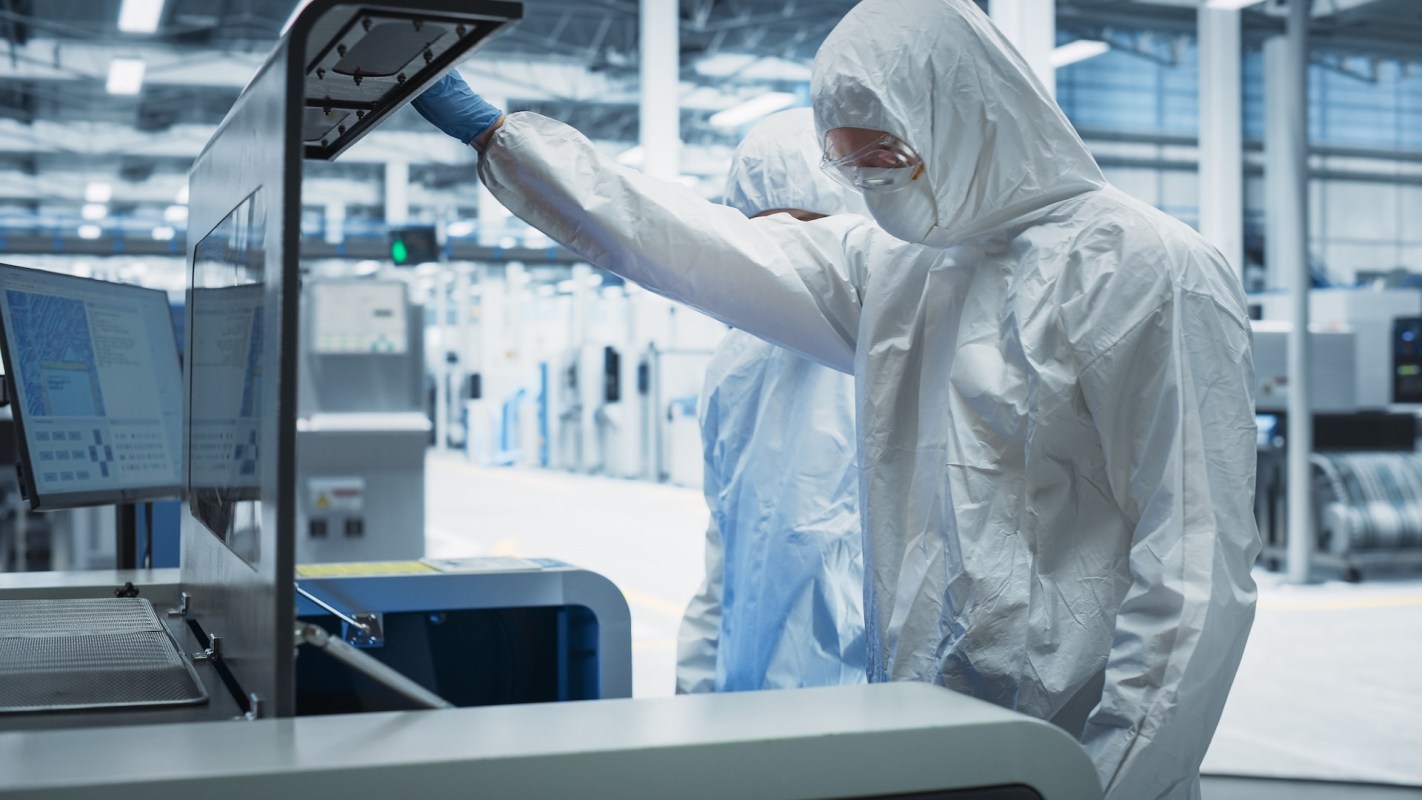
Scientists in a top-secret Chinese facility "have built what Washington has spent years trying to prevent," according to a Reuters exclusive that read more like a geopolitical thriller than news.
Reuters reported that scientists in "a high-security Shenzhen laboratory" developed a working prototype of the specialized equipment used to manufacture the semiconductor chips for weapons of war, smartphones, and, crucially, AI technology.
With the help of engineers recruited from ASML — a prominent Dutch semiconductor company with a "near monopoly" on the technology in question — Chinese scientists reportedly "reverse engineered" the firm's extreme ultraviolet lithography machines, or EUVs.
The undertaking was described as China's "Manhattan Project," an ominous reference to the United States' ultimately successful effort to develop nuclear weapons before the Axis powers did during World War II.
That conflict-fueled arms race shaped the world that followed, as the State Department's historian detailed. In August, the New York Times said the pivotal moment was "arguably the primary driver of American economic hegemony and prosperity in the eight decades since."
Chips are only part — albeit a vital one — of a rapidly emerging AI infrastructure, with resource-intensive data centers serving as another crucial support. On that front, the U.S. has struggled immensely to integrate these power-siphoning facilities into its rickety electric grid.
Starting in January, the new administration followed through on pledges to lobbyists and abruptly halted virtually all clean energy projects, even those nearing completion. Throughout 2025, American energy costs rose 13%, in large part due to data center demand.
While that policy shift was primarily viewed through an environmental lens, utility-scale solar energy is unquestionably cheaper than electricity generated using fossil fuels.
In September, the Wall Street Journal cautioned that the U.S. could be ceding critical economic advantages to China, citing AI and energy demand as key factors. That warning was echoed by economists and environmentalists alike as China lapped the U.S. in scaling new, clean energy.
As the Center for Strategic and International Studies explained in September, the U.S. has long leveraged China's chip-making constraints to maintain technological dominance.
TCD Picks » Quince Spotlight
💡These best-sellers from Quince deliver affordable, sustainable luxury for all




|
Do you think the U.S. should tax goods from China? Click your choice to see results and speak your mind. |
 Definitely 👍
 An individual who spoke to Reuters on the condition of anonymity suggested that the purported development could turn those tables.
"The aim is for China to eventually be able to make advanced chips on machines that are entirely China-made. China wants the United States 100% kicked out of its supply chains."

Get TCD's free newsletters for easy tips to save more, waste less, and make smarter choices — and earn up to $5,000 toward clean upgrades in TCD's exclusive Rewards Club.
Cool Picks





