


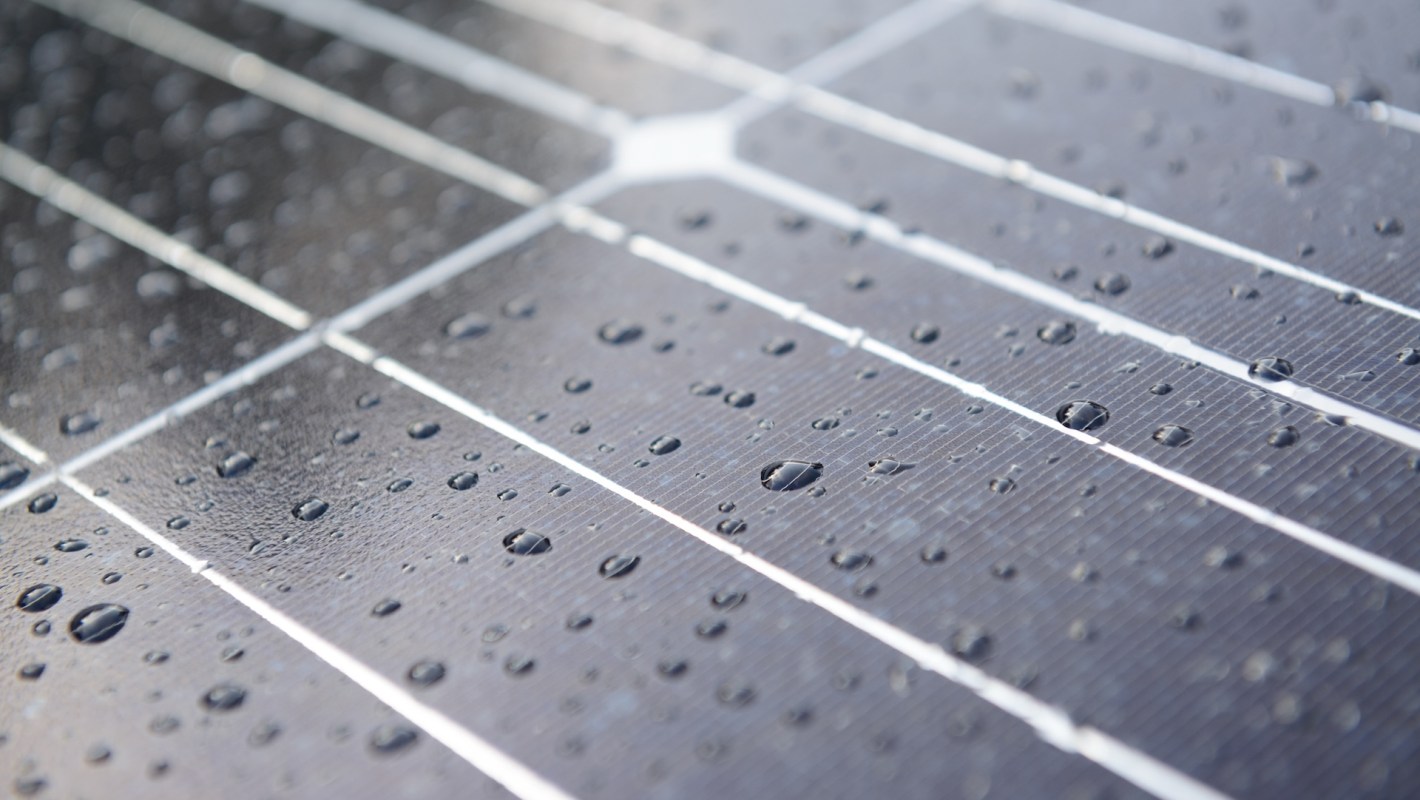
Researchers at the Massachusetts Institute of Technology recently developed a lightweight polymer coating for solar panels, designed to keep most gases from permeating the cells.
A mere 60 nanometers thick, this groundbreaking material — known as 2DPA-1 — has the potential to boost the longevity of perovskite solar cells by limiting the corrosive damage that gas particles can inflict on photovoltaic panels.
While conventional polymer coatings prevent dirt and grime from adhering to and damaging the surface of solar panels, their loosely interlocked molecular structure still allows gas particles through, leaving the panels vulnerable in the long term, according to PV magazine. They're also about six times denser than 2DPA-1, but lack its resilience.
Other traditional options, like graphene, may be effective in preventing gas-driven corrosion within a small, controlled lab sample, but have proven difficult for scientists to scale up as a full-blown solar panel coating.
The study, published in the Nature journal, describes 2DPA-1 as impenetrable to nitrogen, helium, oxygen, methane, sulfur hexafluoride, and more, preventing any wear-and-tear from most gases found in normal atmospheric conditions — and due to its layered hydrogen bond structure, this material can easily stick or be "painted" onto the surface of perovskite cells.
That makes it ideal for solar arrays big and small, especially as solar power becomes a more and more prominent option for homeowners these days.
"Using an impermeable coating such as this one, you could protect infrastructure such as bridges, buildings, rail lines — basically anything outside exposed to the elements," one MIT professor told PV magazine.
Solar energy is one of the most cost-efficient ways for today's homeowners to bring renewable energy innovations into their daily lives. The Cool Down's Solar Explorer platform is a great way to get started on navigating the solar installation process while scoring major savings along the way.
There's a reason that Northwestern University professor George Schatz referred to this recent polymer research as "remarkable," per PV magazine — improving solar cell longevity can incentivize more homeowners to go solar and cut down on their household carbon pollution.
Standard energy options like coal, oil, and natural gas rely on combustion to generate electricity, releasing heat-trapping pollution into our atmosphere and disrupting our weather patterns, natural resources, and the like.
TCD Picks » Quince Spotlight
💡These best-sellers from Quince deliver affordable, sustainable luxury for all




|
Would you cover your home with reflective solar paint? Click your choice to see results and speak your mind. |
 Sign me up 👍
 Switching to solar power, by contrast, can slash your pollution footprint and your energy bills alike. TCD's Solar Explorer offers $0-down subscription programs that can guide you through the complexities of solar installation by connecting you with a range of trusted partners and ultimately saving you up to $10,000.
With EnergySage, for instance, you can check out a variety of local solar services and stay up-to-date on available solar incentives for your residence. If you'd rather go for a lower-risk option, Palmetto's LightReach solar leasing program can help you cut down on your utility rates by up to 20% with contracted solar panels, all while providing you access to federal tax credits otherwise earmarked for solar ownership.
This latest polymer coating study was published in mid-November, which means it could take a couple of years to see this new durable material fortifying our commercial solar panels. We may even see a surge in research focused on the production of similar protective materials in the near future, following the 2DPA-1 example.

Get TCD's free newsletters for easy tips to save more, waste less, and make smarter choices — and earn up to $5,000 toward clean upgrades in TCD's exclusive Rewards Club.
Cool Picks


