


Driving around Paris, France, prompted one observer's concerns about an invasion — of trees.
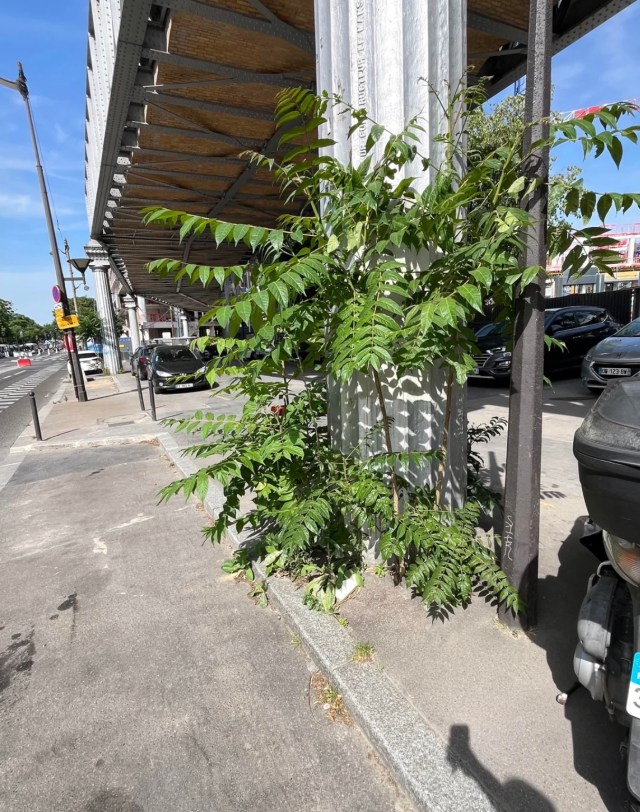
"Is [the] tree of heaven invading Paris?" the original poster posed to the Invasive Species subreddit, sharing photos of small trees throughout the city. Several pictures appeared to show the saplings popping up in the middle of the street.
"This plant will come up through cracks in the sidewalk and such as you can see in your photos," one commenter explained.
Ailanthus altissima, also known as the tree of heaven, has an aggressive root system capable of damaging foundations and sewer systems. According to the College of Agriculture, Health, and Natural Resources at the University of Connecticut, it can reach 80-100 feet in height and produce 300,000 seeds annually while its root suckers can spread 50 feet from the parent tree.
Native to China, the tree's dense thicket formation and chemical emissions into the soil can speed up the tree's ability to kill nearby resident plants. It also attracts another invasive species — the sap-sucking spotted lanternfly.
"It's all fun and games until spotted [lanternflies] invade," one commenter warned. "They will devastate France's [agricultural] orchards." Each egg mass these bugs lay contains 30-50 eggs, which, along with the large availability of host plants, allows them to spread quickly.
France isn't the only place the tree of heaven is popping up. Someone added, "[It's] like an alien invasion. I've seen it all over the U.S."
Overall, invasive species cost the planet $423 billion each year, according to a 2023 post from the World Economic Forum. Their presence threatens food security and aids species extinction by destroying numerous resident plants and animals.
That's why individuals and governments shouldn't ignore invasive plants. Effective action often involves removing them down to the root and rewilding any affected soil. Cultivating native plants will quickly reap benefits for the landowner and planet.
Native plants tend to be well-adapted to their surroundings, so their maintenance typically requires less labor as well as less water and harsh chemicals. But the environmental benefits don't stop there.
TCD Picks » Quince Spotlight
💡These best-sellers from Quince deliver affordable, sustainable luxury for all




Regardless of which native plants you choose, expect to attract pollinators, from bees to butterflies and hummingbirds. These creatures spread cheer, beauty, and the pollen needed to reproduce biodiverse vegetation that strengthens the global food supply and oxygenizes the whole planet.
|
Do you worry about the quality of the air inside your home?
Click your choice to see results and speak your mind. |
 Yes — often 😬
Join our free newsletter for easy tips to save more and waste less, and don't miss this cool list of easy ways to help yourself while helping the planet.
Cool Picks




