


A new Tesla driver on TikTok broke down his cost savings in the first month of driving his electric vehicle, and the numbers were incredibly enticing.
HapaThunder (@hapathunder) purchased a Tesla Model 3 and kept a close eye on stats from the moment he drove off the lot.
@hapathunder The money I've been saving on gas, is basically paying off my car 🤑🚗💨 #tesla #teslatok #teslamodel3 #model3 #ev #cartok #carsoftiktok #hapathunder #fypシ #greenscreen ♬ WII SHOP TRAP - Flixterr
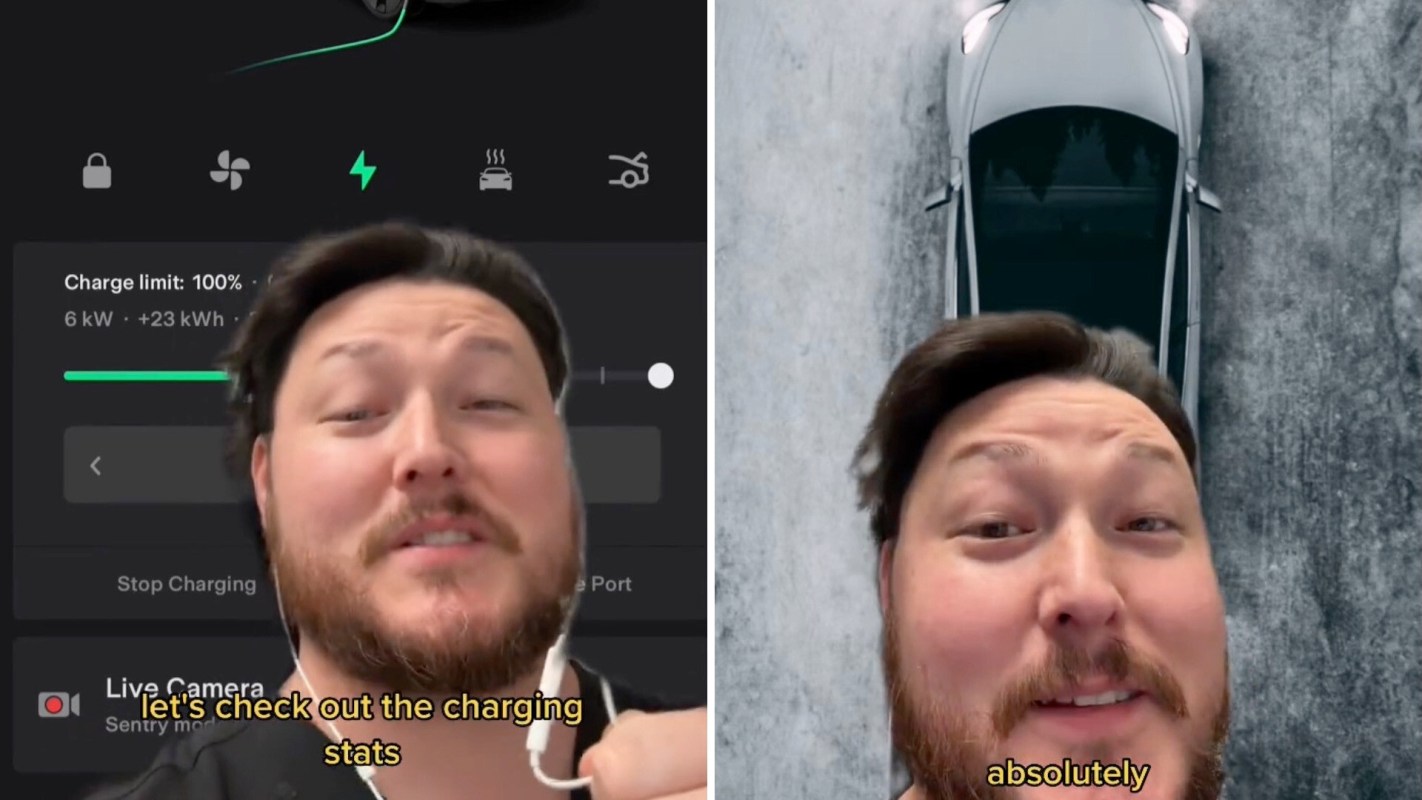
"So, I've owned and have been driving my Tesla for a month now. Let's check out the charging stats," Jason begins, with his background a visual of then-current usage data for his first month as a Tesla driver.
Jason charged his Model 3 for 882 kilowatt-hours, noting that 92% of this charging occurred at work at no cost to him. Consequently, he spent a grand total of $24 on fueling his new car.
Although his use of a free charging perk at the office certainly increased those savings, the length of Jason's commute was significant. Later in the clip, he disclosed that he drove a staggering 130 miles per day (600 per week) and had previously spent $400 a month on gas.
Jason didn't mention pairing his EV with solar panels, but installing solar panels is another energy cost-saving hack — particularly as electricity costs soar with no end in sight.
EnergySage is a convenient, free service that connects consumers to vetted installers, and it can save customers up to $10,000 on new solar installations.
As Jason's video emphasized, switching to an EV often pays off instantly. In the first month of EV ownership, he realized that the $400 a month he no longer had to spend on gas functionally offset the payment for his brand-new Model 3.
"The gas that I'm saving is basically paying off my car, so was it worth it buying an EV over a gas-powered car? Absolutely," he concludes.
Most experts agree, too, though there is a bit of an "apples to oranges" comparison, and even more so when discussing Tesla, which leans more luxury and expensive with most models and statistically has higher insurance costs than many other EVs. Even still, a study earlier this year by New AutoMotive found that drivers can save around $8,000 when switching to an EV due to reduced fueling and maintenance costs, given far fewer parts to repair and fluids to change.
TCD Picks » Quince Spotlight
💡These best-sellers from Quince deliver affordable, sustainable luxury for all




|
Are you thinking about buying an electric vehicle?
Click your choice to see results and speak your mind. |
 Yes — in the next 6 months 🙌
 That study factored purchase price, charging, servicing, insurance, taxation, and depreciation, without even factoring the additional long-term savings that can come from charging with solar panels.
Commenters, some of whom became interested in a new EV, largely agreed with Jason's perspective.
"I'm thinking about it, I drive about 50-100 miles a day on average … My monthly payment would be the same or less than gas," a user surmised.
"My commute is anywhere between 120-180, depending. There's superchargers at work … hmm," another commented.
"I bought one for work. The gas savings plus the standard mileage write-off is crazy," a third concurred.

Join our free newsletter for easy tips to save more and waste less, and don't miss this cool list of easy ways to help yourself while helping the planet.
Cool Picks






