


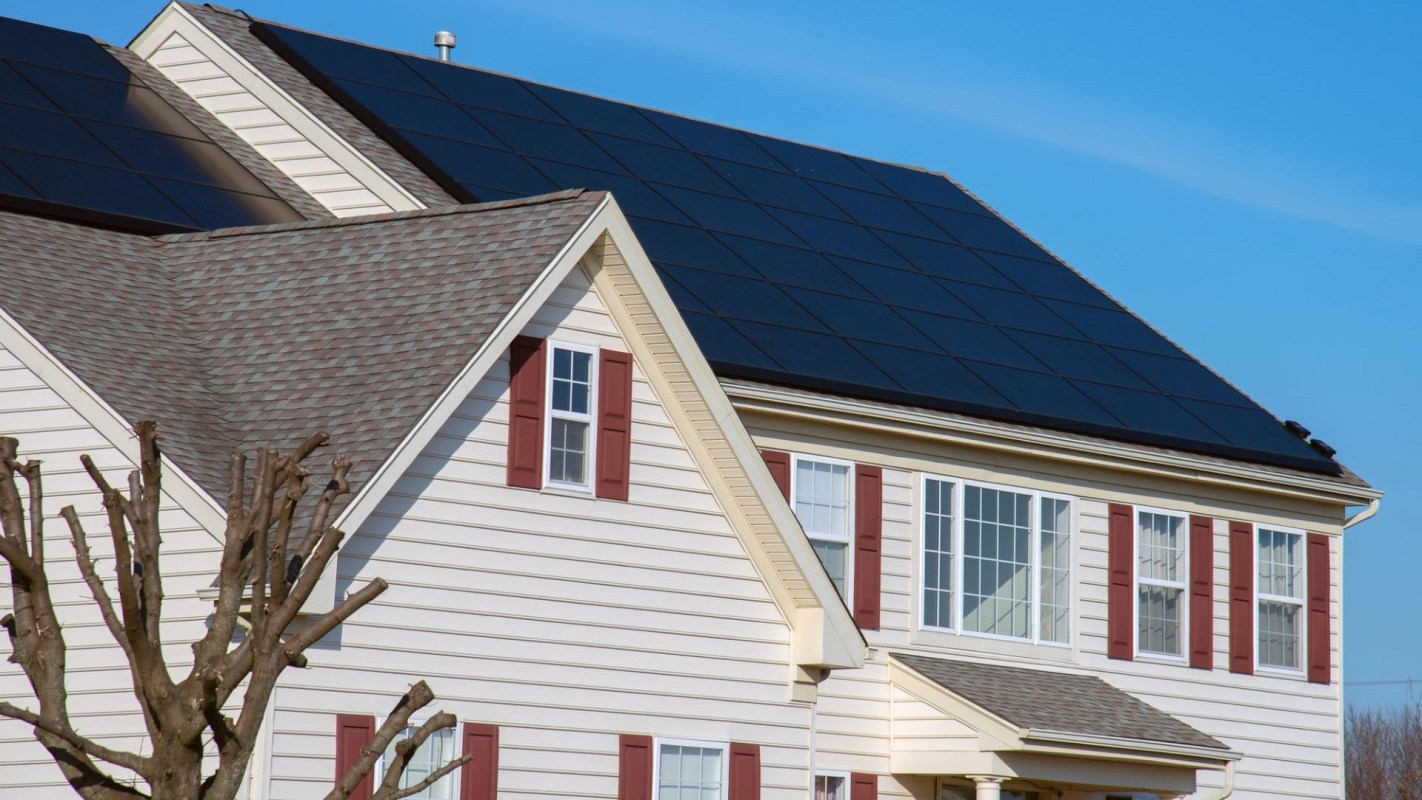
The sun can energize your home and your finances. With solar power, one homeowner's monthly power bill now costs less than a cup of coffee.
The scoop
In a Reddit post, the homeowner showed how solar panels turned their sky-high energy bills into pocket change, sharing a screenshot of their PSE&G bill that came out to just $2.31. But it's not just money savings that are getting them excited.
They explained that after installing solar in 2020, they now make hundreds of dollars a year selling energy back to the grid.

"If you can financially afford it, I strongly recommend you invest in this while the energy tax credit is still available," they said. "Not only do I pay less while fully using full electricity (running AC without worrying about bills), I also get paid by the state for generating electricity. It comes about $800-900 per year that I get paid for generating electricity."
The tax credit they are referring to is from the Inflation Reduction Act, which allows for rebates on energy-efficient upgrades. Right now, homeowners can claim a 30% federal tax credit on solar installations, but that credit is set to expire at the end of 2025.
How it's helping
Solar panels are a great financial investment. Not only do the panels generate so much power that monthly utility bills drop to just a couple of dollars, but they also produce excess electricity earning homeowners credits worth up to $800 a year.
On top of that, solar panels are one of the most effective ways to shrink your carbon pollution, cutting down on planet-overheating pollution every time the sun shines. Every kilowatt-hour generated by rooftop panels offsets electricity that would otherwise come from harmful sources, cutting air pollution and slowing the pace of Earth's overheating.
With millions of households facing higher utility rates, adopting solar could help ease strain on the grid and make communities more prepared in the face of extreme weather.
Save $10,000 on solar panels without even sharing your phone number Want to go solar but not sure who to trust? EnergySage has your back with free and transparent quotes from fully vetted providers that can help you save as much as $10k on installation. To get started, just answer a few questions about your home — no phone number required. Within a day or two, EnergySage will email you the best local options for your needs, and their expert advisers can help you compare quotes and pick a winner. |

What everyone's saying
Other Reddit users chimed in with similar experiences, saying solar has kept their homes cool through New Jersey's hot summers while keeping bills low.
"I'm so glad I was able to buy solar last year. Got the tax credit before Trump cut it and in before JCPL price hikes," said another. "My break even before price increases, I calculated at 10 years. Now, with the price increases, it's closer to 8."
|
What's the biggest concern you'd have about getting solar panels? Click your choice to see results and speak your mind. |
 The cost 💰
 However, not everyone was thrilled by solar options, since it does require a large upfront cost.
"I got quoted $57k, $63k, and $64k to install solar at my house. And they said it would only cover about 70% of my total electrical usage. Solar does not make sense for every homeowner," explained a commenter.
More From EnergySage
💡Go deep on the latest news and trends shaping the residential solar landscape

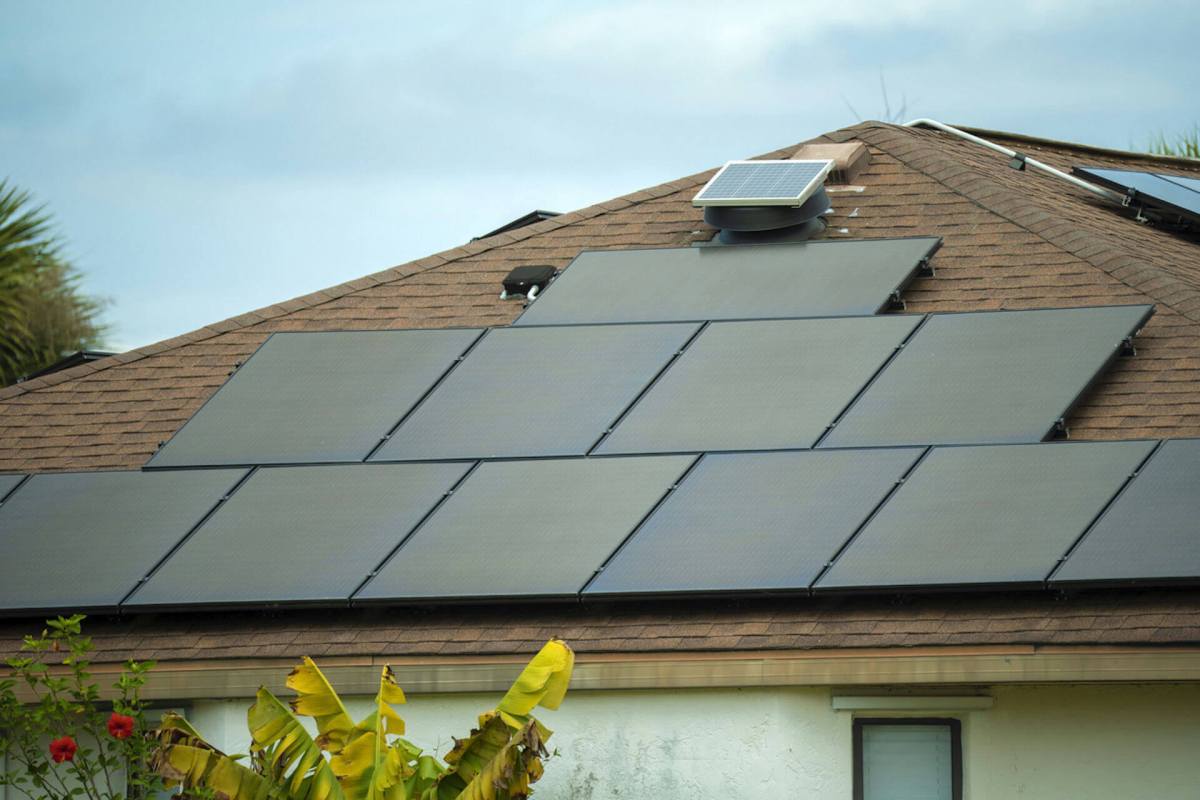


To explore whether solar could work for you, tools like EnergySage's free solar estimator let you compare local installer quotes and save up to ten thousand dollars on solar installations. Their helpful mapping tool even shows average solar system costs and incentives available in each state, helping you lock in the best possible deal before federal credits expire in 2025.

Join our free newsletter for easy tips to save more and waste less, and don't miss this cool list of easy ways to help yourself while helping the planet.
Cool Picks


