


Occasionally, stereotypes come to life. For one homeowner, a passive-aggressive neighbor embodied "get off my lawn" energy.
The homeowner posted a photo in the subreddit r/mildlyinfuriating with the caption, "Neighbor not happy that we mowed one row into his lawn, so he decided to spray grass killer to make a point."
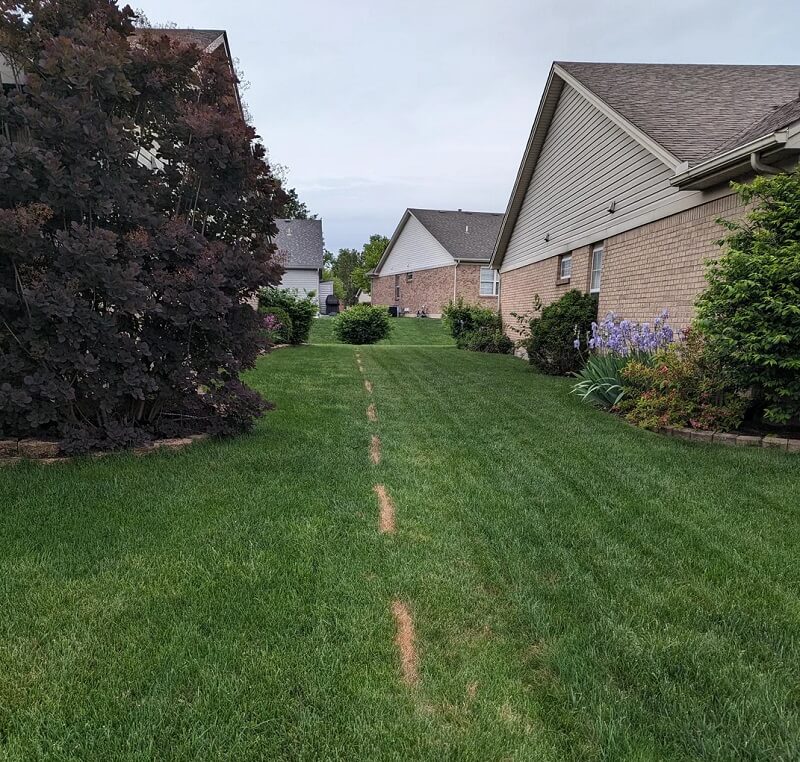
In the photo, a dashed stripe of dead grass cuts directly down the center of a grass lawn, marking a boundary.
Commenters were outraged on OP's behalf. "This is just psycho," one person wrote. "Never trust anyone who literally poisons," another agreed.
Others pointed out the irony of being upset over a free mowing job. "You can come cut my whole damn yard anytime you want," one said.
The stereotypically grass-obsessed neighbor (or homeowners association) isn't just a nuisance — they're actually harmful to their local ecosystem. According to Audubon, "the modern obsession with highly manicured 'perfect' lawns alone has created a green, monoculture carpet across the country … [that] no longer supports functioning ecosystems."
TCD Picks » Quince Spotlight
💡These best-sellers from Quince deliver affordable, sustainable luxury for all




And most people might be surprised to learn how, exactly, the culture of grass lawns originated. "Medieval castle dwellers needed their tall grass hand-cut by scythes in order to see approaching enemies," per the History Channel. "Landowners with livestock required fields cut down to grazeable heights. And wealthy people with leisure time tamed nature into neatly trimmed surfaces for sporting endeavors like golf, tennis and lawn bowling."
In short, the reasoning behind grass is largely a vestige of elitism, and grass lawns are actually damaging to wildlife and pollinators.
"Mow money, mow problems," one person joked.
Grass is also expensive — accounting for an average of 30% of daily water use — and more difficult to maintain.
Fortunately, the number of Americans who report that they're planning to rewild their lawn or install a natural lawn — such as one of wildflowers or clover — has doubled in recent years. And with a proliferation of native plants, neighbors can instead focus on enjoying wildlife sightings (and a lower energy bill).

Join our free newsletter for easy tips to save more, waste less, and help yourself while helping the planet.






