


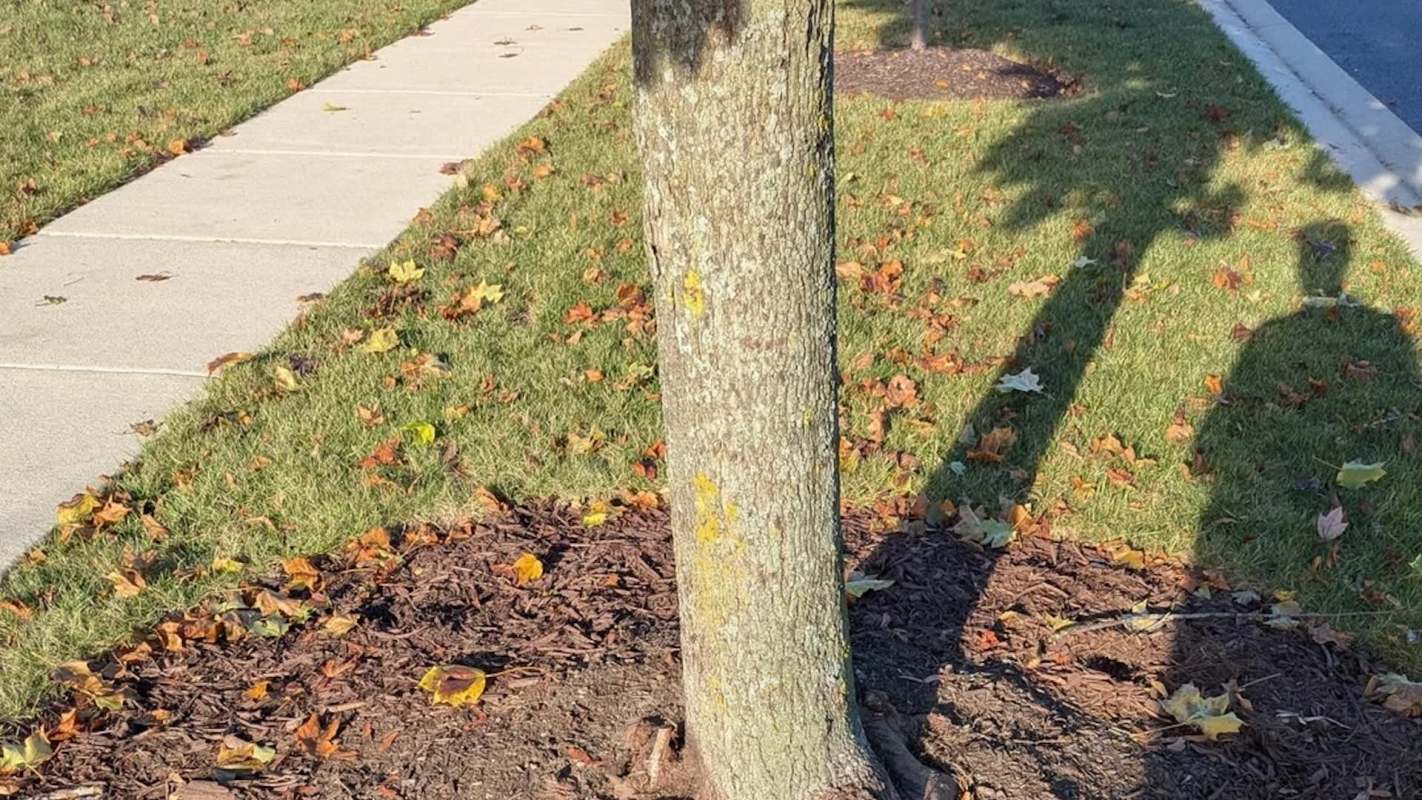
Too much of a good thing can quickly turn into a very bad thing. As one homeowner recently learned, that adage especially applies to mulch.
The worried homeowner recently took to Reddit to try to save a struggling tree in their new home's yard. The homeowner asked tree enthusiasts if the sick tree had "girdling roots," which is when a tree's roots grow in a circular pattern around its root flare, eventually choking the tree by cutting off water and nutrients.
"When I moved in here, the trees had way too much mulch on them, burying the tree," the homeowner wrote. "I didn't know how bad that was until we recently, so I began excavating to seek out the root flare."

In doing so, the homeowner revealed a thick root around the tree's base, which commenters confirmed is a bad sign.
"The tree is choking itself," one commenter wrote.
Another commenter added, "Time to move on and replace the tree."
Perk up the winter blues with natural, hemp-derived gummies Camino's hemp-derived gummies naturally support balance and recovery without disrupting your routine, so you can enjoy reliable, consistent dosing without guesswork or habit-forming ingredients. Flavors like sparkling pear for social events and tropical-burst for recovery deliver a sophisticated, elevated taste experience — and orchard peach for balance offers everyday support for managing stress while staying clear-headed and elevated.
Learn more → |

To help educate, a third commenter explained that there are a few reasons girdling roots can happen to a tree.
"When you have soil against the bark, or when the tree is planted too deep, the tree will start growing adventitious roots," the commenter wrote. "These might eventually circle around the trunk and will get thicker as the tree gets older. Other common ways this can happen are through poor planting practices, poor nursery stock selection, or bad contractors."
Planting with mulch volcanoes, like the one the homeowner described, is included in that list of poor planting practices. Mulching in moderation can be beneficial to trees, controlling weed growth and maintaining soil moisture and temperature. But piling too much mulch around a tree's base can deprive its roots of oxygen, leading to root decline. Excess mulch also traps moisture, which can cause the bark to rot. These so-called "mulch volcanoes" can even harm the surrounding ecosystem by creating ideal conditions for diseases and rodents, the University of Maryland warns.
A better approach is to use a combination of compost and mulch, which helps suppress weeds, retain moisture, regulate soil temperature, and prevent erosion and disease. Experts recommend spreading a one-inch layer of organic compost in a ring around the tree, leaving the trunk flare exposed to avoid issues like the one this homeowner faced. Then, add about three inches of wood-chip mulch on top of the compost to create a healthy, protective layer.
TCD Picks » Upway Spotlight
💡Upway makes it easy to find discounts of up to 60% on premium e-bike brands





|
What's the hardest thing about taking care of your yard? Click your choice to see results and speak your mind. |
 Mowing the lawn 🏡
 After their fears were confirmed, the homeowner said they plan to explore ways to save the tree, like removing the encircling roots and implementing proper planting practices. In tough cases, root removal should be handled by a certified arborist to avoid further damage — and in some situations, it may be too late for treatment at all.
"Debating if this is something I could handle or if an arborist is the way to go here," the homeowner wrote. "Or if it's just simply too late and now just have to hope for the best."

Get TCD's free newsletters for easy tips to save more, waste less, and make smarter choices — and earn up to $5,000 toward clean upgrades in TCD's exclusive Rewards Club.
Cool Picks






