


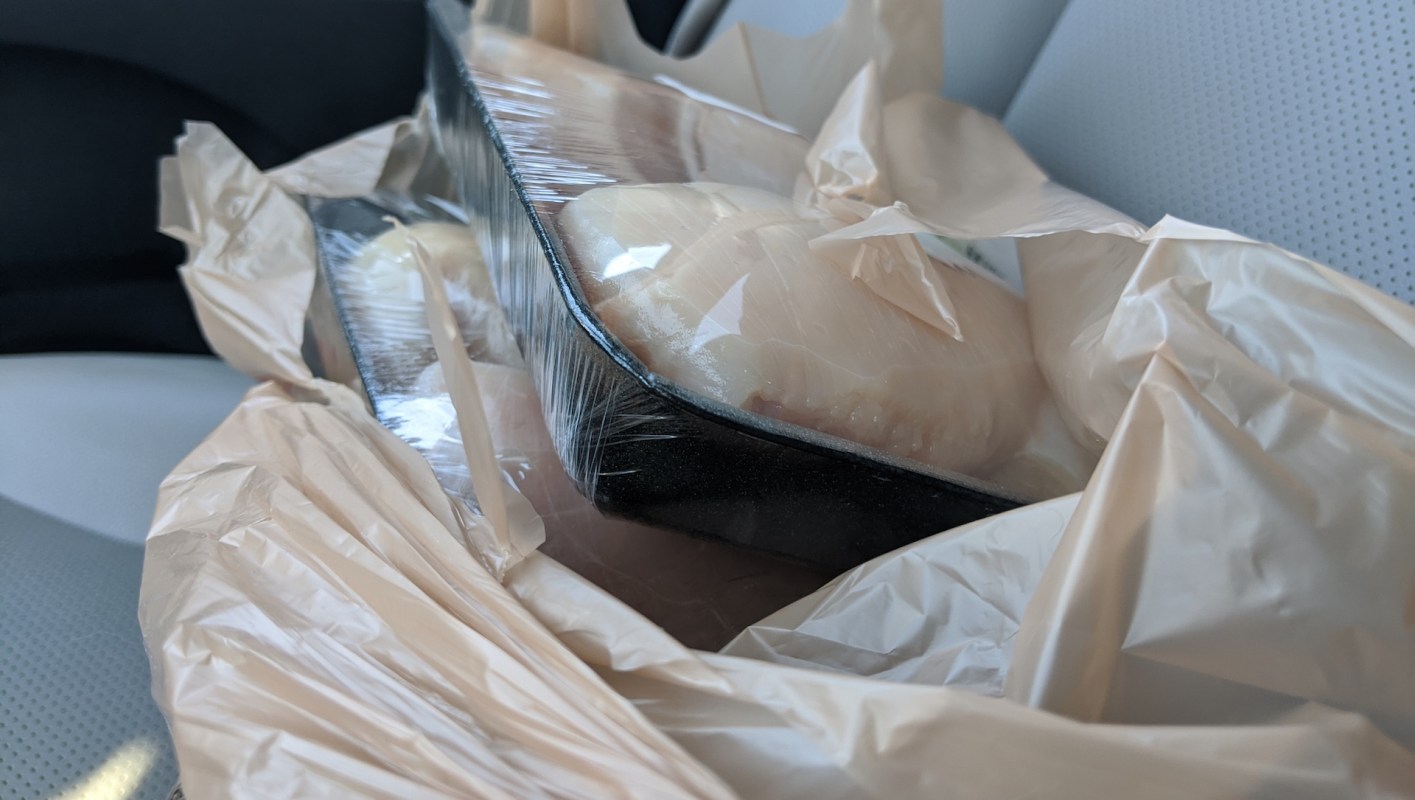
Grocery shoppers in Washington state will pay a little bit more starting in 2026 if they don't bring their own bags to the store.
In January, the cost of a plastic grocery bag within the state will increase from 8 cents to 12 cents. But as the Washington State Standard reports, lawmakers have pushed back a requirement to make the bags considerably thicker, as they determine the usefulness of that aspect.
The price increase is part of a law passed in 2020 that aimed to curb the use of single-use plastic bags, promote reusable bags, and reduce Washington's amount of plastic waste. The law originally set a per-bag fee of 8 cents at grocery stores, regardless of whether the bags were made of paper or plastic.
When the plastic-bag fee increases in January, the paper-bag fee will remain at 8 cents.
The law also mandated that both paper and plastic bags be made with 40% recycled material and that plastic bags be 2.25 millimeters thick, instead of the previous standard of 0.5 millimeters. Officials hoped that shoppers would be more likely to reuse the bags if they were stronger and if they had to pay a fee to receive them.
That hasn't necessarily been the case, however, and now, legislators have scrapped plans to increase the thickness again at the start of 2026, to 4 millimeters.
A recent study from Washington State University found that since the law's implementation, the number of plastic bags distributed in stores has fallen by 50%, but the amount of plastic used in bags has actually increased by 17%.
This makes the issue "very complex," Kirk Esmond of the Department of Commerce told the Standard, and makes it worth further investigation by lawmakers.
"It certainly contradicts the law's goal and the environmental factors that are associated with that," Esmond said.
Plastic bag bans have become more common across the United States and around the world in recent years and have proved to be quite effective overall.
TCD Picks » Quince Spotlight
💡These best-sellers from Quince deliver affordable, sustainable luxury for all




New Jersey, for example, banned large grocery stores from offering any type of single-use bag starting in 2024. Since that took effect, a study found, the number of bags distributed statewide fell by 96%, and more than 90 million bags were avoided in just 33 stores over eight months.
|
Should plastic grocery bags be banned nationwide? Click your choice to see results and speak your mind. |
 Absolutely 👍
Join our free newsletter for good news and useful tips, and don't miss this cool list of easy ways to help yourself while helping the planet.
Cool Picks





