


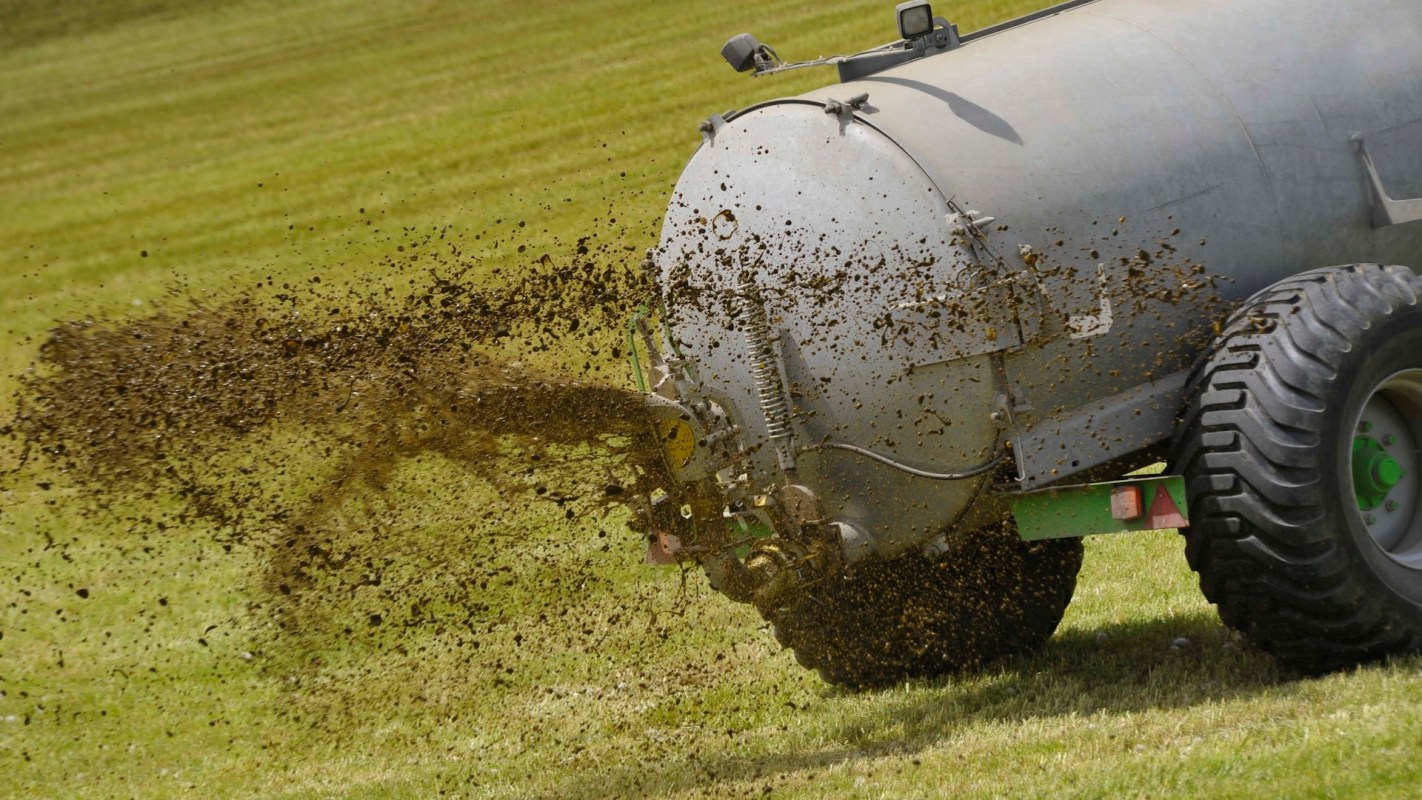
A broad alliance is showing that Americans from across the political spectrum can agree on wanting food and water supplies safe from "forever chemicals."
What's happening?
Access to clean water is a human right, according to the United Nations, but toxic sludge used as fertilizer is putting drinking water, soil systems, and food supplies at risk. Now, as reported by The Guardian, a diverse range of individuals across the United States is pressuring the current administration to legislate against the use of this sludge.
Human waste, treated and combined with industrial waste, has been used for decades as a cheap fertilizer. But its agricultural use began before the sludge was discovered to carry an even more disturbing characteristic than its origins might initially suggest: Along with nutrients, it is also often replete with per- and polyfluoroalkyl substances, or PFAS.
While the science on the potential effects of PFAS exposure is still developing, the chemicals have been linked with a range of health problems. This threat, already deeply felt by some families, is now uniting advocates from both major political parties in the hopes that the Trump administration will advance bans on the toxic sludge rather than weaken them — as its Environmental Protection Agency has done with some regulations on PFAS in drinking water.
Why is toxic sludge so worrying?
Also known as "forever chemicals" for their persistence in human bodies and the environment, these chemicals have been associated with various health issues, including reproductive concerns, developmental delays, and an increased risk of certain cancers, according to the EPA.
Notre Dame professor and PFAS researcher Graham Peaslee told Bloomberg in 2023, "I personally think the magnitude of the PFAS contamination in the United States particularly is probably our worst environmental disaster yet." That may be, in part, because the chemicals not only linger for years upon years but are also found in countless consumer goods, such as non-stick cookware, stain-resistant furniture, waterproof clothing, and more.
They can also be found on the farms that grow our food.
Spreading sludge — or biosolids — containing these harmful chemicals may impact the health of local farmers, the people who eat the food produced in PFAS-contaminated soils, and the environment.
The tragic death of Texas six-year-old Rylan Pruitt from an aggressive form of brain cancer is thought by his father, Mike, to have been connected to nearby dairy and oil operations, known sources of PFAS and other pollution.
The type of cancer that Rylan had was exceedingly rare, with only around 50 other recorded cases. One of those cases was a young girl who lived just 11 miles away, according to Mike. "We've got to make a change," he told The Guardian.
TCD Picks » Quince Spotlight
💡These best-sellers from Quince deliver affordable, sustainable luxury for all




|
Do you worry about having toxic forever chemicals in your home?
Click your choice to see results and speak your mind. |
 Majorly 😥
 Dana Ames, a detective, also from Texas, who is investigating the use of toxic sludge, said, per the publication, "We can all sit down and agree that we and our children shouldn't be fed literal poison."
Ames thinks the EPA "has gone rogue" and that, with effective advocacy, the president will be moved to support stricter PFAS regulations to protect water and food.
What's being done about toxic sludge?
The good news is that the state of Maine has already banned the use of toxic sludge as fertilizer. The bad news is that it remains legal elsewhere in the country, often with little or no regulation. Farms and water systems across Maine are also still reckoning with PFAS contamination.
To help advance the issue, Ames and others are working in coalition across party lines. The detective, a trucker from New Jersey concerned about health threats to haulers, a scientist helping to sue the EPA under the Clean Water Act, farmers, and young families are joining forces to raise awareness about the bipartisan concern. The group is planning to hold rallies in Austin, Texas, and Washington, D.C., calling for legislation and action from the White House.
Cancer survivor and Massachusetts resident Kyla Bennett — formerly of the EPA and now suing it — told The Guardian, "This is an issue that should transcend politics because it affects human health and people are humans before they're Republicans and Democrats."
While the country awaits effective bans on biosolids, consumers may choose to swap out PFAS-containing products in order to mitigate exposure at home. Giving up non-stick pans, using your own glass or stainless steel food containers to carry takeout, and investing in a water filter certified to help remove PFAS might help. Community advocates might also consider supporting local initiatives to improve equitable access to PFAS-free goods in their own neighborhoods.

Join our free newsletter for good news and useful tips, and don't miss this cool list of easy ways to help yourself while helping the planet.
Cool Picks






