


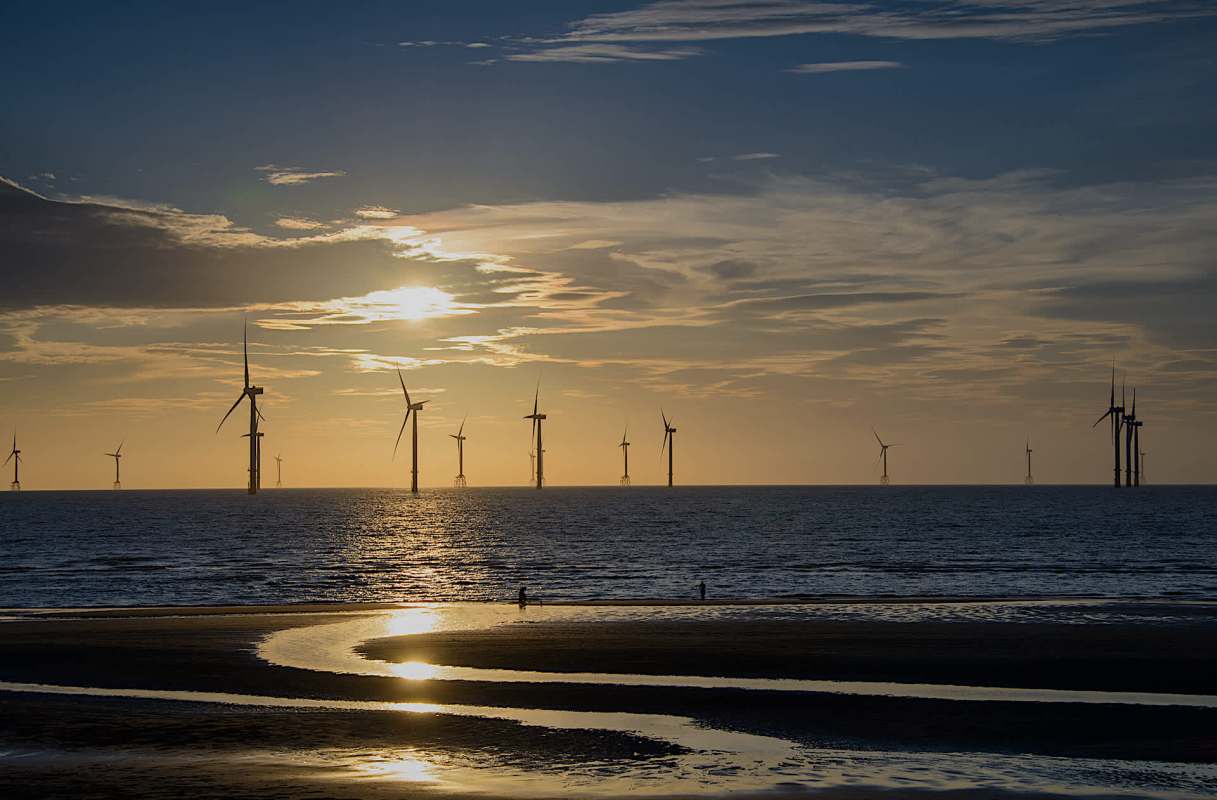
An offshore wind farm over a decade in the making could be dead in the water after several actions by the Trump administration.
What's happening?
Canary Media reported on a court motion filed by the Department of the Interior, which asked a district judge to cancel approval for the Maryland Offshore Wind Project.
The project, slated to be the state's first offshore wind farm, was approved by the Biden administration, but Interior Department lawyers argued that approval was given erroneously and didn't properly account for the project's impact on other activities in that part of the ocean.
Developers purchased a lease for the area in 2014, and the 114-turbine farm was expected to power more than 700,000 homes, according to the news outlet.
But even before this court battle, the project was facing an uphill battle.
When President Donald Trump signed the One Big Beautiful Bill Act in July, it moved the end date for wind turbine tax credits way up, only making projects eligible if they begin construction before July 2026 or get placed in service by the end of 2027. This wind farm is unlikely to meet the former date, making it challenging to meet the latter date as well. That means it likely wouldn't be able to offset 30% of its costs, potentially making it financially unviable.
Why is this concerning?
This farm is just one of many wind projects on the chopping block as the Trump administration prioritizes fossil fuels over many clean energy sources, such as wind and solar.
In August, the Department of Transportation announced it would cancel $679 million in funding for offshore wind projects. In New Jersey and elsewhere on the East Coast, several proposed wind farms likely won't come to fruition — or have at least been challenged. In New Hampshire, a new law restructured the state's energy office, putting less of a focus on wind projects.
These moves all mean less renewable energy produced for millions of Americans and that energy prices will likely continue to rise as utilities put more focus on dirty fuel sources — which come with the added cost of impacts from heat-trapping pollution.
What can I do about this?
It's not just commercial tax credits that will expire soon. Many federal tax credits for eco-friendly home upgrades — which reduce energy bills and environmental impacts — are also on the chopping block. This means that now is the best time to act and lock in savings before they're gone.
TCD Picks » Quince Spotlight
💡These best-sellers from Quince deliver affordable, sustainable luxury for all




|
Should the government continue to give tax incentives for energy-efficient home upgrades? Click your choice to see results and speak your mind. |
 Absolutely 💯
 The federal tax credit for electric vehicles isn't available as of Oct. 1. The tax credit for residential solar systems expires at the end of this year, meaning solar panel projects must be underway by then.
Fortunately, other federal, state, or utility incentives will continue, including rebates for energy-efficient appliances such as heat pumps.
Meanwhile, those with opinions about government actions on renewable energy can voice their perspectives to elected representatives.

Join our free newsletter for good news and useful tips, and don't miss this cool list of easy ways to help yourself while helping the planet.
Cool Picks





