


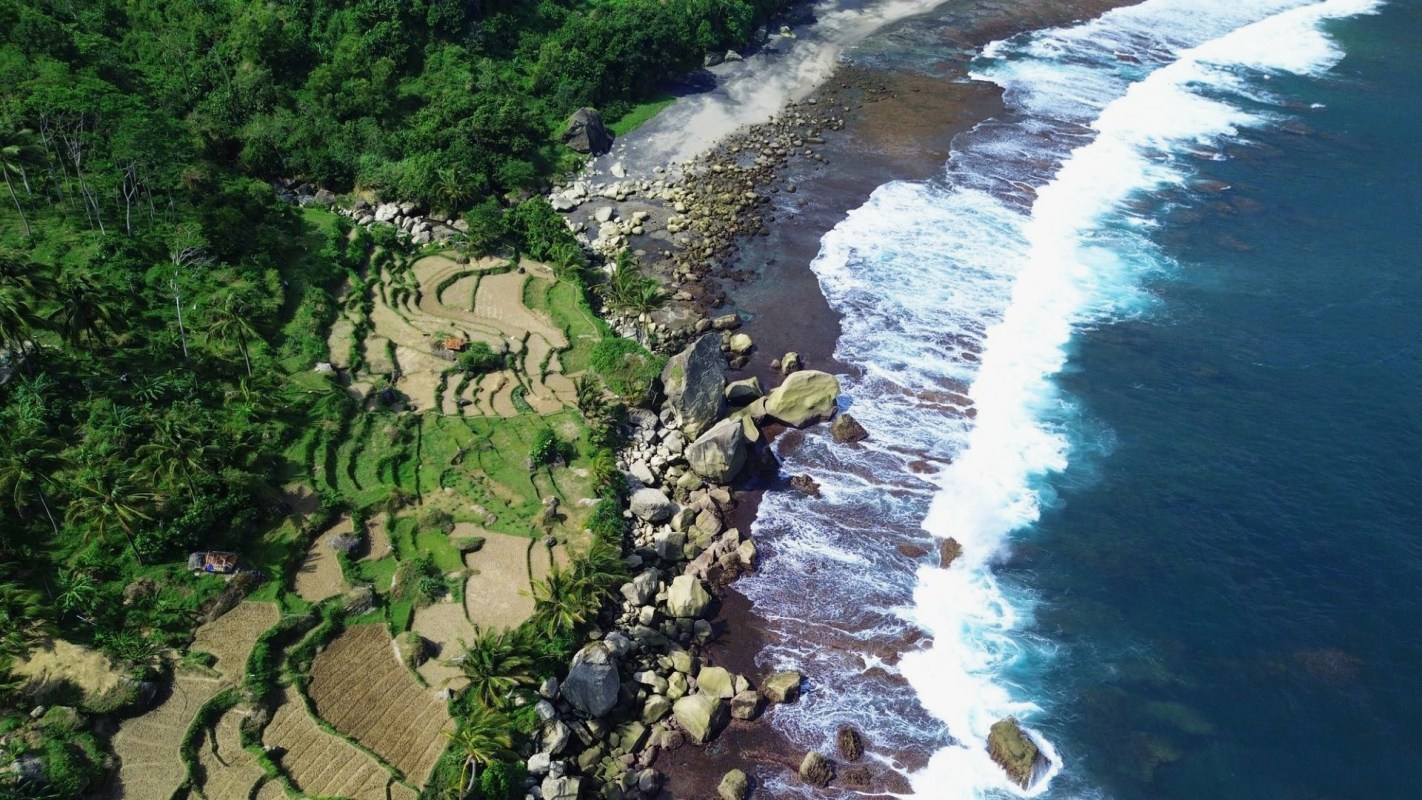
With Indonesia's coastlines disappearing as seas rise and land sinks, some are concerned the government's plan to help coastal communities with a massive $80 billion seawall isn't the right solution — and that it won't arrive in time.
What's happening?
The coast of Indonesia's Java Island has become increasingly vulnerable to floods, as rising global temperatures raise sea levels and groundwater extraction causes land mass to sink.
To protect communities from encroaching waters, the government plans to build a 435-mile seawall along Java's coast. Officials consider it a "vital" program to help residents of the island, which is home to over half of the nation's population of 280 million people.
Bedono village chief Muhammad Syarif told AFP the seawall is "very much needed" and that it is "the right solution because the coastline needs wave management."
However, funding for the seawall remains uncertain, and the project is expected to take decades to complete. Meanwhile, some wonder if the seawall is the best approach to flood prevention and if construction will be done in time to save their communities.
Why is seawall construction controversial?
Many communities have successfully used seawalls to protect residents and ecosystems from damaging tides. Seawalls can be effective in deflecting wave energy and preserving coastal infrastructure as water levels rise and storm surges rock coastlines.
However, seawalls can also bring their own set of problems, including increased erosion in nearby areas, destruction of beaches, and disruption of fishing communities. They're time-consuming and costly to build, sometimes offering only a temporary fix as climate threats expand.
A study published in 2024 in Nature Communications pointed to the risks of "coastal hardening," saying we may be underestimating the hazards of "hardening" shores with rigid, impermeable infrastructure, like seawalls, in low-income countries in particular.
Meanwhile, rising sea levels and coastal erosion are increasingly problematic issues globally, prompting an urgent need for action to protect people living along coastlines. Once-thriving villages are being abandoned as people are forced to evacuate these areas. And, unfortunately, these concerns are only growing as extreme weather events intensify around our rapidly warming world.
What's being done?
In Indonesia and elsewhere, experts are now often suggesting alternatives to massive seawalls that can bring longer-term benefits with fewer environmental impacts. These options can include partial seawalls, coastal dikes, infrastructure elevation, and resident relocation plans. Some areas are also leveraging nature-based solutions, such as restoring wetlands and mangroves to serve as natural barriers for vulnerable shores.
TCD Picks » Quince Spotlight
💡These best-sellers from Quince deliver affordable, sustainable luxury for all




|
Do you think America does a good job of protecting its natural beauty? Click your choice to see results and speak your mind. |
 Definitely 👍
 Land subsidence — or sinking — expert Heri Andreas told AFP that a mix of relocation and smaller infrastructure projects would be the most effective on Java, adding, "We need more listening," with hopes of persuading the government to alter its strategy.
Whatever the solutions — which seem likely to require multiple approaches rather than a single, monolithic fix — the experiences and perspectives of the community members most impacted will need to be considered in order for any efforts to meet real needs.
Bedono resident Karminah, who says village children can't go to school or play during floods, told AFP that locals need action now: "The solution is to build something, I don't know, just build a road, a dike or a coastal belt so it doesn't keep happening. ... Please help me find a solution so the water doesn't rise."

Join our free newsletter for good news and useful tips, and don't miss this cool list of easy ways to help yourself while helping the planet.
Cool Picks





