


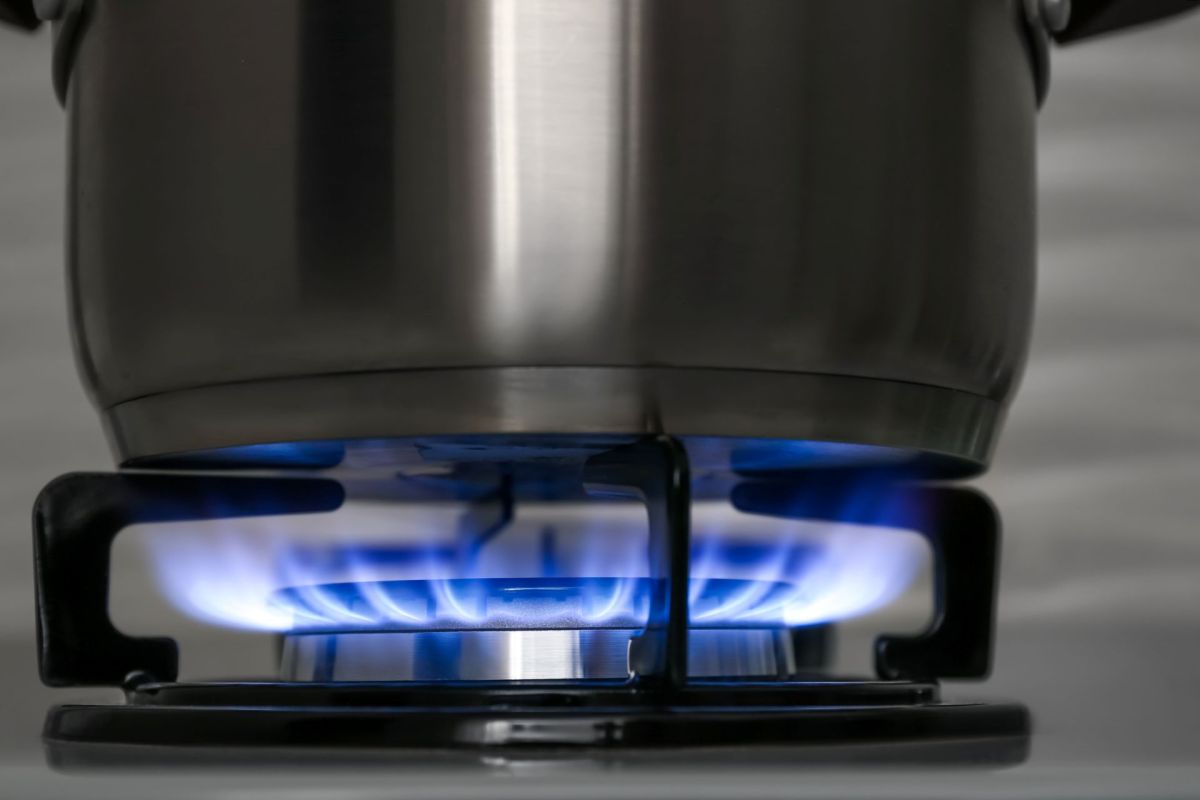
Colorado's plans to put cigarette-like warning labels on a common household appliance are on hold after a federal judge blocked the legislation in December, according to CPR News.
What's happening?
Colorado approved a law last May requiring retailers to attach yellow warning labels on gas stoves beginning Aug. 6, 2025. However, the Association of Home Appliance Manufacturers — a trade group representing appliance powerhouses like Samsung and Whirlpool — filed a lawsuit claiming the legislation violated the First Amendment, as detailed by the publication.
"Because the alleged health risks from using gas stoves are not supported by scientific consensus, the law violates the First Amendment's protection against compelled speech," AHAM wrote in a press release. "... Absent the injunction AHAM seeks in its lawsuit, Colorado's new law would force retailers and manufacturers to stigmatize their own products."
A 2018 Supreme Court case established that governments cannot force private companies to disclose information unless it's "factual" and "noncontroversial."
U.S. District Court Judge S. Kato Crews determined that "robust disagreement" remains surrounding gas stove risks. He issued a preliminary injunction blocking Colorado from enforcing the law.
Why is this important?
As recently as the 1950s, cigarette companies used images of doctors in ads to gain the trust of consumers. In fact, the majority of U.S. physicians smoked, according to a study published by the American Public Health Association.
This seems ludicrous given what we now know about the dangers of smoking and vaping. At the time, though, researchers hadn't firmly established a link between smoking, cancer, and other health complications, as History.com noted.
Comparing cigarette use to gas stoves isn't apples-to-apples. Clear parallels, however, exist in the discussion surrounding gas stoves today.
"It's true that scientists aren't in perfect alignment about the risk presented by gas cooking devices," CPR News acknowledged.
The publication highlighted an updated American Lung Association literature review of studies on the subject. These studies didn't find a statistically significant link between asthma and cooking devices but did find that gas stoves can harm lung health.
TCD Picks » Quince Spotlight
💡These best-sellers from Quince deliver affordable, sustainable luxury for all




|
What would it take for you to get rid of your gas stove?
Click your choice to see results and speak your mind. |
 I'd pay for it myself 💪
 For its part, AHAM hired an epidemiologist at a rate of $425 per hour. The epidemiologist, Stacey Benson, concluded that a clear link is missing between gas stoves and health issues.
However, while AHAM claimed in its media release that "no study has found that gas stoves cause respiratory health issues," one doesn't have to look far to see that's not the case.
A peer-reviewed study out of Stanford found that gas stoves contribute to 19,000 adult deaths each year. Another study out of Harvard found children in homes with gas stoves have a 42% higher chance of developing asthma.
What's being done about this?
The body of evidence that has established a connection between gas stoves and health issues is growing. In the meantime, leading medical groups such as the American Public Health Association, the American Medical Association, and the American Lung Association have warned about the dangers of indoor air pollution from gas stoves.
"We know these gases hurt us. We should do everything we can to reduce exposure," Rob Jackson, a professor at the Stanford Doerr School of Sustainability, told CPR News.
Kirsten Schatz, an air quality advocate for the Colorado Public Interest Research Group, is optimistic the court will reconsider the preliminary decision as the case proceeds.
However, Jamie Long, a senior staff attorney for the Public Health Law Center, believes the initial ruling suggests the court will side with the appliance makers.
"We've seen this in the tobacco context where sometimes it's one step forward, two steps back," Long told CPR News.
Educating yourself about critical issues can help you make informed decisions about your health. If you're ready to say goodbye to gas, affordable alternatives like induction are gaining buzz for their safety, ease of use, and faster cook times.

Get TCD's free newsletters for easy tips to save more, waste less, and make smarter choices — and earn up to $5,000 toward clean upgrades in TCD's exclusive Rewards Club.
Cool Picks






