


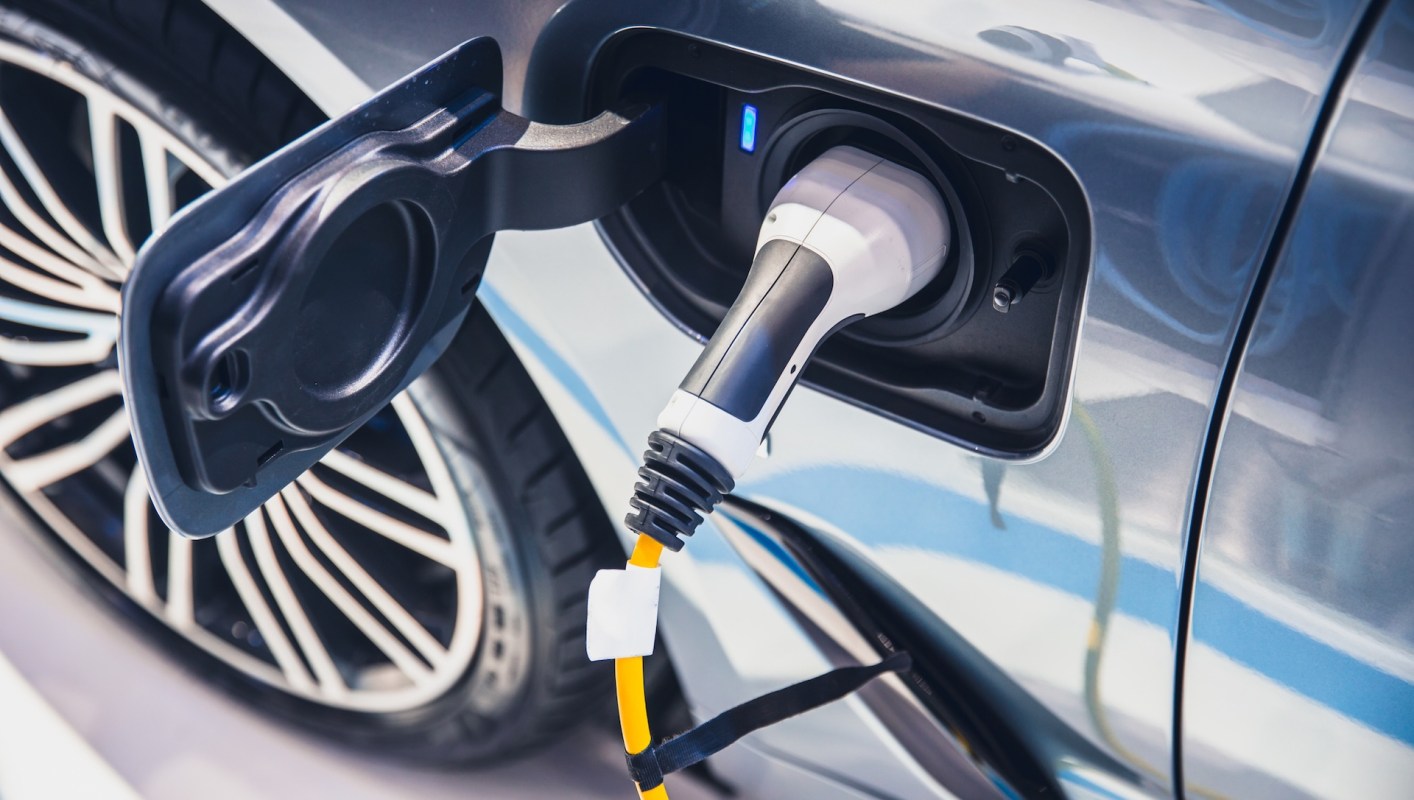
Cox Automotive analysts expect the American electric vehicle market to grow in the "long run" despite significant challenges related to federal policy changes.
But those obstacles aren't going uncontested.
Sixteen states and the District of Columbia are suing the federal government for blocking more than $2 billion in funding for EV charging infrastructure.
It's the latest argument over EV-related allocations from the $1 trillion infrastructure law enacted in 2022, according to Oregon Public Broadcasting.
The Associated Press reported in June that a federal judge ordered the government to release billions of dollars to 14 states for EV charger work as part of another legal case.
If successful, funding released from the latest legal battle could be used to construct a crucial public charging network needed to power the growing number of EVs on America's highways, helping to nix range anxiety fears for longer trips.
California is part of a block of Northwest states involved in the lawsuit. State Attorney General Rob Bonta called the federal funding pullback a "reckless" move that will "stall the fight against air pollution" and "slow innovation."
For the Trump administration's part, the moves are designed to "unleash American energy," largely through burning oil, coal, and gas — fuels that create harmful air pollution that affects health on the neighborhood level.
Save $10,000 on solar panels without even sharing your phone number Want to go solar but not sure who to trust? EnergySage has your back with free and transparent quotes from fully vetted providers in your area. To get started, just answer a few questions about your home — no phone number required. Within a day or two, EnergySage will email you the best options for your needs, and their expert advisers can help you compare quotes and pick a winner. Solar panels can save you more than $50k over their 25-year lifespan, and EnergySage can help you save as much as $10k on installation. Which begs the question — isn't that worth an email or two? |

The good news is that EV owners can save money simply by powering up at home, according to experts from Qmerit.
In fact, overnight home-based charging is hundreds to thousands of dollars a year cheaper than public stations. That's because household plug-ins avoid service fees, and EV owners can charge when their electricity rates are cheapest.
|
What's the most you'd pay per month to put solar panels on your roof if there was no down payment?
Click your choice to see results and speak your mind. |
 $200 or more 💰
 Qmerit can help you upgrade to a Level 2 charger with curated competitive quotes, starting with some simple questions about your electric panel and garage.
Level 2 chargers can power a battery in four to 10 hours, but they can cost thousands of dollars for the tech and installation, making the right insight important. Certain states even offer perks for the setups, Qmerit noted.
Level 1 charging using a standard exterior outlet is the easiest route. However, it's also the slowest, providing up to 5 miles an hour, according to the U.S. Department of Transportation.
DC fast-chargers at many public stations, such as Tesla's Supercharger system, can provide hundreds of miles in under 20 minutes.
A robust, nationwide network is needed for reliable long-distance travel. That's why states are suing to have previously allocated funding released for the investment.
Ionna, a partnership of eight automakers, is also working to build 30,000 charging stations during the next several years. Other experts have proposed leveraging existing electrical infrastructure at campgrounds as an outside-the-box solution.
While EV sales dipped in December as federal tax breaks expired, Cox reported that the 2025 total was the second-best on record, at more than 1.2 million vehicles.
That was thanks to a strong third quarter when purchases surged ahead of incentive expirations. Sales were just 2% short of the 2024 record of 1.3 million.
EVs have several benefits beyond eliminating tailpipe exhaust. They also nix gas and service costs, oil changes, and other pesky maintenance, saving drivers up to $1,500 a year.
Home solar can be a big upgrade, too, as the panels generate cheap, abundant energy via the sun to charge the rides. The Cool Down's Solar Explorer is a link to trusted partners that curate quotes and recommend vetted installers — insight that can save you up to $10,000 on upfront expenses.
In the meantime, Bonta indicated that lawsuits to regain funding for charging stations will continue, because the lost investment leaves "communities without access to clean, affordable transportation," according to OPB.

Get TCD's free newsletters for easy tips to save more, waste less, and make smarter choices — and earn up to $5,000 toward clean upgrades in TCD's exclusive Rewards Club.
Cool Picks





