


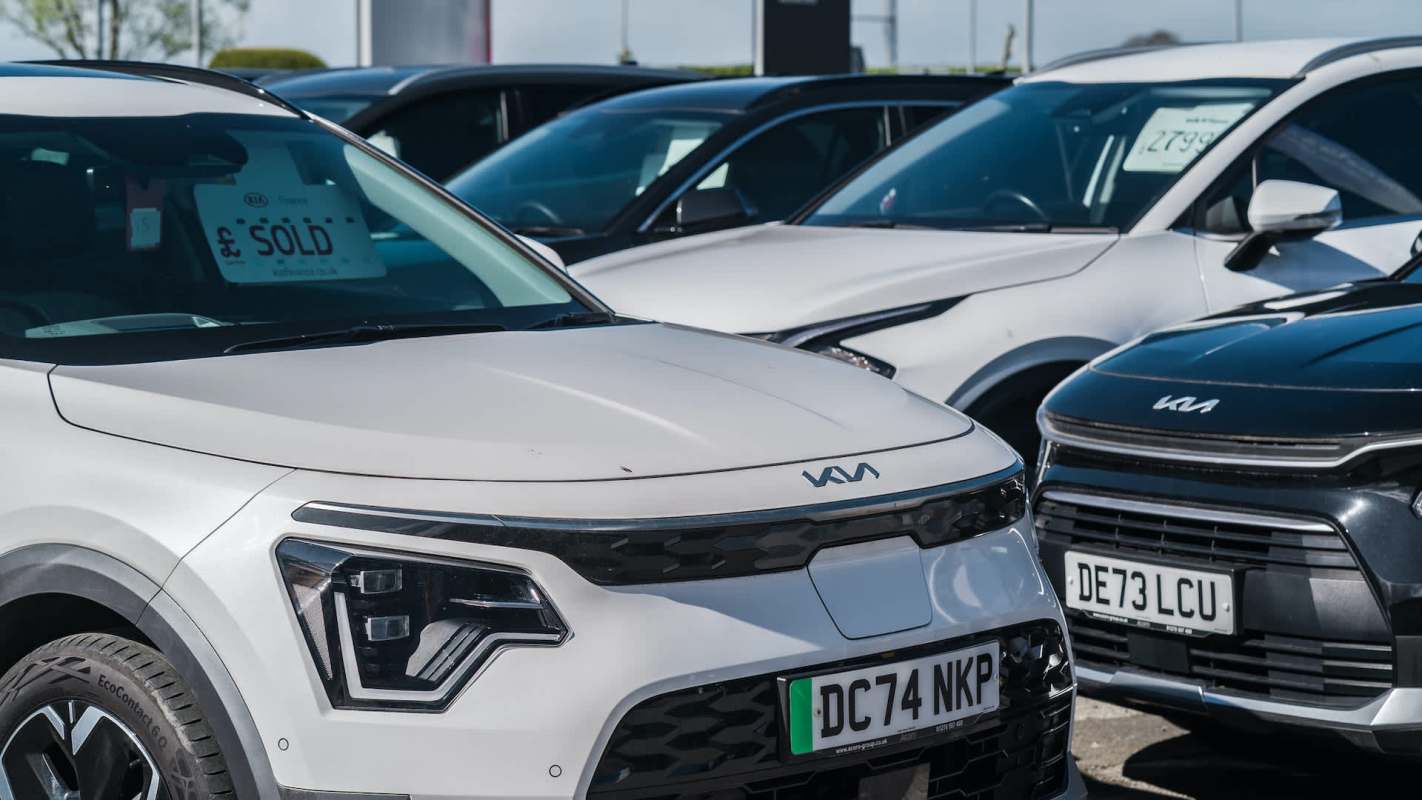
Europe's electric car market is getting an unexpected jolt due to expensive gasoline and diesel.
As fuel prices rise amid the U.S. and Israel's war in Iran, drivers across the continent are moving more quickly toward both new and used EVs. That is giving automakers a lift after a slower-than-hoped-for transition.
What's happening?
Data cited by Reuters indicated EV demand accelerated across Europe after crude moved past $100 per barrel following late-February U.S. and Israeli strikes on Iran and the ensuing energy turmoil.
In 16 European markets that make up over 80% of European Union and European Free Trade Association car sales, new EV registrations climbed 34% in April from a year earlier, Reuters reported, citing New Automotive and E-Mobility Europe.
Companies are seeing the shift in real time. Reuters reported that U.K.-based Octopus Electric Vehicles saw April demand rise 95% for new EVs and 160% for used models. Reuters also said Renault reported that EVs accounted for half of its April registrations in Britain, while searches and purchase inquiries also climbed on online marketplaces.
"This isn't a blip, it's an inflection point," commented Octopus Electric Vehicles' CEO Gurjeet Grewal.
TCD Picks » Quince Spotlight
💡These best-sellers from Quince deliver affordable, sustainable luxury for all




According to Reuters, the pattern is visible both in established EV strongholds such as Denmark and the Netherlands and in slower-moving markets, including Italy and parts of southern Europe.
For drivers, the appeal is fairly straightforward. When fuel gets painfully expensive, EV math improves fast.
While EV sticker prices can still be a hurdle, electricity is often cheaper than gasoline, and maintenance costs for these models are typically lower as well. That can make EVs look much more practical during volatile energy markets.
Why do EVs matter?
The implications go beyond monthly budgets and extend to reducing the polluting impacts of fuels like gasoline and diesel, which worsen extreme weather disasters that destroy homes, livelihoods, and local economies.
It also drives air pollution, which is linked to asthma, heart disease, cancer, and premature death, while keeping household energy costs high even as corporate profits soar. Industry lobbying slows cleaner and often cheaper energy solutions that could better protect families, public health, and economic stability.
Europe's latest EV surge also highlights how closely transportation costs are tied to geopolitical shocks. Heavy dependence on oil leaves households exposed when supply disruptions hit.
For automakers, the rebound is also significant. Reuters noted that many poured money into EV manufacturing and then faced weaker-than-expected demand and sizable write-downs over the past year.
What can the industry do to boost EV sales?
Some carmakers are already considering ramping up production. Reuters reported that Renault is working to raise output, and Volkswagen brands Seat/Cupra are seeing EV orders in Germany take a much bigger share than planned.
Online marketplaces are also helping speed the shift by connecting more shoppers with lower-cost models, especially from Chinese brands. Reuters reported that Carwow saw EV inquiries in Germany jump to 75% from about 40%, with BYD, Leapmotor, and Xpeng posting especially strong gains.
For consumers, comparing total cost of ownership, not just the purchase price, makes sense. Used EV demand is rising for a reason, since an electric vehicle can offer lower running costs without the price tag of a new model.
"Europeans have shifted from 'maybe someday' to 'right now' on electric vehicles," Christian Gisy, the CEO of online marketplace OLX, told Reuters.

Get TCD's free newsletters for easy tips, smart advice, and a chance to earn $5,000 toward home upgrades. To see more stories like this one, change your Google preferences here.






