


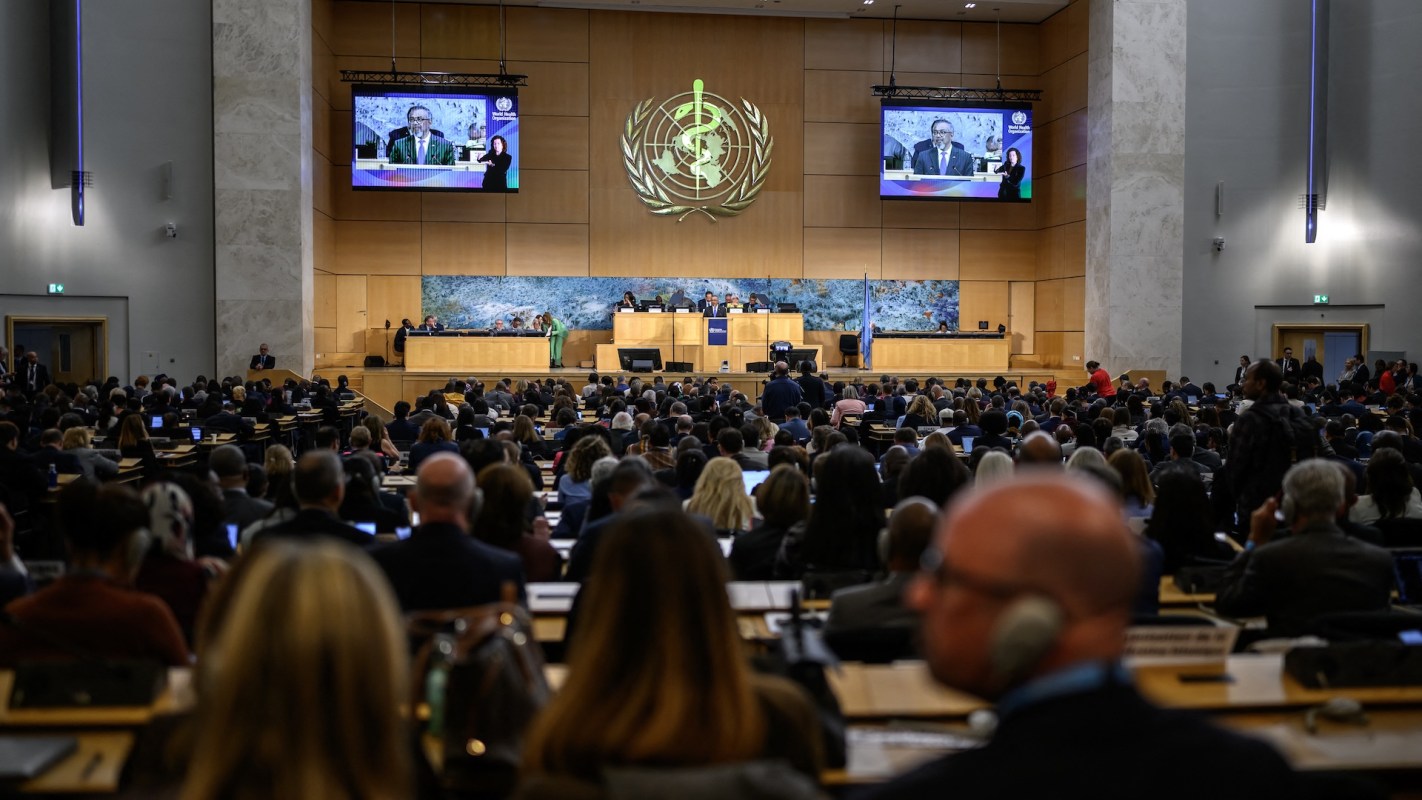
As health ministers meet in Geneva, Switzerland, for the World Health Assembly this week, one public health advocate is urging governments to treat the fossil fuel industry as the cause of major health crises.
Jeni Miller, the Executive Director of the Global Climate and Health Alliance, recently made her case to WHO member countries about what she called "the biggest public health emergency of our time."
In an op-ed for Health Policy Watch, Miller advocates for keeping fossil fuel industry leaders away from the negotiating table. In the piece, she states that the "WHA can guide the WHO Secretariat in advocating for stronger conflict-of-interest protections to limit the influence of the fossil fuel industry in health policymaking."
Miller added that "the health community can also help revoke the social license of the fossil fuel industry by clearly communicating that these products are fundamentally incompatible with health protection."
Burning fossil fuels generates pollution that can contribute to rising global temperatures and to intensifying extreme weather, which destroys homes, livelihoods, and local economies. It can also drive the air and water pollution that has been linked to asthma, heart disease, cancer, pregnancy complications, and premature death.
But beyond pointing out the seemingly straightforward take that the fossil fuel industry shouldn't guide health policy, Miller noted the parallels between the tobacco industry and the fossil fuel industry.
TCD Picks » Quince Spotlight
💡These best-sellers from Quince deliver affordable, sustainable luxury for all




"Tobacco control showed that effective public health action requires conflict-of-interest protections, restrictions on advertising and sponsorship, public education, fiscal measures, warning labels, litigation support, and international cooperation to reduce demand for harmful products," she wrote. "Fossil fuels require a similarly comprehensive approach."
Other campaigners are drawing comparisons to tobacco regulation. Their argument is straightforward: If the WHO helped lead a global treaty to curb an industry tied to widespread illness and death, why shouldn't it take a similar approach to fossil fuels?
Miller concludes the opinion piece, saying, "the science is clear, the health evidence is overwhelming, and solutions exist. The question now is whether the global health community is prepared to address the cause of the crisis, not just its consequences."

Get TCD's free newsletters for easy tips, smart advice, and a chance to earn $5,000 toward home upgrades. To see more stories like this one, change your Google preferences here.






