


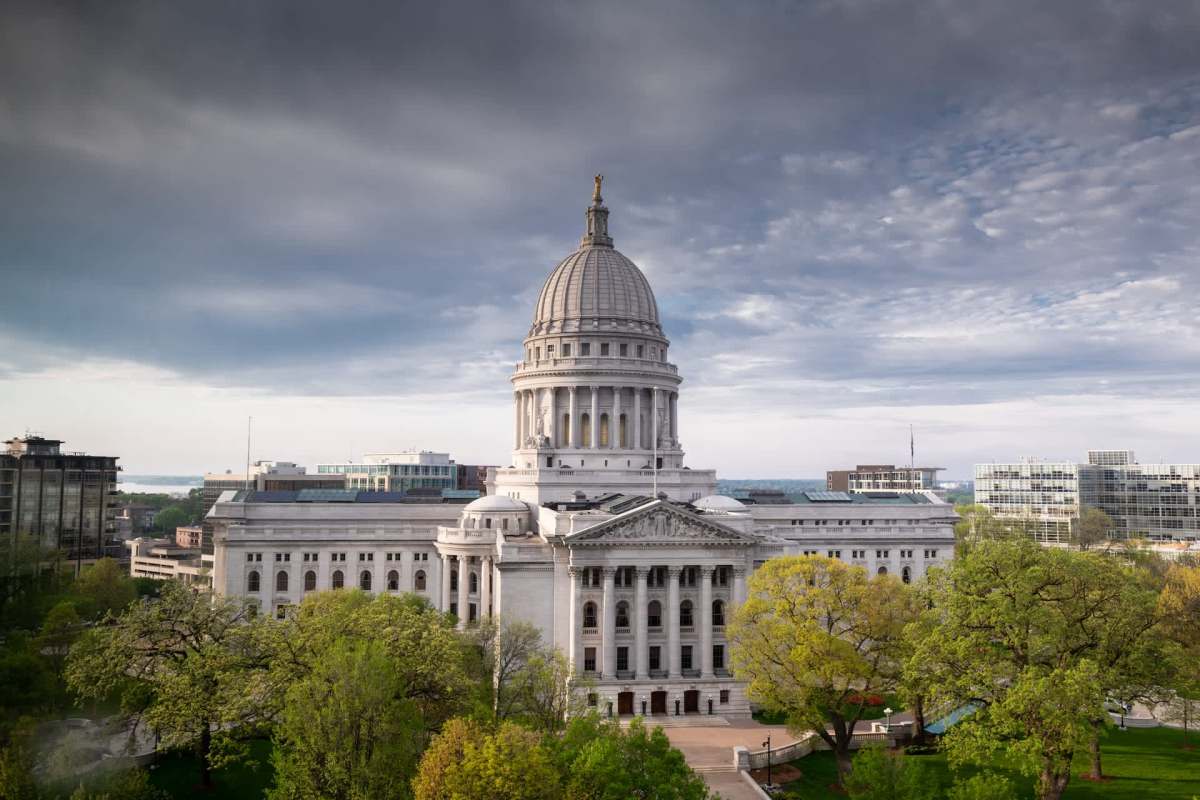
Lawmakers are at odds over dueling bills aimed at ensuring data center energy demand doesn't unduly burden ratepayers, according to Canary Media.
What's happening?
As investment in and use of artificial intelligence increased, the number of data centers grew in tandem.
Throughout 2025, utility bills in several states skyrocketed, with data center demand the primary driver of unaffordable rates.
Wisconsin has emerged as a highly desirable site for data centers "because of its ample fresh water and open land," Canary Media noted, but state residents have already begun objecting to the resource-hungry facilities.
Republican and Democratic lawmakers in Wisconsin introduced bills to prevent ratepayers from continuing to subsidize data centers' use of public resources, but the devil was in the details.
On one side of the aisle, Wisconsin Democrats proposed creating a "separate billing class" for large tech firms to ensure costs aren't passed on to households. Their bill included a stipulation that 70% of the energy used by data centers be from renewable sources.
Republican lawmakers in Wisconsin drafted legislation with similar billing provisions, but Canary Media noted that it contained a "poison pill." In political parlance, a poison pill is a provision so unpalatable that it functionally renders a bill unpassable, even to supporters.
In the Republican version of Wisconsin's data center bill, the stipulation in question would mandate that all renewable energy used by data centers be constructed on-site.
"This effectively means that data centers would have to rely largely on fossil fuels, given the limited size of their sites and the relative paucity of renewable energy in the state thus far," Canary Media explained.
Why is this concerning?
By now, most Americans are aware that energy prices have continued rising and that data centers are the primary culprit.
TCD Picks » Quince Spotlight
💡These best-sellers from Quince deliver affordable, sustainable luxury for all




|
How concerned are you about rising energy costs?
Click your choice to see results and speak your mind. |
 I can hardly afford my bills now 😮💨
 In 2025, community opposition to data centers solidified, and $98 billion of data center development was halted in the spring. By the second half of the year, data center cancellations quadrupled under intense community pushback.
Pundits, energy experts, and community organizers in Wisconsin told Canary Media that lawmakers' conflicting approaches rendered both bills "impossible to pass," effectively preventing action.
Walnut Way Conservation Corp environmental director Bryan Rogers expressed frustration that elected officials seemed hesitant to force data centers to pay for their energy use.
"We know what the data centers want and how fast they want it. We can extract more concessions from data centers," Rogers asserted, citing diverse costs and impacts to residents.
"They should be paying not just their full way — bringing their own energy, covering transmission, generation. We also know there are going to be social impacts, public health, environmental impacts. Someone has to be responsible for that," he added, per Canary Media.
What's being done about it?
In Wisconsin, both bills remained pending and would require Gov. Tony Evers, a supporter of clean energy, to sign them into law.
Amid legislative gridlock, Wisconsin residents can contact lawmakers to demand action on data centers in the state.

Get TCD's free newsletters for easy tips to save more, waste less, and make smarter choices — and earn up to $5,000 toward clean upgrades in TCD's exclusive Rewards Club.
Cool Picks




