


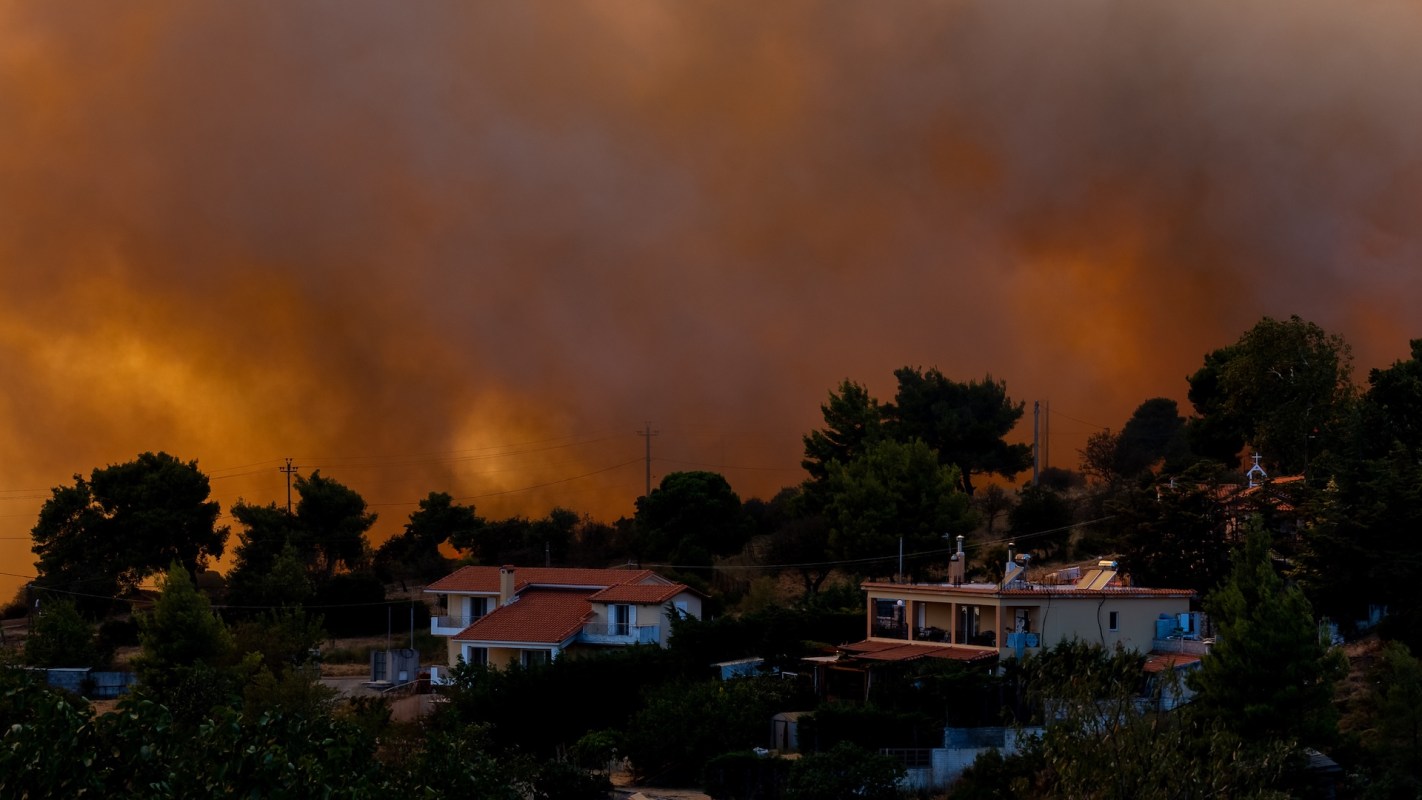
Although the summer of 2025 has yet to technically end, newly published research in the peer-reviewed journal European Economic Review served as a preliminary review of the rising costs of extreme weather, the Guardian reported.
What is going on?
Around the world, this summer was marked by bouts of violent, dangerous weather.
Deadly heat waves twice shattered records in Japan, as was the case in much of the United States. A flash flood near Kerrville, Texas, killed 135 people, and wildfires consumed parts of the West Coast, destroying historic structures on the Grand Canyon's North Rim.
Europe wasn't spared from weather extremes, with parts of England forced to ration water amid drought conditions and dwindling supplies.
It's common to see assessments of the impact of extreme weather in geological or meteorological contexts, but the new study quantified the impact of these novel, anomalous events in a more universally tangible language: money.
Citing a "background of heightened economic uncertainty," the authors focused on "extreme climate events," noting that a wealth of data showed an increase in the frequency and severity of this phenomenon over the next few decades was an "unfortunate certainty."
The study's authors were limited by the recency of the data they analyzed, but they managed to arrive at a staggering figure for short-term losses. In Europe alone, they identified €43 billion ($50.6 billion) in immediate costs related to extreme weather.
According to the Guardian, researchers projected those losses would climb to €129 billion ($151.8 billion) by 2029.
Why is this study so important?
As the outlet pointed out, scientists and researchers "have raced" to determine the risks and impacts of climate-related extreme weather while these events unfold in real time.
Properly gathering and examining data is time-consuming, but violent weather continues apace, necessitating short-term estimates and long-term projections based on the most up-to-date information available.
TCD Picks » Quince Spotlight
💡These best-sellers from Quince deliver affordable, sustainable luxury for all




|
How often do you experience power outages? Click your choice to see results and speak your mind. |
 Pretty regularly 😠
 Research demonstrated that higher average temperatures made a spate of wildfires in Portugal and Spain "40 times more likely" than under normal conditions.
Sehrish Usman, the study's lead author, indicated that these abrupt changes can be surprisingly insidious in a fiscal sense.
"The true costs of extreme weather surface slowly because these events affect lives and livelihoods through a wide range of channels that extend beyond the initial impact," said Usman, an economist at the University of Mannheim.
World Bank chief climate economist Stéphane Hallegatte wasn't involved with the study, and he cautioned that the authors' metric of choice — "gross value added" or GVA, a measure similar to gross domestic product — could vastly underestimate the impact on vulnerable people.
"Especially when disasters affect poor communities and people, the impact on GVA may be minimal, because these people are poor. But it does not mean they won't suffer," Hallegatte explained, per the Guardian.
What can be done about the costs of extreme weather?
As researchers and the Environmental Protection Agency have warned, extreme weather is likely to intensify as the planet continues to warm.
Usman told the Guardian that in a rapidly changing weather landscape, researchers' projections enable policymakers to act on the data as it evolves, potentially mitigating losses.
The research made it clear that inaction would be costlier than mitigation and adaptation, particularly in the absence of long-term data.
At an individual level, keeping track of key climate issues is a crucial part of preparedness.

Join our free newsletter for good news and useful tips, and don't miss this cool list of easy ways to help yourself while helping the planet.
Cool Picks






