


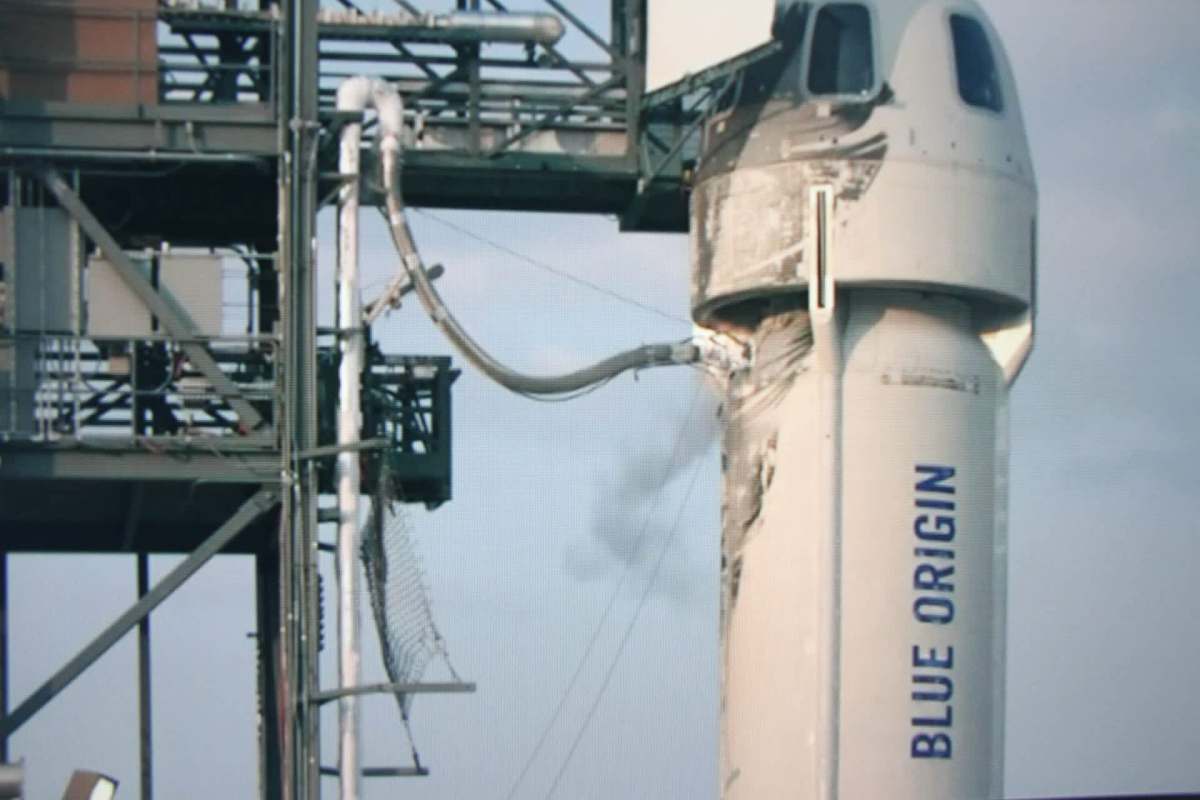
Blue Origin, the private aerospace venture backed by Amazon founder Jeff Bezos, unexpectedly disclosed plans to launch a satellite internet network called TeraWave, CNBC reported.
What's happening?
Blue Origin's announcement "came out of the blue" on Jan. 21, according to Ars Technica.
Bezos founded Blue Origin in 2000, and in 2024, he speculated that the aerospace outfit would eventually outpace his retail behemoth, Amazon.
In 2019, Amazon established a satellite internet arm initially dubbed Project Kuiper. It was rebranded as "Amazon Leo" in November, with a stated mission to deploy internet access to "customers and communities beyond the reach of existing networks."
Per CNBC, Blue Origin's TeraWave will compete with Amazon Leo and Elon Musk's SpaceX, promising speeds of "up to 6 terabits per second" via a network of 5,408 satellites. Ars Technica described the network as a "megaconstellation."
On Jan. 21, Blue Origin CEO Dave Limp (@davill) tweeted an announcement, touting "unmatched speeds" and a service "purpose-built for enterprise customers."
"This is next level sick in so many ways! Calls for data centers in space as the next step," one user replied.
Why is this launch concerning?
Although the commenter's sincerity was difficult to gauge, their remark about "data centers in space" hinted at broader concerns, arguably a megaconstellation of caveats.
On Dec. 10, Reuters reported Blue Origin was developing technology to facilitate "data centers in space." Reuters covered the TeraWave news on Jan. 21, citing a "space industry rush to build data centers" in low orbit.
As Bezos, Musk, and other tech titans reportedly clamored to launch data centers into space, the facilities were wreaking havoc on the ground.
TCD Picks » Quince Spotlight
💡These best-sellers from Quince deliver affordable, sustainable luxury for all




AI investments soared in 2025, and the data centers required to power the technology grew in tandem. But this increasing number of data centers strained water supplies and launched energy demand into the stratosphere.
|
Would you ever want to travel to space? Click your choice to see results and speak your mind. |
 Sign me up 🚀
 As a result, electricity bills spiked nationwide, saddling ratepayers with the costs of limitless "innovation," and opposition to data centers rose sharply in the second half of the year.
Even without the specter of "data centers in space," private aerospace ventures like SpaceX and Blue Origin have engendered considerable, credible concerns about their impact on people and the planet.
SpaceX satellites and other privately launched equipment have been falling to Earth at an escalating rate, putting habitats and humans at risk of damage or injury.
In December, Florida residents balked at Blue Origin's plans to discharge 490,000 gallons of wastewater each day into the fragile Indian River Lagoon.
In essence, tech titans' data centers and rocket launches have already harmed ecosystems, livelihoods, and communities terrestrially, prompting sustained backlash.
Potentially creating more space junk isn't likely to offset those impacts.
What's being done about it?
At least one startup is developing "armor" for astronauts to protect them from growing amounts of low-orbiting debris, but protecting the planet's surface isn't nearly as feasible.
Blue Origin's TeraWave isn't expected to launch until late 2027, giving concerned citizens time to contact their lawmakers to voice objections.

Get TCD's free newsletters for easy tips to save more, waste less, and make smarter choices — and earn up to $5,000 toward clean upgrades in TCD's exclusive Rewards Club.
Cool Picks





