


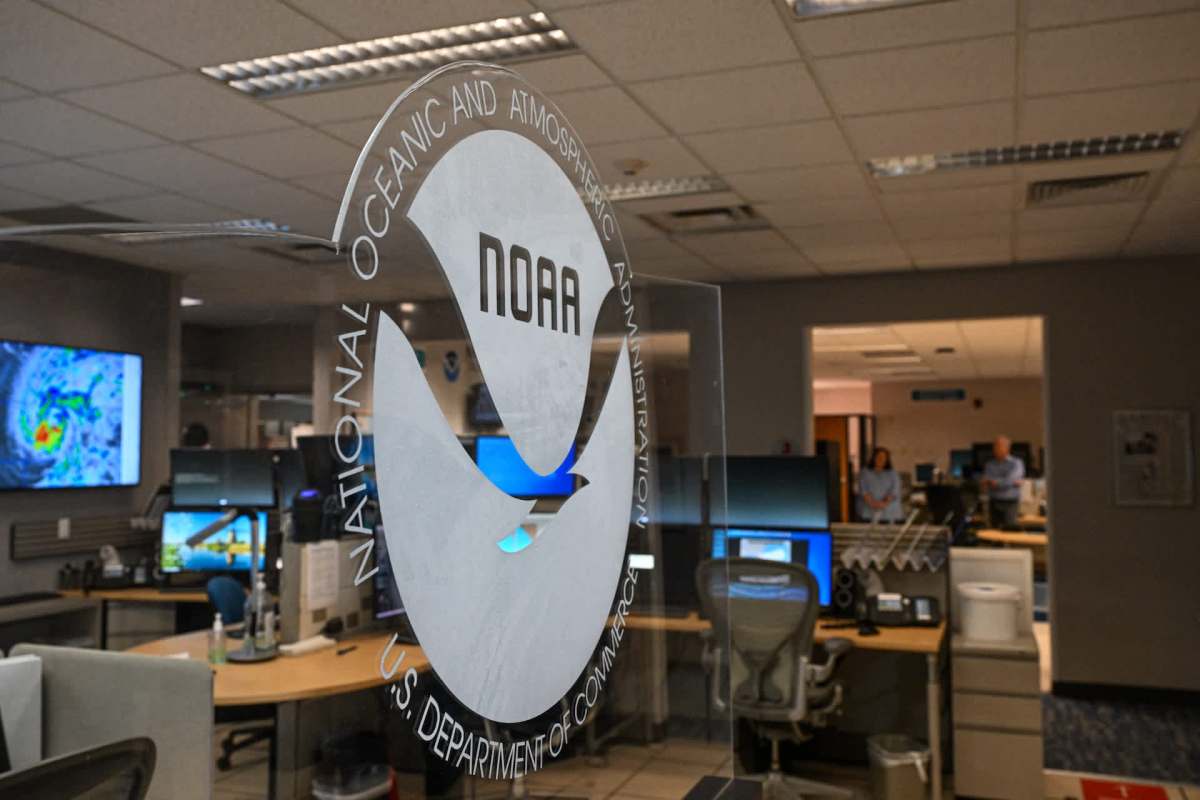
Artificial intelligence is playing a growing role in U.S. weather forecasting. But experts say it could come up short if the federal government continues cutting the systems that make accurate forecasts possible in the first place, The Guardian reported.
Hurricane season is nearing, and extreme heat will likely intensify again this summer. Scientists and former officials are warning that scaling back weather observations and research could leave communities more vulnerable to fast-moving disasters.
What's happening?
In 2025, the National Oceanic and Atmospheric Administration rolled out a set of global forecasting models that use AI, stating that the technology could make predictions quicker, more efficient, and more accurate.
But experts say that those benefits depend on one key factor: access to large amounts of high-quality data.
According to The Guardian, the Trump administration has floated a small budget increase for the National Weather Service while seeking a 40% reduction to NOAA's overall budget. Former NOAA official Monica Medina said that approach is backwards, arguing that the government is embracing AI while weakening necessary climate and weather data collection.
"We absolutely need AI to help us crunch the data faster," Medina said. "But right now, what we're doing is cutting back the data collection … we're going in the wrong direction."
TCD Picks » Quince Spotlight
💡These best-sellers from Quince deliver affordable, sustainable luxury for all




Erica Grow Cei, a National Weather Service spokesperson, disputed claims that essential information is vanishing. Cei noted that the U.S. still gathers enormous amounts of weather data every day through satellites, weather balloons, ocean buoys, and ground-based sensors.
Even so, The Guardian reported that staffing shortages and program cuts have already led to reductions in balloon launches and other monitoring efforts. Research programs that help scientists better understand shifting weather patterns are also being scaled back.
Why is a lack of weather forecasting concerning?
AI weather models can be incredibly useful, but they do not work the same way as traditional forecasting systems. Standard physics-based models use equations to simulate how the atmosphere behaves. AI models, by contrast, identify patterns in historical data and use those patterns to predict what is likely to happen next.
That can make AI faster and less energy-intensive to run, and in some cases, improve forecast performance. But experts say there is a major limitation. When weather starts behaving in ways that do not resemble the past, AI can struggle.
As The Guardian noted, an April study published in Science Advances found that AI-based forecasting models still underperform when predicting extreme weather. Since they learn from earlier conditions, they may be less able to anticipate the record-breaking events becoming more common as global temperatures rise.
Forensic meteorologist Chris Gloninger put it bluntly, saying these systems were trained on "a climate that no longer exists."
These systems have real-world consequences beyond the scientific community. Accurate forecasts help families evacuate ahead of hurricanes, warn workers about dangerous heat, protect airline and shipping routes, and more. If forecasts become less reliable, communities may have less time to prepare for blizzards, heat waves, and other extreme weather.
Former NOAA acting chief scientist Craig McLean also told The Guardian that cutting climate research can weaken short-term forecasting. In other words, scaling back the tools scientists use to understand a changing climate today could make tomorrow's forecast less dependable.
What is NOAA doing about weather forecasting?
NOAA has said it is not replacing conventional forecasting with AI. Instead, the new models will be a part of a broader forecasting toolkit with established physics-based systems.
The larger issue, though, is preserving the public infrastructure that forecasting depends on: satellites, balloons, buoys, staffing, and research. Experts say the U.S. needs stronger investment in those systems, not less, especially as extreme weather becomes more costly and disruptive.
For most people, this can seem like a distant policy debate until the next storm or heat emergency hits. One meaningful step is supporting elected leaders and local officials who favor strong funding for weather monitoring, disaster preparedness, and scientific research. People can also sign up for local emergency alerts and rely on multiple trusted forecast sources when severe weather happens.

Get TCD's free newsletters for easy tips, smart advice, and a chance to earn $5,000 toward home upgrades. To see more stories like this one, change your Google preferences here.






