


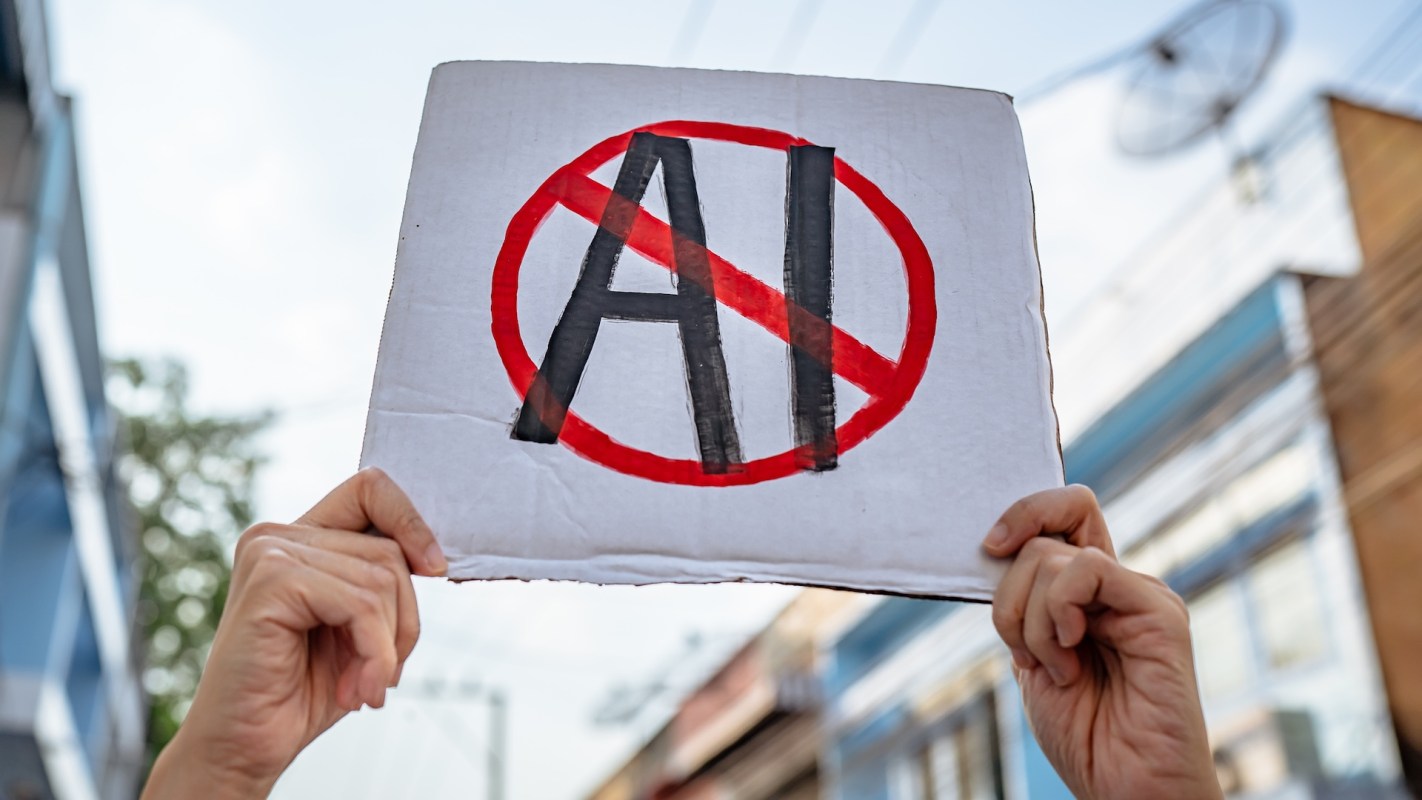
A new label is entering the federal law enforcement lexicon: "anti-tech violent extremism."
As WIRED reported, people and movements opposing the rapid spread of artificial intelligence and data centers may have to contend with vague definitions over what activities actually constitute a threat.
What's happening?
The development comes as more Americans speak out about AI-driven job losses, energy-hungry data centers, and the impact of large tech projects on their communities.
According to documents obtained by WIRED through public records requests, more than 1,000 pages of previously unpublished reports from Department of Homeland Security, the FBI, and fusion centers show agencies increasingly tracking what they describe as anti-technology threats.
One report from the New York Intelligence and Counterterrorism Bureau warned that AI adoption could spark major unrest within the next five years and result in "anti-tech violent extremist activity." WIRED said the label does not appear in public DHS or FBI domestic extremism guides.
The records also describe monitoring around data centers, including reports from a Western Pennsylvania fusion center and the Northern Virginia Regional Intelligence Center. In some cases, activities listed as suspicious included photography, observation, and implied threats. That's conduct that civil liberties experts say can overlap with peaceful protest.
TCD Picks » Quince Spotlight
💡These best-sellers from Quince deliver affordable, sustainable luxury for all




WIRED further reported that agencies circulated intelligence on demonstrations and civic meetings, including protests over Tesla and demonstrations at local civic events.
Why does this matter?
Across the country, residents have raised concerns about data centers because of their heavy electricity demand, water use, noise, and strain on local infrastructure. At the same time, workers and advocates have warned that AI could automate jobs without delivering broad public benefits.
If those concerns are treated as a potential sign of extremism, it could chill public participation. According to WIRED, Data Center Watch — an initiative of AI security firm 10a Labs — says hundreds of organizations across 42 states have organized against data center construction.
What's being done?
Civil liberties advocates are already pushing back. Spencer Reynolds of the NAACP Legal Defense Fund told WIRED that suspicious activity reports are "incredibly unreliable" and can reflect officer bias rather than genuine threats.
Mauro Lubrano, a researcher whose work on anti-technology violence has circulated in fusion centers, warned that the framework must be used carefully.
"While anti-technology violence is unacceptable, it should not be used as an excuse to securitize AI and emerging technologies, thereby silencing those who are critical of the current trajectory," Lubrano told WIRED.
Reynolds offered a similar warning about where things could be headed if "anti-tech extremist" becomes an easy way to paint regular residents opposed to AI's impacts with a broad brush as dangerous outliers.
"As people continue to organize for a better future, we're likely to see more surveillance and criminalization of this opposition," he said, per WIRED.

Get TCD's free newsletters for easy tips, smart advice, and a chance to earn $5,000 toward home upgrades. To see more stories like this one, change your Google preferences here.






