


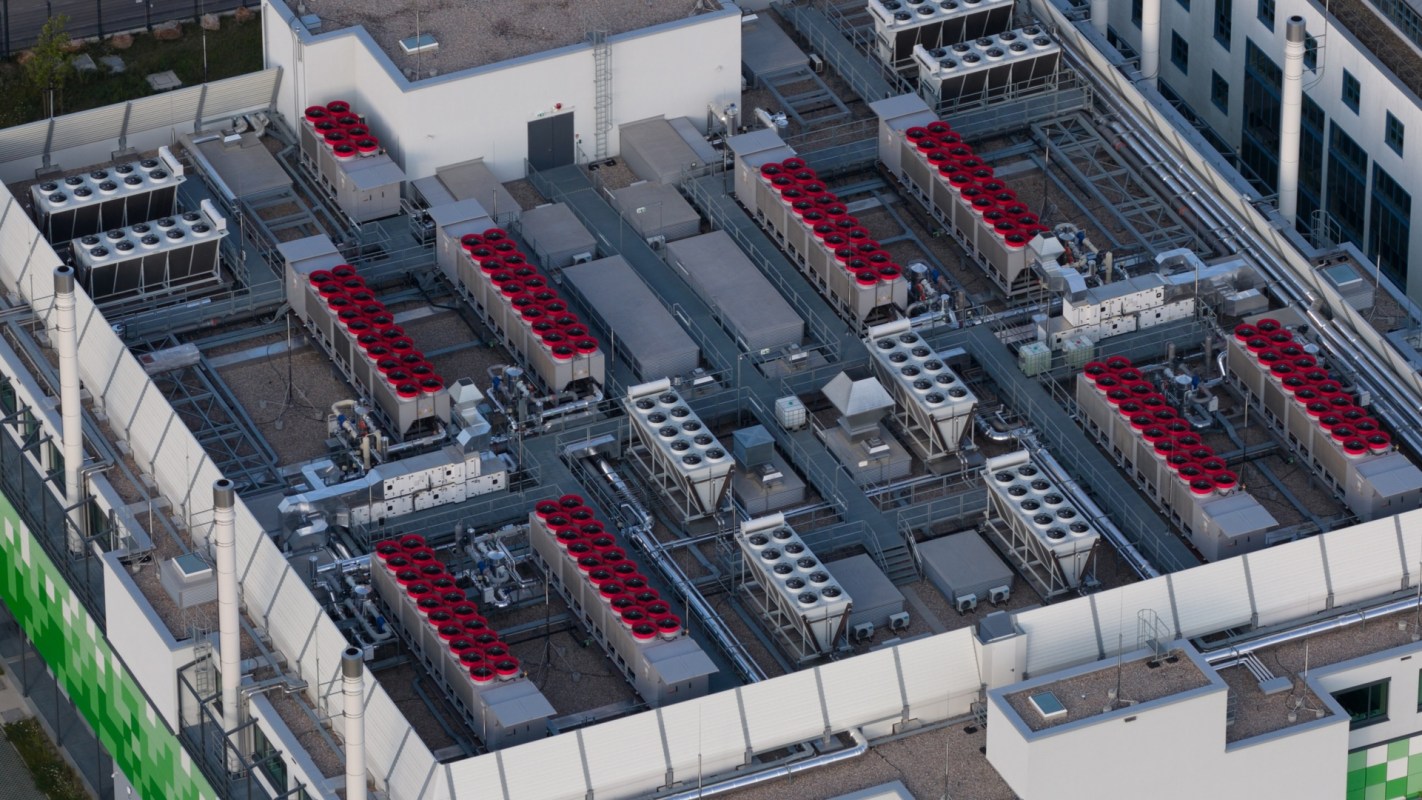
The massive data centers powering artificial intelligence are already notorious for their energy consumption, water use, and noise pollution. Now, new research suggests they may also be heating up the areas around them.
What's happening?
As CNN reported, recent findings indicate that these facilities could be creating localized "heat islands," raising temperatures for millions of nearby residents.
A study — currently available as a preprint — has found that large-scale data centers can increase surrounding surface temperatures by an average of 3.6 degrees Fahrenheit, with some areas experiencing spikes as high as 16.4 degrees.
Researchers analyzed satellite temperature data and compared it with the locations of more than 6,000 AI "hyperscalers," which are enormous data centers that house thousands of servers and can span up to a million square feet, mostly built within the past decade. The team focused on sites outside densely populated cities to better isolate the impact of the data centers themselves.
The results showed a consistent pattern. Once a data center began operating, nearby surface temperatures rose.
In areas such as the Bajio region in Mexico and Aragon in Spain — both major data center hubs — temperatures climbed by around 3.6 degrees over two decades, while surrounding areas remained largely unchanged.
Surprisingly, the study found that the warming effect may extend up to 6.2 miles from a facility, potentially affecting more than 340 million people.
Why is this concerning?
This excess heat can exacerbate heat waves and increase the risk of heat-related health impacts.
Co-author Andrea Marinoni told CNN that the rapid expansion of data centers "could have dramatic impacts on society," affecting the environment, public welfare, and the broader economy.
At the same time, AI itself presents a complex trade-off. While it has the potential to optimize renewable energy systems and improve industrial efficiency, among other things, the infrastructure behind it comes with significant environmental costs — particularly its high energy and water use.
TCD Picks » Quince Spotlight
💡These best-sellers from Quince deliver affordable, sustainable luxury for all




|
Which of these savings plans for rooftop solar panels would be most appealing for you?
Click your choice to see results and earn rewards to spend on home upgrades. |
 Save $1,000 this year 💸
 "The 'rush for AI-gold' appears to be overriding good practice and systemic thinking and is developing far more rapidly than any broader, more sustainable systems," Deborah Andrews, a sustainability researcher not involved in the study, told CNN.
What's being done about it?
Because the research is still in its early stages and has not yet undergone peer review, some experts say more data is needed to fully understand the scale of the issue.
Still, these findings are already igniting important discussions on how to advance the sustainability of data centers.
"There still might be time to consider the possibility of a different path … without affecting the demand of AI and its ability to provide progress for mankind," said Marinoni.

Get TCD's free newsletters for easy tips to save more, waste less, and make smarter choices — and earn up to $5,000 toward clean upgrades in TCD's exclusive Rewards Club.
Cool Picks




