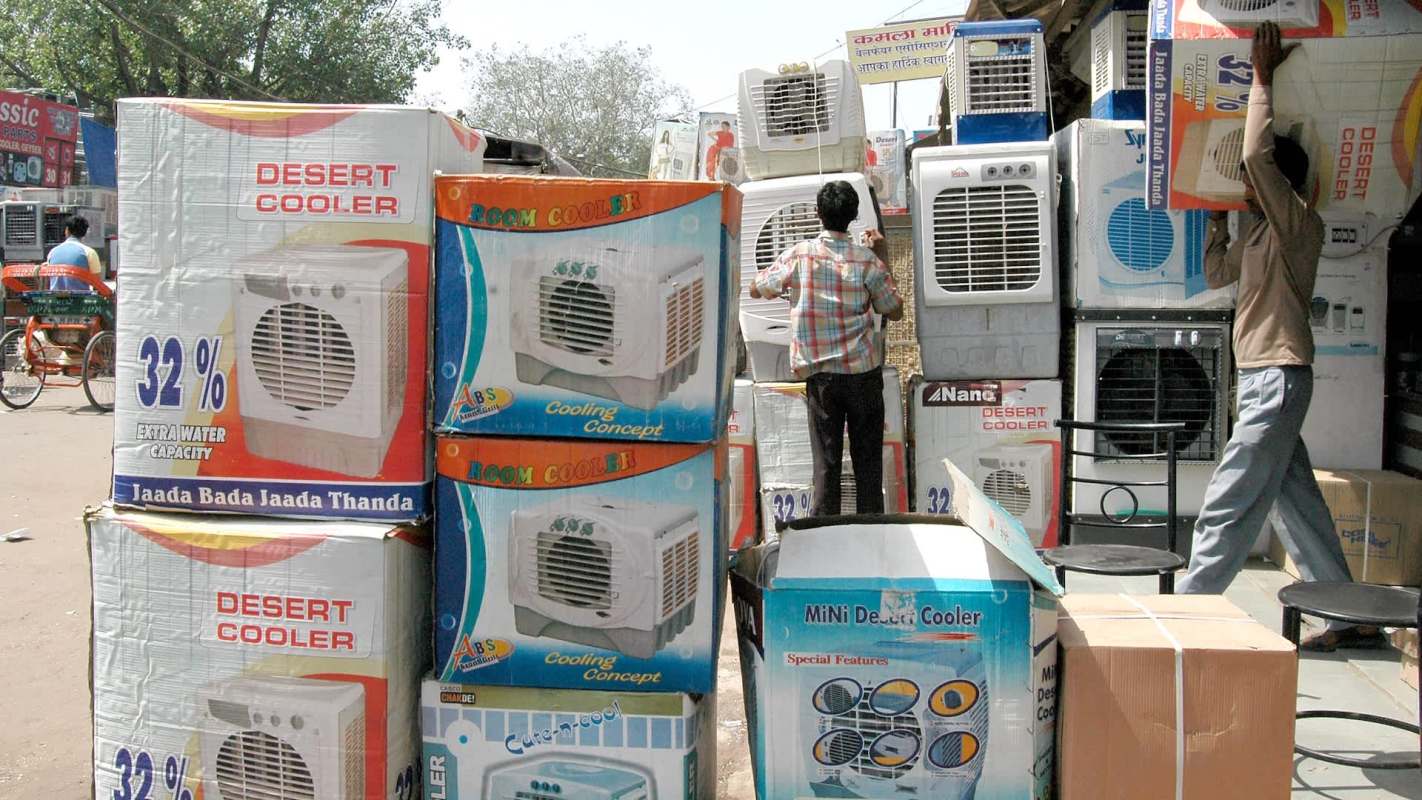
In some of the driest parts of the country, one of the cheapest ways to cool a home is also among the oldest: the "swamp cooler," which helped make life more livable in the Southwest long before central air conditioning became widespread and still matters for people trying to cut electricity use.
Here's what to know
As Local 10 reported, evaporative coolers can still reduce cooling costs in arid regions — but they are a poor fit for humid states such as Florida.
Cooling happens through evaporation: a fan draws hot outdoor air through water-soaked pads, and the air that moves indoors is cooler and more humid.
That makes them very different from traditional air conditioners, which rely on refrigerants and compressors to remove heat.
The underlying idea goes back centuries. Ancient people cooled air by fanning it over water kept in clay vessels, and inventor Oscar Palmer created the first evaporative-cooling system in the United States in Arizona in 1908.
These coolers had spread across parts of the Southwest by the 1930s, including New Mexico and Nevada. Much of their staying power comes from cost, because in dry climates their lower energy use can mean smaller utility bills than standard air-conditioning systems.
TCD Picks » Quince Spotlight
💡These best-sellers from Quince deliver affordable, sustainable luxury for all




Dryness is what gives the technology its edge. Eric Verpolegen, founder of CoolVeg, a nonprofit focused on evaporative cooling for fruits and vegetables, explained it simply: "If it's really dry out, in Arizona, you're going to get a greater cooling effect."
More background
The issue is especially relevant as more households look for ways to manage rising cooling bills without installing or constantly running central air.
Central air remains a luxury for many people worldwide, and air-conditioning did not become commonplace in the United States until the 1950s. For these reasons, evaporative coolers still serve as a practical middle option in desert communities, where they are cheaper to operate than full air conditioning.
Humidity is where the limitations show up. When the surrounding air is already saturated and cannot absorb much more moisture, swamp coolers provide little relief.
What can be done?
For homes in dry climates, an evaporative cooler can be a lower-energy alternative to central air.
In humid areas, a swamp cooler may add moisture without providing enough cooling, potentially leaving households paying for equipment that does not solve the problem.
A possible fix may come from newer hybrid designs. Experts say systems that combine evaporative cooling with separate humidity control could make the technology effective in more places. If that happens, low-energy cooling could become available to more people in more places.
"There is a lot of innovation happening where people are trying to come up with hybrid solutions, where they are marrying evaporative cooling with something that can manage humidity separately," Ankit Kalanki, principal of cooling at RMI, a nonprofit dedicated to clean energy, said, according to Local 10, "and so now you have the best of both worlds."

Get TCD's free newsletters for easy tips, smart advice, and a chance to earn $5,000 toward home upgrades. To see more stories like this one, change your Google preferences here.