


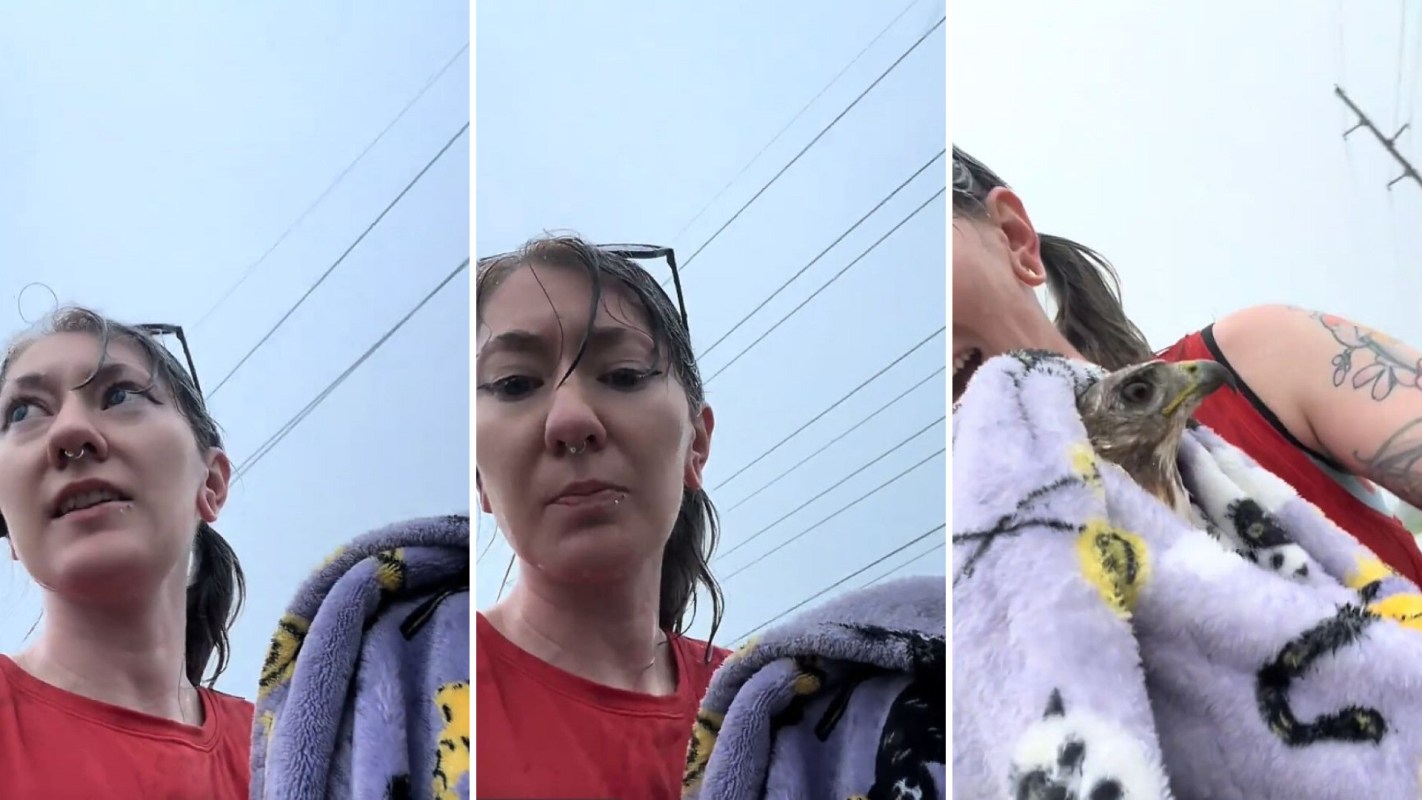
A rainy run turned into an emergency rescue when a wildlife rehabber spotted a red-tailed hawk struggling beside a trail in the middle of a thunderstorm.
The rescuer documented the moment they realized the bird could not get airborne and stepped in to help. What may have looked like a dramatic detour to viewers was also a reminder that animal rescue work can happen anywhere — even on a day off.
Here's what to know
Jam (@paperjamio), a wildlife and exotics vet nurse, detailed the rescue in a TikTok video.
@paperjamio Wildlife rehab never stops , not even on a run of my day off, or during a thunderstorm. This red tailed hawk has several medical issues but they are treatable. He got super lucky being found by a wildlife and exotics vet nurse. Get better soon buddy ❤️#wildlife #wildliferehab #icecreamleague #running ♬ original sound - Jam 🐌
Jam explained in the video that a friend of theirs had already reported the hawk in that area, and that it was still in a dangerous spot near the trail. When they tried to encourage it away from the area, they quickly realized the bird was in distress.
"I noticed pretty quickly that he couldn't really get any lift and he was just going a little bit forward," the rehabber said in the video.
As the storm intensified, the rescuer went back to their car for a blanket and used it to secure the hawk. In the caption, they added that the red-tailed hawk had several medical issues, but they are treatable.
TCD Picks » Quince Spotlight
💡These best-sellers from Quince deliver affordable, sustainable luxury for all




The creator wrote that the hawk "got super lucky being found by a wildlife and exotics vet nurse."
One commenter praised that dedication, writing, "I love being the dedicated bird girl"
More background
For raptors such as red-tailed hawks, being unable to gain lift can quickly become life-threatening. A grounded bird near a public trail faces multiple dangers, including stress, further injury, and the risk of being struck by people, pets, or even vehicles if it wanders toward nearby roads.
The moment underscores the split-second difference between a passerby noticing an animal and a trained person recognizing a medical emergency. Wildlife rehabbers often serve as a crucial bridge between injured animals and the specialized treatment they need before they can be released.
Beyond helping a single bird, successful rehabilitation can also support the broader balance of local ecosystems, where birds of prey play an important role.
What can be done?
If you come across an injured wild animal, the safest first step is usually to keep your distance and contact a licensed wildlife rehabilitator, veterinarian, or local animal control agency. Large birds of prey can be dangerous to handle without training, even when they are weak or unable to fly.
People who want to support this kind of rescue work can also take local action by connecting with wildlife groups and conservation efforts in their communities. Supporting habitat protection and local rescue networks can make it easier for animals to get help quickly.
Financial support can also matter, especially for organizations covering medical care, transportation, and release efforts.
"Wildlife rehab never stops, not even on a run of my day off, or during a thunderstorm," the rescuer wrote in the caption.
"You're a hero!" a commenter wrote. "Hope lil dude dries off and recovers well."

Get TCD's free newsletters for easy tips, smart advice, and a chance to earn $5,000 toward home upgrades. To see more stories like this one, change your Google preferences here.







