


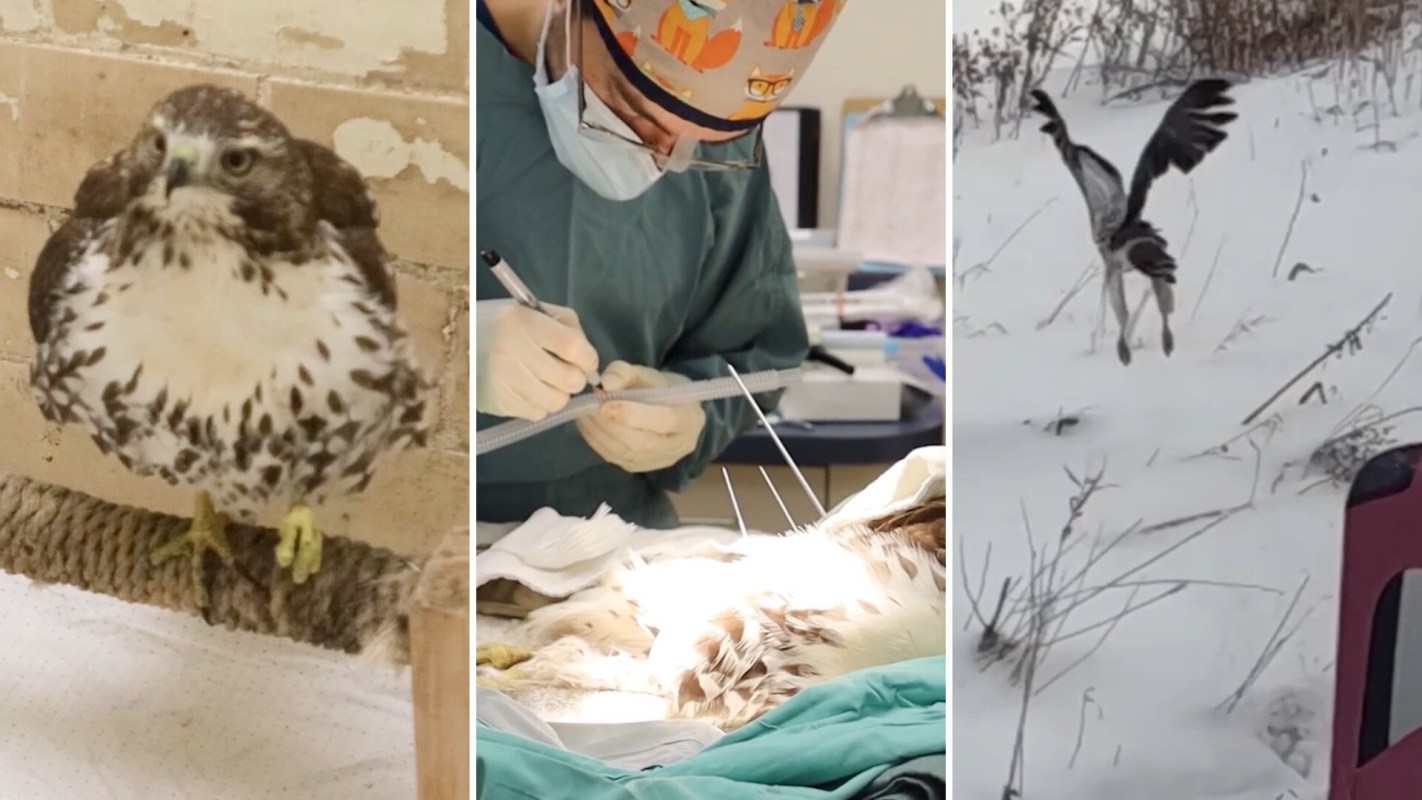
A red-tailed hawk in Toronto returned to flight after emergency treatment for a badly broken leg, following a chain of accidents that included a strike on streetcar power lines and a crash into a window.
In the end, the bird recovered well enough to fly again.
What happened?
The Toronto Wildlife Centre shared a post that said the hawk endured two crashes in quick succession. First, "a red-tailed hawk was rushed to Toronto Wildlife Centre after someone witnessed him crash into TTC streetcar power lines." Then, after falling to the ground and trying to take off, he "slammed into a window and landed hard back onto the pavement again."
Repairing the injury required what the center described as "complex orthopedic surgery." X-rays taken after the hawk arrived showed why: its leg was severely fractured.
Recovery was not immediate. Over the next two months, staff provided post-surgery care, monitored the hawk's healing, and helped it regain the strength needed to perch and fly.
By the end of that treatment and rehabilitation, the hawk had recovered enough to fly again.
TCD Picks » Quince Spotlight
💡These best-sellers from Quince deliver affordable, sustainable luxury for all




Why does it matter?
Streetcar wires, glass windows, traffic, and dense infrastructure can turn an ordinary flight into a life-threatening emergency in a matter of seconds.
For wildlife living in cities, surviving one collision does not necessarily mean the danger has passed. In this hawk's case, the first impact was followed almost immediately by a second, compounding the trauma and resulting in a serious injury.
Buildings, wires and windows can pose major risks to wildlife, often in ways that go unnoticed until a rescue like this brings the threat into view.
What's being done?
Before the hawk could return to flight, Toronto Wildlife Centre treated it with X-rays, orthopedic surgery and an extended period of rehabilitation.
That kind of effort depends on trained veterinary teams and wildlife rehabilitators who know how to treat animals while preserving the behaviors they need to survive in the wild. In this case, the goal was not only to heal the leg, but also to help the hawk regain full function.
Bird-safe window treatments can make glass more visible to wildlife, and anyone who encounters an injured bird should contact a wildlife rehabilitator rather than trying to handle or treat the animal themselves.
With raptors in particular, keeping a safe distance is important. A quick call to a local wildlife rescue organization can give an injured bird the best chance of recovery without putting either people or the animal at greater risk.
As the Toronto Wildlife Centre put it, "After a successful procedure and two months of post-surgery care, the resilient bird was perching well and soaring back into the sky!"

Get TCD's free newsletters for easy tips, smart advice, and a chance to earn $5,000 toward home upgrades. To see more stories like this one, change your Google preferences here.







