


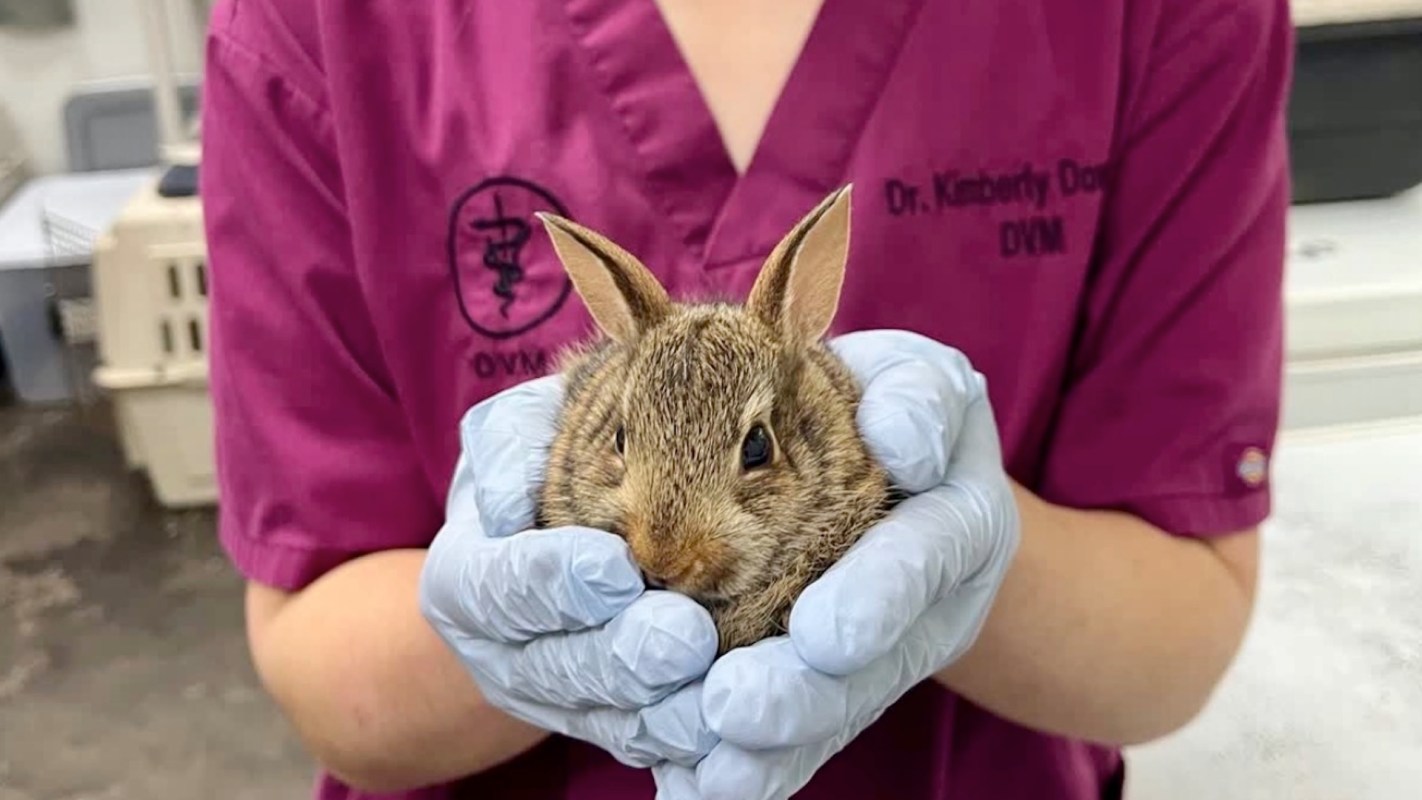
A soaked eastern cottontail pulled from a pool filter got a second chance from WildCare Oklahoma (@wildcareoklahoma).
The wildlife rehabilitation center posted the news on Instagram, pairing the bunny's ordeal with word that its hospital staff had expanded.
Here's what to know
Dr. Kimberly Downing was identified as WildCare Oklahoma's newest veterinarian.
"Now our wildlife hospital has two veterinarians and two [registered veterinary technicians]!" the caption read.
The photo shows Downing holding an adorable rabbit in her hands as it peeked straight ahead.
"She recently cared for this eastern cottontail, rescued from a pool filter," the facility added. "Wet, scared, and exhausted, this little one needed nothing more than some rest and TLC."
TCD Picks » Quince Spotlight
💡These best-sellers from Quince deliver affordable, sustainable luxury for all




As the post revealed, animals can become trapped in pools, with many exhausting themselves trying to escape. That can be especially common during hot weather, when they may have been searching for water.
More background
Wildlife rehabilitation hospitals play an important role for animals that are orphaned, injured, or caught in human-made hazards. In suburban and urban areas, those hazards can include windows, roads, fences, netting, and backyard pools.
An eastern cottontail may be resilient, but cold, stress, and exhaustion can become serious very quickly. Even when an animal does not appear visibly injured, it may still need warmth, quiet, and expert observation to recover.
Adding another veterinarian can expand a rehab hospital's ability to evaluate patients, respond to emergencies, and support the work required during busy rescue periods.
What can be done?
One of the simplest steps is to make backyard pools safer for animals. Checking skimmer baskets and filters regularly, especially during warm months, can help people spot trapped wildlife before the situation becomes fatal.
Pool escape ramps or similar devices can also help animals climb out if they fall in. WildCare Oklahoma promoted the FrogLog in its post.
Paying close attention to covers, drains, and landscaping may reduce the chances that rabbits, birds, frogs, and other creatures become trapped.
If you find distressed wildlife, the safest move is usually to contact a licensed wildlife rehabilitator. Improper handling of an animal can increase stress or cause further injury, and some require specialized care to survive.

Get TCD's free newsletters for easy tips, smart advice, and a chance to earn $5,000 toward home upgrades. To see more stories like this one, change your Google preferences here.







