


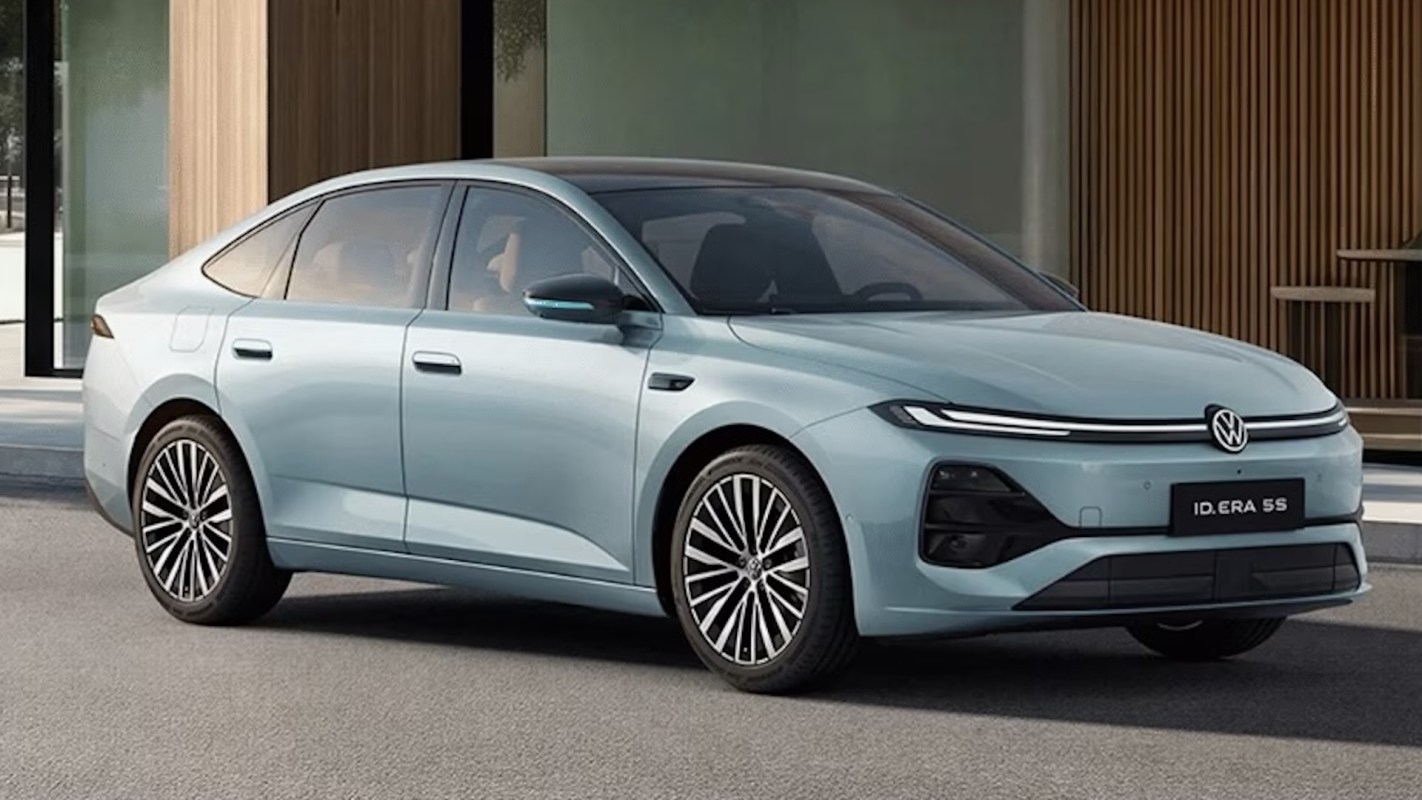
China is getting a Volkswagen-badged sedan at an unusually low entry point. As The Next Web detailed, the new ID. Era 5S starts at about $17,175.
For that money, the car offers 99 miles (160 kilometers) of electric-only range, a large touchscreen, and front seats with heating, ventilation, and a 10-point massage feature.
Here's what to know
Ahead of the ID. Era 5S going on sale in China on Aug. 21, SAIC Volkswagen, Volkswagen's joint venture with China's state-owned SAIC Motor, has begun taking preorders. The Next Web says the launch price is 115,900 yuan, which Digital Trends converts to about $17,175.
Its plug-in hybrid setup combines a 130-kilowatt electric motor with a 19.1-kilowatt-hour lithium-iron phosphate battery, and a 91.5-cubic-inch (1.5-liter) gasoline engine. On China's CLTC testing standard, Volkswagen lists 99 miles (160 kilometers) of electric-only range for that package.
The outlet added that the cabin equipment includes Apple CarPlay, wireless charging, an 8.8-inch instrument screen, and a 15.6-inch center touchscreen. Heated rear seats are included too, along with front seats that provide heat, ventilation, and massage.
The model is Volkswagen's first sedan with the company's Navigate on Autopilot for city streets and highways, The Next Web noted. It still remains a Level 2 system, meaning drivers must continue paying attention behind the wheel.
TCD Picks » Quince Spotlight
💡These best-sellers from Quince deliver affordable, sustainable luxury for all




China's EV price war has only intensified, the outlet said. BYD quickly responded by launching the 2027 Seal 06 plug-in hybrid at roughly $14,700, while the all-electric version starts at about $16,100.
The electric model uses the Blade 2.0 800-volt charging architecture, and higher trims add LiDAR-based driver assistance.
More background
Entry-level EVs in the U.S. are still much more expensive. The 2027 Chevrolet Bolt starts at $28,995, and the 2026 Nissan Leaf starts at $29,990 before destination charges. Even a more expensive ID. Era 5S trim is still priced well below both, as The Next Web noted.
The Volkswagen is a plug-in hybrid rather than a fully electric vehicle, and China's CLTC range standard is widely considered optimistic, the outlet did caveat. Even so, the price gap still stretches into five figures.
Lower-cost EVs and plug-in hybrids can help households spend less on fuel and routine maintenance while also reducing tailpipe pollution. Due to external factors like tariffs, supply chain inefficiencies and more, the ultra-low-priced EV or hybrid is elusive in the U.S.
What can be done?
For automakers, pressure is growing to lower costs without cutting coveted features. Through its China joint venture, Volkswagen has shown it can pack advanced tech and comfort options into a much cheaper vehicle, The Next Web argued.
Whether that indicates Volkswagen could do that in the U.S. or Europe is murkier. The global EV race is increasingly about who can deliver the most practical, comfortable, and lower-cost electrified car first. It doesn't end there, though. What markets they can realistically bring it to is an important question to answer.
If you're considering buying an electric vehicle, fuel savings, fewer oil changes, and less routine service can make a big difference over time.
Charging an EV at home often costs half as much as using public chargers, but basic Level 1 charging tends to be slow. Qmerit provides free, instant installation estimates for faster Level 2 home charger installations.

Get TCD's free newsletters for easy tips, smart advice, and a chance to earn $5,000 toward home upgrades. To see more stories like this one, change your Google preferences here.






