


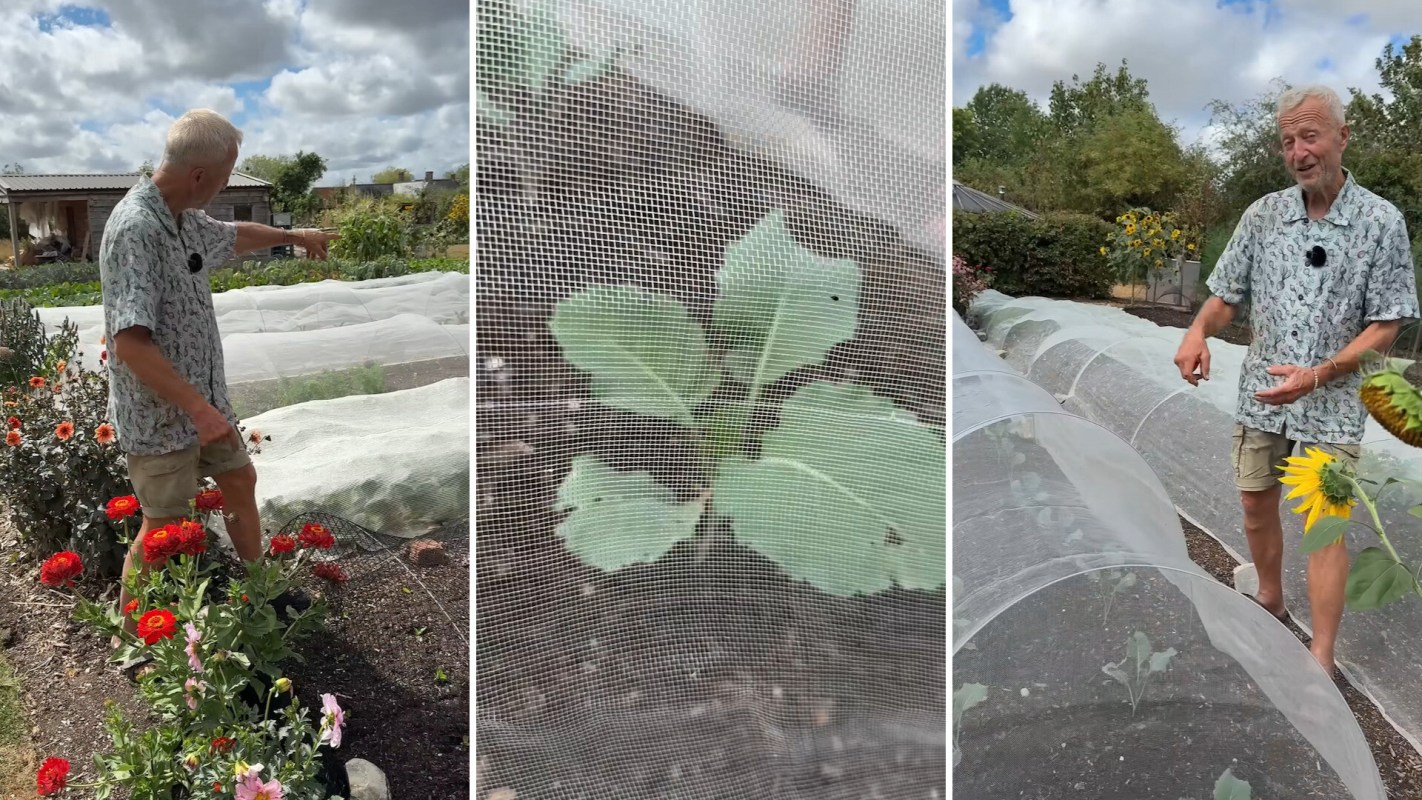
Flea beetles can quickly turn a promising brassica patch into a disappointment, chewing tiny holes through tender leaves and stressing young plants before they ever get established.
However, gardening expert Charles Dowding (@CharlesDowding1nodig) says a simple shift in timing and plant size may help growers avoid some of the worst damage.
What's happening?
The content creator and no-dig gardening expert posted a garden update showing that he is still growing brassicas in a year that has been difficult for flea beetles.
"Flea beetles have been a huge problem for brassicas this year, but I feel there are now quite a few less of them than there were," Dowding wrote in the caption. "Different covers for different potential problems."
In the video, he points to larger transplants that had been set out on July 31 and were already coping better than smaller ones.
As part of that update, he contrasted more established brassica starts with younger kohlrabi transplants that had gone in at only three weeks from sowing. Letting seedlings size up more before transplanting may help them tolerate pest pressure more effectively.
TCD Picks » Quince Spotlight
💡These best-sellers from Quince deliver affordable, sustainable luxury for all




He said early August appears to be a better planting window in his conditions, especially as flea beetle pressure appears to be easing. During the continuing dry weather, he is pairing that timing with mesh covers, steady watering, and patience.
The video also showed newly planted radicchio sitting beneath netting meant to keep rabbits away.
Why does it matter?
Brassicas such as cabbage, kale, broccoli, and kohlrabi are among the most rewarding edible crops to grow, but pests can make them feel frustratingly unreliable. Flea beetles are especially discouraging because they target plants when they are most vulnerable.
Growing food at home can help households save money on produce, especially as grocery prices remain a concern for many families. It can also mean fresher, better-tasting vegetables that do not have to travel long distances before reaching the plate.
Time spent tending crops can support mental health by reducing stress, while the digging, watering, carrying, and walking involved can increase physical activity. When gardeners find low-chemical ways to protect crops, it can also make the habit easier to sustain.
Dowding's update focuses on realistic adjustments rather than perfection by fine-tuning plant size, timing, moisture, and physical barriers.
What's being done?
Instead of transplanting brassicas as soon as possible, Dowding said he is giving them more time to develop before moving them into the garden. A sturdier young plant is more likely to handle some pest damage than a tiny seedling with only a few leaves.
He is also changing when he plants, with early August looking more promising in his conditions. Adding regular watering during dry stretches can help keep transplants from becoming overly stressed and may improve how well they bounce back.
Protective coverings are another key part of the approach, as mesh can help shield brassicas from flea beetles, and netting can keep rabbits away from crops such as radicchio.
Small changes can make a big difference, and pest setbacks do not always mean giving up on the crop.

Get TCD's free newsletters for easy tips, smart advice, and a chance to earn $5,000 toward home upgrades. To see more stories like this one, change your Google preferences here.






